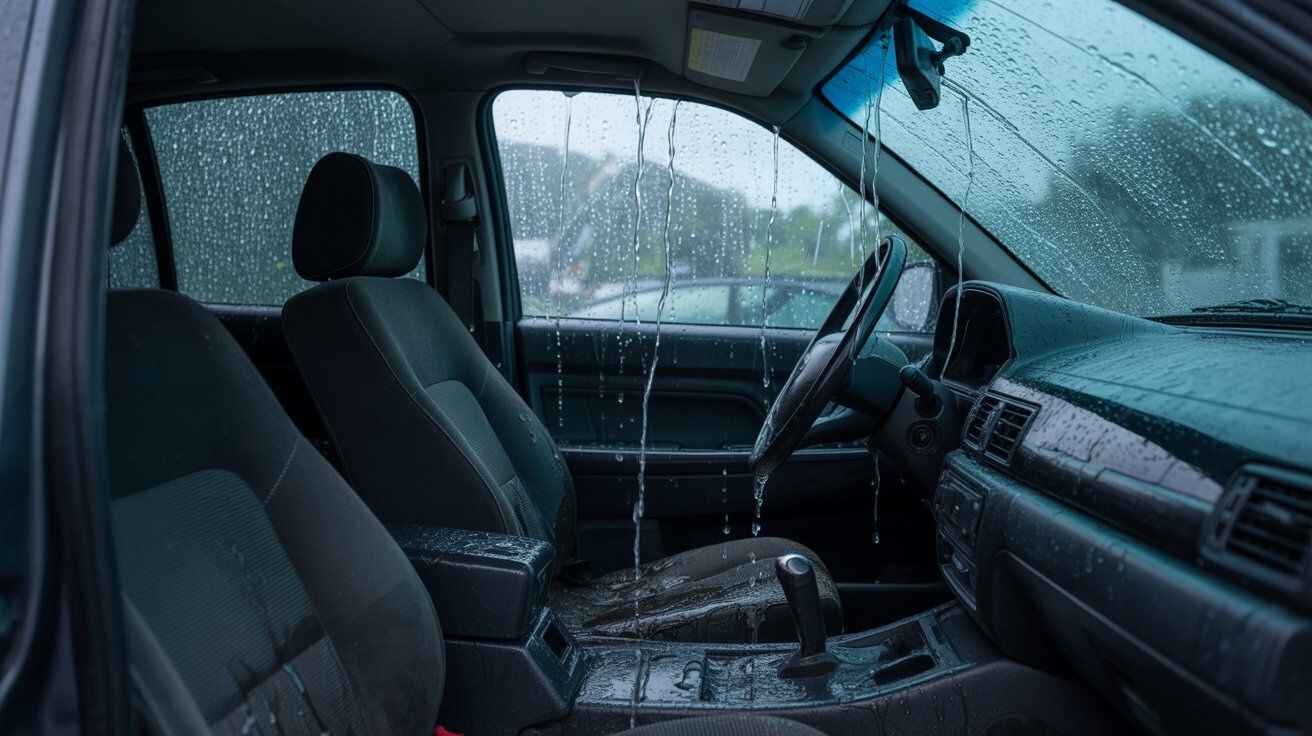
Water leaking into your car when it rains usually happens because of worn door seals, clogged sunroof or cowl drains, poor windshield sealing, or damaged weather stripping.
Why is water leaking in my car when it rains?
Why is water leaking in my car when it rains?. A wet carpet, foggy windows, or that musty smell inside your car are all warning signs that rainwater is sneaking into places it shouldn’t. Left unchecked, this moisture can cause rust, mold, and costly interior damage.
Common Causes of Water Leaks in Cars
When trying to figure out why water is leaking in your car when it rains, it usually comes down to a few common culprits.
1. Faulty Door Seals and Drain Holes
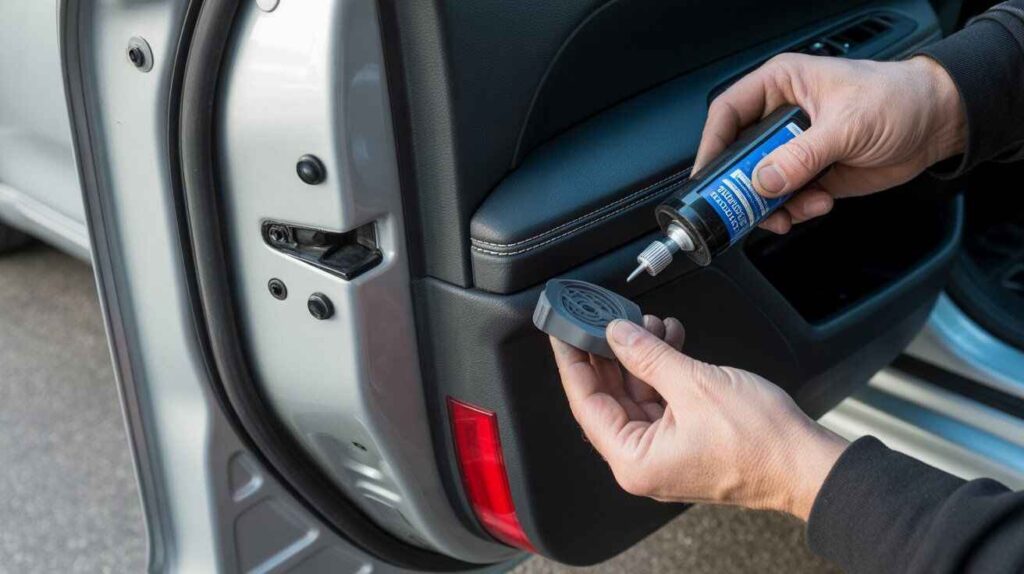
Your door seals (also called weather-stripping) are the first defense against rain. Over time, they dry out or shift, creating tiny gaps that let rainwater enter the car cabin. Water may also collect inside doors if the drain holes are clogged with dirt or debris.
To check, remove the rubber plugs at the bottom of the door and see if water escapes. Clean the holes and inspect the rubber seals for cracks. A small leak here can lead to rust and mold if ignored.
2. Sunroof Drains and Sunroof Seal Problems
If your car has a sunroof, clogged drain tubes could be the reason water leaks inside when it rains. These tubes run through the roof pillars and out near the wheel wells. When blocked, water pools in the tray and seeps into the headliner or A-pillars.
To test, pour a small amount of water into each corner of the open sunroof—it should drain quickly underneath. If not, gently clear the tubes using compressed air or a flexible wire. If the drains are disconnected or damaged, have them professionally reattached.
3. Windshield, Glass, and Body Seam Leaks
A poorly sealed windshield or cracked body seam can let rainwater in through the dashboard or footwells. This often happens after a windshield replacement where the adhesive didn’t fully bond. Signs include moisture under the dash or wet carpets after rain.
Fixing this usually requires professional resealing, as it involves removing trim and applying specialized urethane adhesive. If you notice water trails near the dash after heavy rain, don’t delay—moisture can damage wiring and airbag components.
4.Cowl, Plenum, and Wiper-Area Drain Clogs
Blocked cowl or plenum drains under the windshield can cause water to overflow into the HVAC or cabin filter, soaking your floor mats.
Remove debris near the wiper base, lift the cowl cover, and flush the drains with water to restore proper flow.
AC Condensation vs. Rainwater
Not every wet spot inside your car means something’s wrong. Sometimes, what looks like a leak from rain is actually AC condensation.
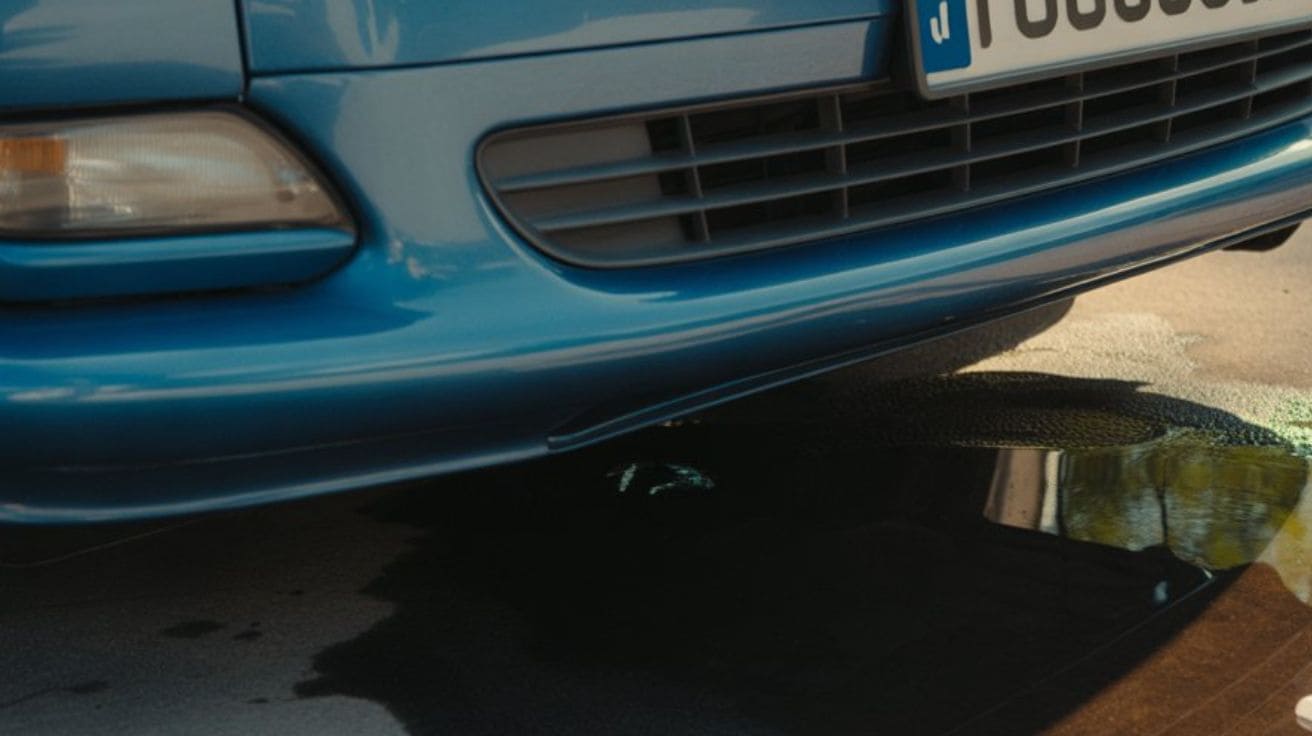
AC condensation usually a small, clear puddle under the passenger side is usually normal AC condensation, not a leak. But damp carpets, musty smells, or wet areas after rain indicate rainwater leaks.
To confirm, run the AC on a dry day—if the cabin stays dry, the issue is rainwater ingress, not AC drainage.
How to Diagnose Where the Rainwater Is Coming From
If you’re unsure why water is leaking in your car when it rains, use this quick diagnostic checklist to trace the source before starting repairs.
| Step | Action | Purpose |
|---|---|---|
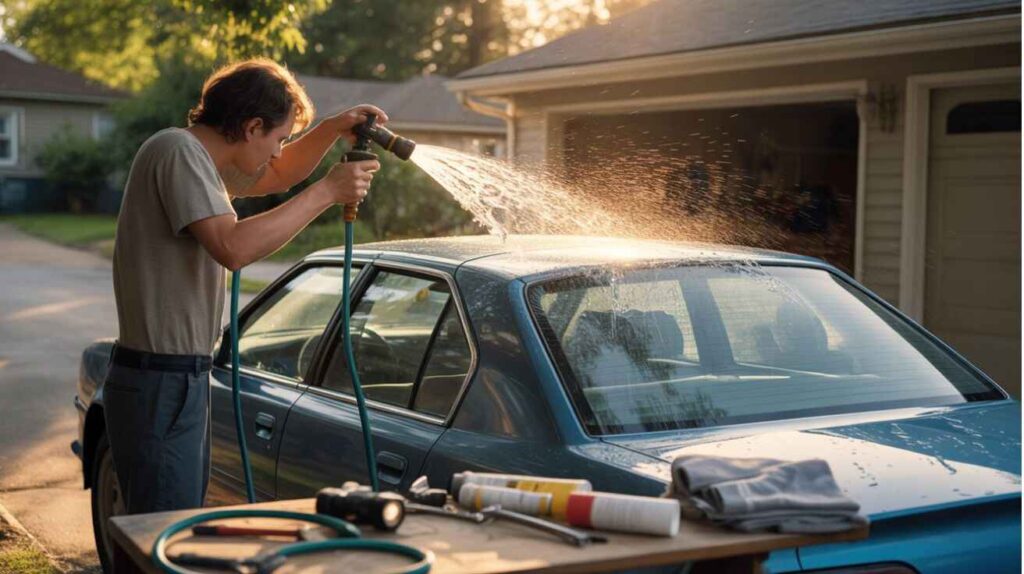
| 1. Recreate the Leak | Spray the car gently with a hose. | Watch where water enters. |
| 2. Inspect Top to Bottom | Check roof liner, seals, trunk, and footwells. | Spot drips or damp areas. |
| 3. Lift Floor Mats | Remove mats and feel for moisture. | Hidden leaks or rust signs. |
| 4. Trace Drip Trails | Use talcum powder or paper towels. | See water path clearly. |
| 5. Safety First | Disconnect battery before checking wiring. | Avoid short circuits. |
How to Fix a Water Leak
Replacing Door Seals
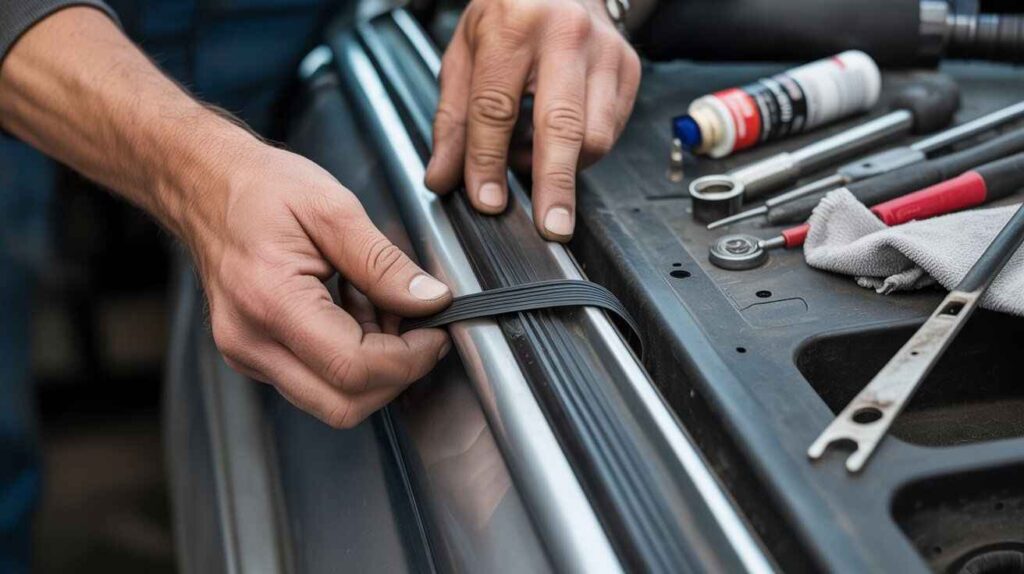
Old or cracked weather-stripping often causes leaks. Remove the damaged seal, clean the surface, and apply new seals with automotive adhesive. Press firmly, let it cure fully, and test with a light water spray to confirm the fix.
Cleaning Drainage Channels
Clogged door or sunroof drains can trap water. Use compressed air or flexible tubing to clear debris, then flush with soapy water to remove residue. Regular cleaning ensures free water flow and keeps the cabin dry and mold-free.
Professional Help
If leaks come from the windshield or disconnected drain tubes, seek professional repair. Technicians use pressure-testing tools to find hidden leaks and ensure a long-term fix—worth the cost for lasting results.
Preventative Measures
Regular Maintenance Checks
Perform routine inspections of seals, drains, and cowl areas every few months. Apply silicone protectant to keep the rubber flexible, and clean the sunroof tracks to prevent future leaks.
Environmental Considerations
Sun exposure and tree debris accelerate seal wear. Park in shaded or covered areas, especially during rain, and wash your car regularly to prevent buildup and keep the interior moisture-free.
FAQs
Q1: Why is water leaking in my car when it rains?
Usually, it is due to clogged drains, damaged seals, or poor windshield bonding.
Q2: How can I prevent it?
Keep drains clean and seals conditioned.
Q3.Can a clogged sunroof drain cause leaks?
Absolutely. Sunroof drain tubes often get blocked with debris, causing overflow into the cabin or trunk.