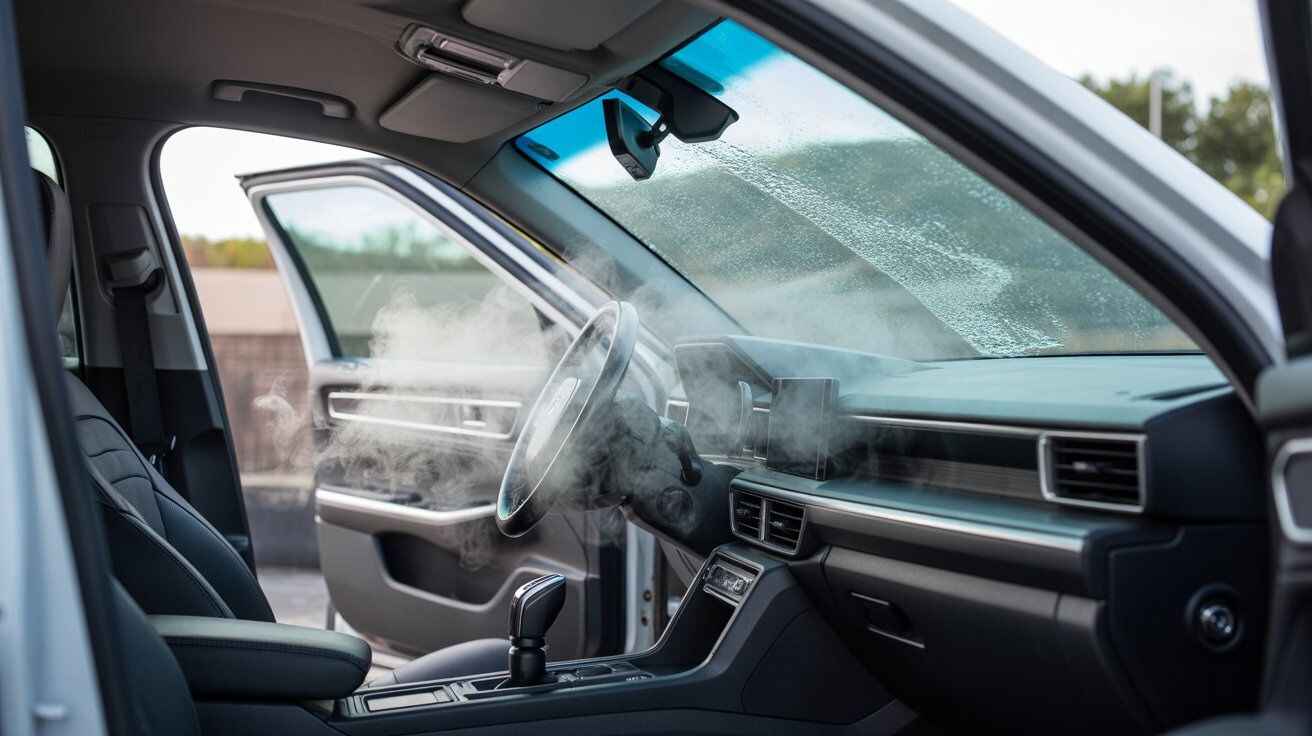
The inside of a car gets so hot because sunlight passes through the windows, heats up the interior surfaces, and traps the heat inside (a greenhouse effect).
Why Is the Inside of the Car So Hot?
When you open your car door on a summer afternoon and are hit with a blast of sweltering air. The seats feel like they’re burning, and the steering wheel is too hot to touch. It raises an important question Why Is the Inside of the Car So Hot?
The answer goes beyond sunlight. A car’s design, materials, and parking conditions create a perfect trap for heat. it can also be dangerous for both people and the vehicle.
Interior Surface Temperatures After 60 Minutes in the Sun
| Surface | Approx. Temperature | Effect on Passengers |
|---|---|---|
| Dashboard | ~157°F (69°C) | Can cause burns on contact, damages plastics and electronics |
| Steering Wheel | ~127°F (53°C) | Painful to touch, may cause skin irritation or burns |
| Seat (Leather/Vinyl) | ~120–125°F (49–52°C) | Uncomfortable to sit on, increases body heat stress |
| Seat (Fabric/Cloth) | ~110–115°F (43–46°C) | Slightly cooler than leather but still uncomfortably hot |
The Science of Heat Inside a Car
1.Heat Absorption by Car Materials
Different car materials absorb and store heat at varying rates. Dashboards, seats, and steering wheels made of vinyl, leather, or dark plastics act like heat sinks under direct sunlight.
Leather and vinyl retain heat longer than fabric, which explains why these surfaces feel after only a short time parked outside.
2.The Greenhouse Effect Inside Cars
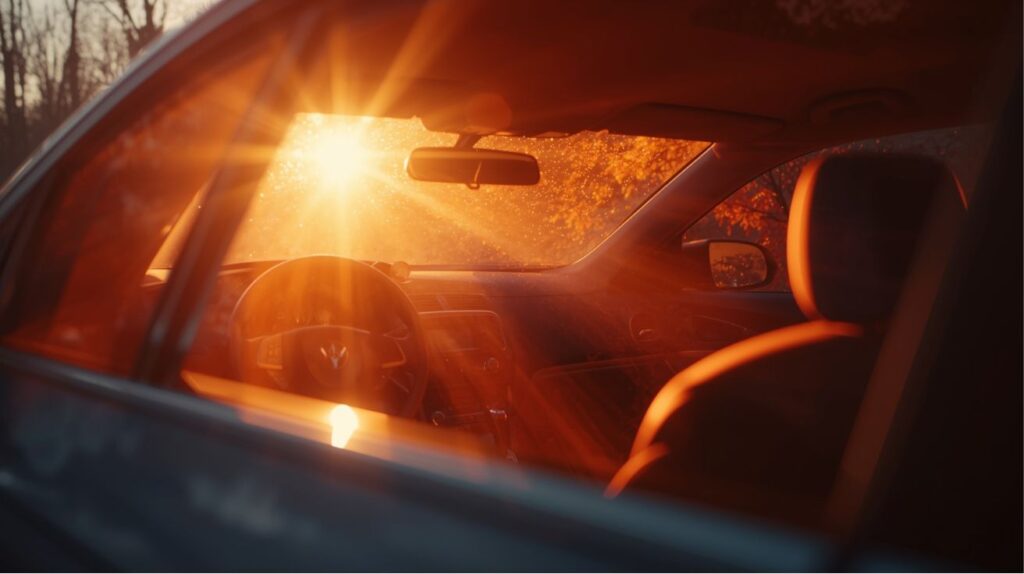
The main reason a car’s interior gets so hot is the greenhouse effect. Shortwave solar radiation passes through windows, heating surfaces that then re-emit longwave infrared energy.
Since glass traps this heat, it leads to a cycle of heat accumulation, causing rapid temperature increases inside the cabin.
3.The Role of UV Radiation and Glass
While sunlight heats the cabin, UV rays add extra heat and damage. UV penetrates glass, degrading fabric and plastics over time.
Standard auto glass blocks some UV, but not all. Laminated or tinted glass reflects more radiation, helping to slow temperature rise and protect against long-term sun damage.
4.Difference Between Dark vs Light Interiors
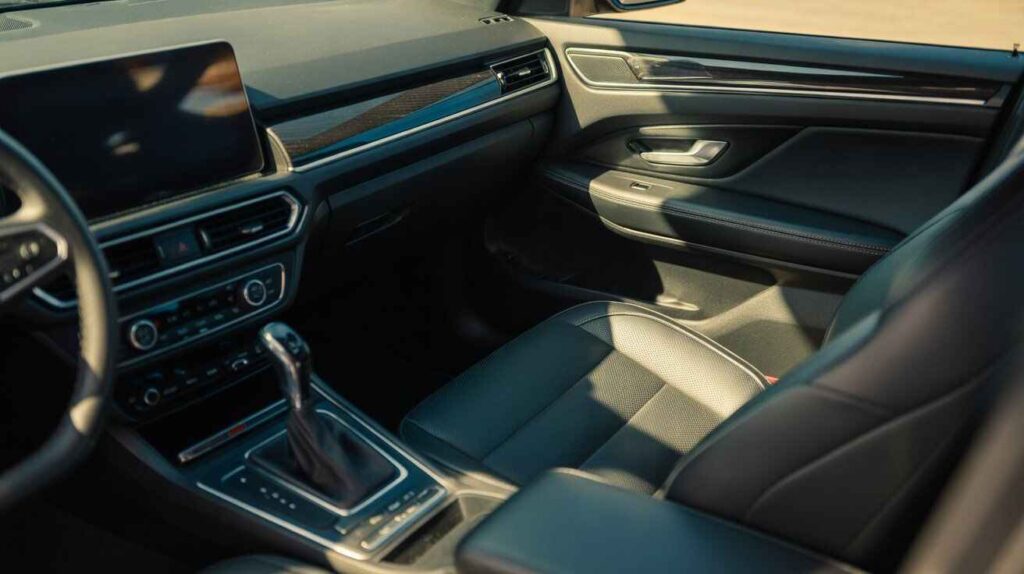
Interior color greatly affects cabin temperature. Dark surfaces absorb more solar energy, while lighter colors reflect sunlight and stay cooler. Black leather seats can reach 10–15°F hotter than light-colored fabric under the same conditions.
Choosing lighter interiors reduces heat absorption and improves passenger comfort.
How Fast Temperatures Rise Inside a Parked Car
Heat builds up inside a car much faster than most people think. On an 85°F day, research shows a parked car’s interior can exceed 100°F in just 10 minutes. After 30 minutes, the cabin may hit 120°F, and within an hour it can climb past 130°F.
This rise isn’t limited to hot weather. Even on a mild 70°F day, the greenhouse effect pushes cabin temperatures past 100°F in under an hour. Children, pets, and vulnerable adults are especially at risk since their bodies overheat more quickly.
Never leave anyone inside a parked car, not even for a short time. Closing all windows accelerates the process, and cracking them open only slows it slightly.
Factors Contributing to Why the Inside of the Car Is So Hot
1.Weather Conditions
Outside temperature is the most obvious factor—the hotter the day, the higher the baseline for cabin heat. Humidity also plays a hidden role. Moist air traps heat longer, making the car feel sticky and suffocating even if the thermometer doesn’t show extreme numbers.
2.Vehicle Design Features
Different vehicles respond differently to the sun. Sedans, SUVs, and trucks have varying cabin sizes and airflow patterns. Larger cabins may take longer to heat, but they still reach dangerous levels.
Windows are another key factor. Bigger glass areas let in more sunlight. Untreated windows allow more heat and UV radiation, while tinted or laminated glass blocks part of it. This is why reflective tints and glass treatments are popular in hot climates.
3.Parking Habits and Location
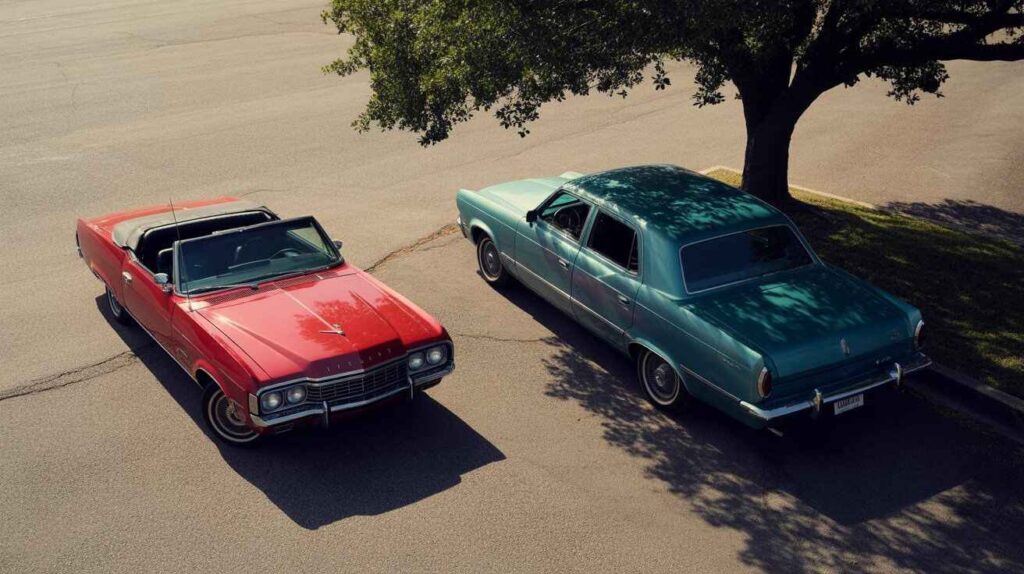
A car left in direct sunlight absorbs far more heat than one in the shade. Parking under a tree or in a garage can lower temperatures by 20°F or more.
Urban drivers face an additional challenge the heat island effect. Concrete, asphalt, and buildings trap and radiate heat, making cars on city streets heat up much faster than those in rural or suburban areas.
Dangers of a Hot Car Interior
A hot car interior poses serious risks. Children and pets can suffer heatstroke within minutes, while adults may experience dehydration, dizziness, or impaired focus.
Vehicles also take damage UV rays crack dashboards, fade upholstery, and weaken plastics, while heat degrades electronics, batteries, and leather seats. These dangers highlight the need to keep cars cooler and protected from the sun.
How to Keep Your Car Cooler
Preemptive Measures
Prevention is key. Use sunshades or window coverings to block direct sunlight and lower dashboard temperatures. Whenever possible, park in shade or a garage even under a tree or canopy makes a noticeable difference.
Ventilation Techniques
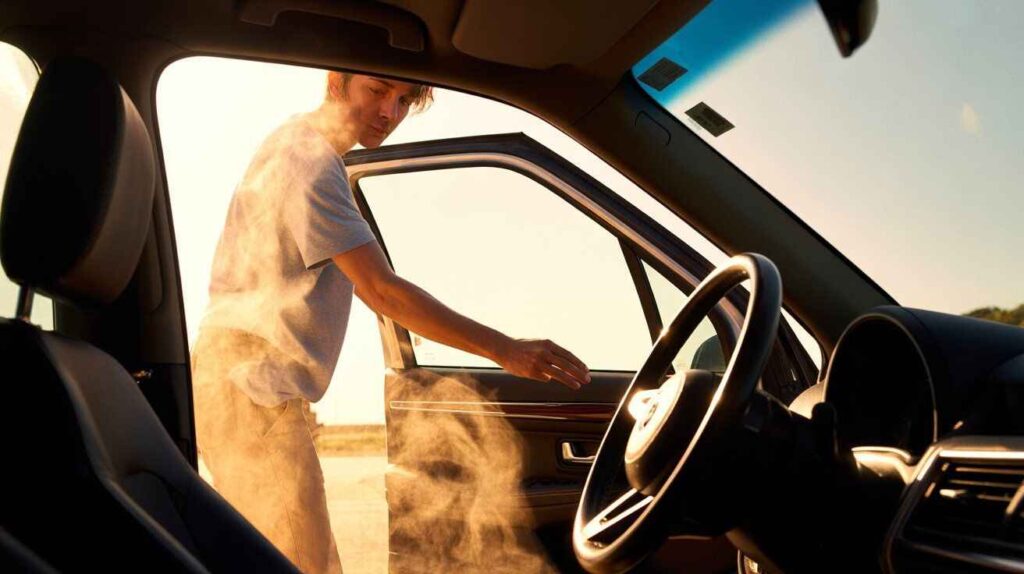
Cracking the windows slightly can help air circulate, but it’s not enough on its own. To cool faster, open the doors briefly before turning on the A/C. Start with the “fresh air” setting instead of recirculation to clear hot air more efficiently.
Modifications and Accessories
For stronger protection, install reflective tints or UV-blocking films to cut solar gain and prevent fading. Cooling seat covers, portable fans, or ventilated seats add comfort, while a remote start system can pre-cool the cabin in hot climates.
FAQs
Q1: Does the color of the car interior really matter?
Yes. Dark interiors absorb more heat than light ones.
Q2:What accessories work best to keep cars cool?
Sunshades, reflective window tints, cooling seat covers, and portable fans
Q3:Why is the inside of the car so hot even when it’s not that warm outside?
Even on mild days, the greenhouse effect traps heat inside. Glass lets sunlight in but blocks infrared radiation from escaping.