The car can feel sluggish when you accelerate if the engine isn’t getting enough air, fuel, or spark. Problems like a dirty air filter, clogged fuel filter, worn spark plugs, or failing sensors can slow it down. Sometimes the transmission or poor-quality fuel is the real issue.
Why Your Car Feels Sluggish When You Accelerate
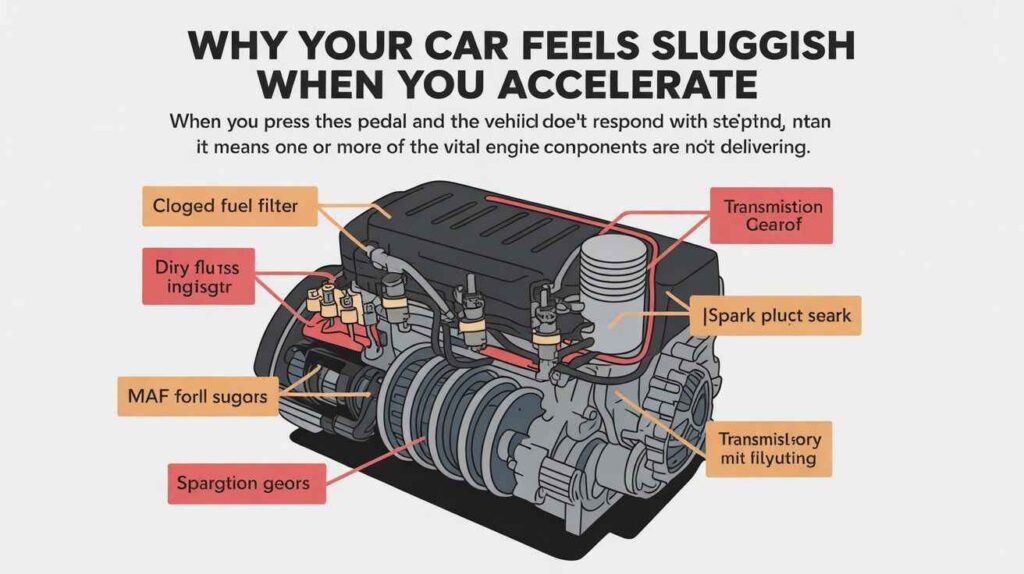
When you press the gas pedal and the vehicle doesn’t respond with strong speed, it means one or more of the vital engine components are not delivering — either not enough fuel, not enough air, or not enough spark/timing.
Things like a clogged fuel filter, dirty MAF sensor, ignition misfires, or slipping transmission all show up as sluggish acceleration or loss of power when accelerating.
Slow Acceleration Symptoms: Gradual vs Sudden Hesitation
Gradual sluggishness often means wear-and-tear: a dirty air filter, fuel injector build-up, or aging spark plugs.
Sudden hesitation or power loss usually points to a sharper fault: failing fuel pump, turbocharger boost loss, or transmission gear slip.

12 Most Common Causes for Slow Acceleration
1.Clogged Fuel Filter or Failing Fuel Pump
When the fuel filter is restricted, or the fuel pump can’t keep up, your engine doesn’t get the proper fuel flow under acceleration.
This leads to car losing power when accelerating and can feel like a throttle delay even though you’re pressing the pedal.
2.Dirty or Failing MAF Sensor
A dirty mass air flow (MAF) sensor or inaccurate intake metering disrupts the precise air-fuel mix the ECU expects. A poor throttle response car often traces back to this kind of sensor fault.
3.Worn Spark Plugs / Ignition Coil Failure
Old or fouled plugs, or bad ignition coils cause misfires under load. If the engine misfires when accelerating, you’ll feel that sluggishness or hesitation.
4.Catalytic Converter Blockage / Exhaust Restriction
A blocked converter or damaged exhaust system builds back-pressure that chokes the engine’s output. Sluggish acceleration uphill. This could be a major culprit.
5.Faulty Oxygen Sensor / Other Engine Sensors
If the oxygen (O2) sensor or throttle position sensor (TPS) sends bad data, the ECU will mis-adjust fuel or ignition timing. This can make your car feel weak when accelerating.
6.Dirty Air Filter or Intake Air Leak
Reduced airflow through a clogged engine air filter or an intake hose leak throws off the combustion process and results in a car sluggish when accelerating scenario.
7.Transmission Slipping or Torque Converter Issues
Even if the engine is fine, a slipping transmission or failing torque converter can interrupt the power delivery, making it feel like the engine is weak but really the drivetrain is at fault.
8.Turbocharger or Boost System Failure
In turbo diesel or petrol vehicles, a loss of boost (e.g., leaking intercooler, failing turbo) means less torque under load and thus sluggish acceleration.
9.Fuel Injector Clogging
Clogged injectors spray unevenly and cause lean/rich spots during load—leading to power drops when accelerating.
10.Timing Belt/Chain & Compression Problems
If timing is off or cylinder compression is weak, engine output drops noticeably, especially when you press the gas for full acceleration.
11.ECU Limp Mode or Software Issues
The engine control unit (ECU) may force the vehicle into limp mode if it detects a fault; this significantly reduces power delivery and is a classic why is my car sluggish when I accelerate symptom.
12.Extra Load & Poor Fuel Quality
Heavy electrical load, running AC hard, or using contaminated/low-quality fuel can all contribute to your car not accelerating like before.
Diagnosis Checklist for Sluggish When Accelerate
| Professional Test | Quick Purpose |
|---|---|
| OBD-II Scan | Pinpoints sensor and engine errors. |
| Fuel Pressure Test | Confirms fuel delivery issues. |
| MAF Sensor Readings | Detects airflow measurement faults. |
| Compression Test | Checks internal engine health. |
| Smoke Test | Finds hidden vacuum leaks. |
| Backpressure Test | Identifies catalytic converter blockages. |
Solutions To Improve Acceleration
Routine Maintenance
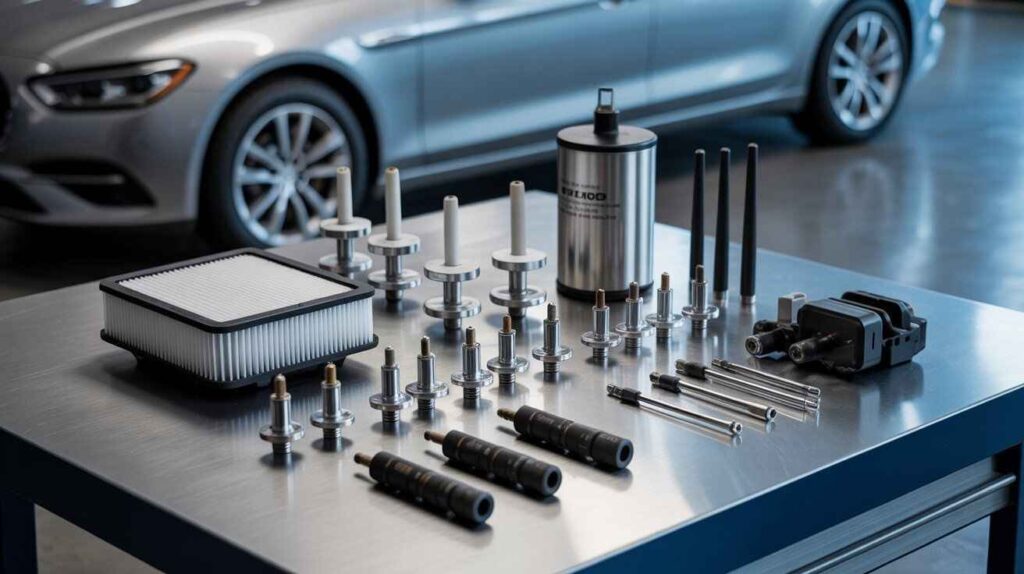
Replace the air filter, fuel filter, spark plugs, and ignition coils as per manufacturer. Schedule servicing every 15,000–30,000 km or as advised for your region.
Upgrading Components
After checking stock components, consider performance upgrades like a more efficient air intake, better ignition coils, or performance exhaust—but ensure compatibility and legal compliance.
Driving Habits
Acceleration is affected by your driving style. Avoid lugging the engine (too low gear), heavy loads, cold intercepts, and always warm the engine before full throttle. Proper gear selection and throttle input matter.
Quick Fixes That Often Help Right Away
| Quick Fix | Quick Benefit |
|---|---|
| Replace air filter | Better airflow, quicker response. |
| Clean MAF sensor | More accurate throttle input. |
| Swap spark plugs | Stronger engine power. |
| Fuel system cleaner | Smoother fuel delivery. |
| Replace fuel filter | Proper fuel flow. |
| Reset ECU | Restores optimal settings. |
Preventative Measures To Avoid Sluggish Acceleration
Regular Checks
Periodically inspect and replace your fuel filter, engine air filter, and check for intake leaks. Doing so prevents the engine feels weak when accelerating scenario from becoming chronic.
Keeping Software Updated
Modern vehicles rely on ECU software. Manufacturers release updates to fix issues like delayed throttle response or erroneous limp mode triggers. Ensure your vehicle is up to date.
FAQs
Q1: Can low-quality fuel cause slow acceleration?
Yes. Contaminated fuel reduces engine performance and can clog injectors, causing hesitation and weak throttle response.
Q2: Is slow acceleration dangerous?
It can be. Sluggish acceleration when merging or overtaking increases safety risks, so timely diagnosis matters.
Q3: Can a bad catalytic converter cause my car to struggle when accelerating?
A blocked catalytic converter increases exhaust backpressure, choking the engine and making the car feel slow or shaky.