A gurgling noise from your car usually means air bubbles in the cooling system, low coolant, or overheating. It can also indicate a clogged radiator, failing water pump, or head gasket issue.
Why Is My Car Making a Gurgling Noise?
When drivers ask, “why is my car making a gurgling noise?” A gurgling sound usually means air and liquid are mixing where they shouldn’t. The cooling system is the main suspect — low coolant, trapped air in the heater core, a weak radiator cap, stuck thermostat, or even a blown head gasket.
Check your coolant level, temperature gauge, and watch for antifreeze smells to see if it’s a minor issue or a serious repair.
3-Step Checklist
| Step | Check | Main Points |
|---|---|---|
| 1 | Listen for location | Heater core (under dash), radiator/hoses (engine bay), muffler (tailpipe condensation) |
| 2 | Coolant & pressure | Low coolant level, faulty radiator cap (cracks, rust, weak spring) |
| 3 | Warning signs | Overheating, cabin heat issues, white smoke, coolant leaks, milky oil → possible head gasket |
Diagnosing the Gurgling Noise
1.Visual Inspection in the Engine Bay
Look for wet hoses, dried coolant stains, or corrosion around the radiator. Even small leaks can cause air entry and gurgling.
2.Listening Techniques
Differentiate between gurgling, clicking, or knocking. Bubbling usually links to coolant movement, while clicking often points to valve train issues.
3.Professional Diagnosis
Mechanics can pressure-test the cooling system, run combustion-gas tests, and check for internal leaks. Share when the noise occurs (idle, acceleration, after shutoff) to guide their inspection.
Most Common Causes of a Car Making a Gurgling Noise
Most gurgling noises are cooling system issues, but exhaust condensation and rare fuel/oil/PCV problems are also possible.
1.Air Trapped in the Cooling System / Heater-Core Gurgle
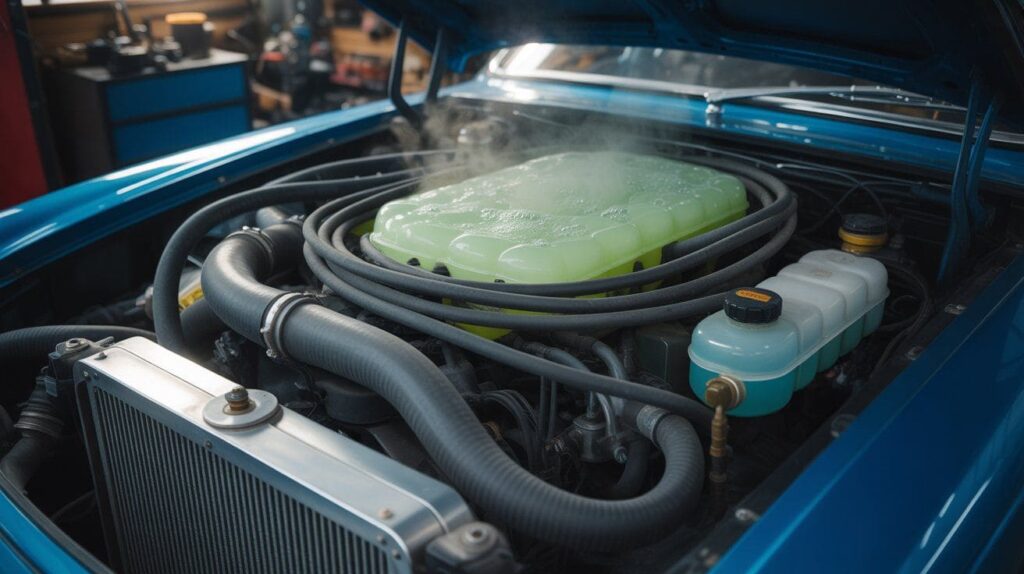
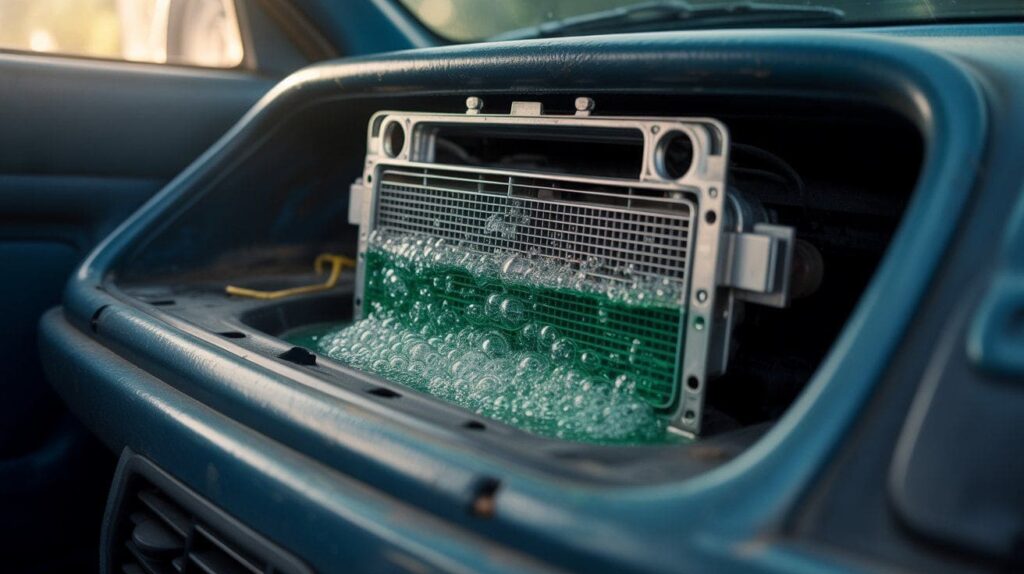
One of the most common causes of gurgling is air trapped in the heater core. The heater core circulates hot coolant, and when air bubbles pass through, they create a gurgling noise under the dash.
This often happens after a coolant refill without proper bleeding, a small leak, or a weak radiator cap pulling in air. Symptoms include:
- Inconsistent cabin heat (warm → cool)
- Temperature gauge spikes
- Coolant loss with no visible leak
Ignoring trapped air can cause engine hotspots, overheating, and head gasket damage.
2.Low Coolant, Leaks, or a Failing Radiator Cap
A common cause of gurgling is low coolant, which lets air pockets move through hoses and the radiator, creating bubbling sounds. Small leaks may show as damp spots under the car, white residue on hoses, or the sweet smell of antifreeze.
A worn radiator cap can also cause gurgling. The cap holds system pressure; if the spring weakens or the seal cracks, coolant can boil and bubble, leading to overflow or frequent top-offs.
Ignoring these issues risks overheating and head gasket failure. Always check coolant levels, inspect hoses, and replace a faulty radiator cap—a cheap fix that often stops the noise instantly.
3.Thermostat Stuck or Cooling Flow Restriction
A stuck thermostat blocks coolant flow, causing hot spots, boiling, and gurgling noises from the radiator or hoses. Signs include temperature spikes and a heater blowing cold air even when the engine is hot.
Sometimes, sludge or mineral buildup also restricts coolant flow, leading to the same bubbling sounds. If the upper radiator hose stays cool while the engine overheats, the thermostat is stuck closed.
4.Blown Head Gasket / Combustion Gases in Coolant
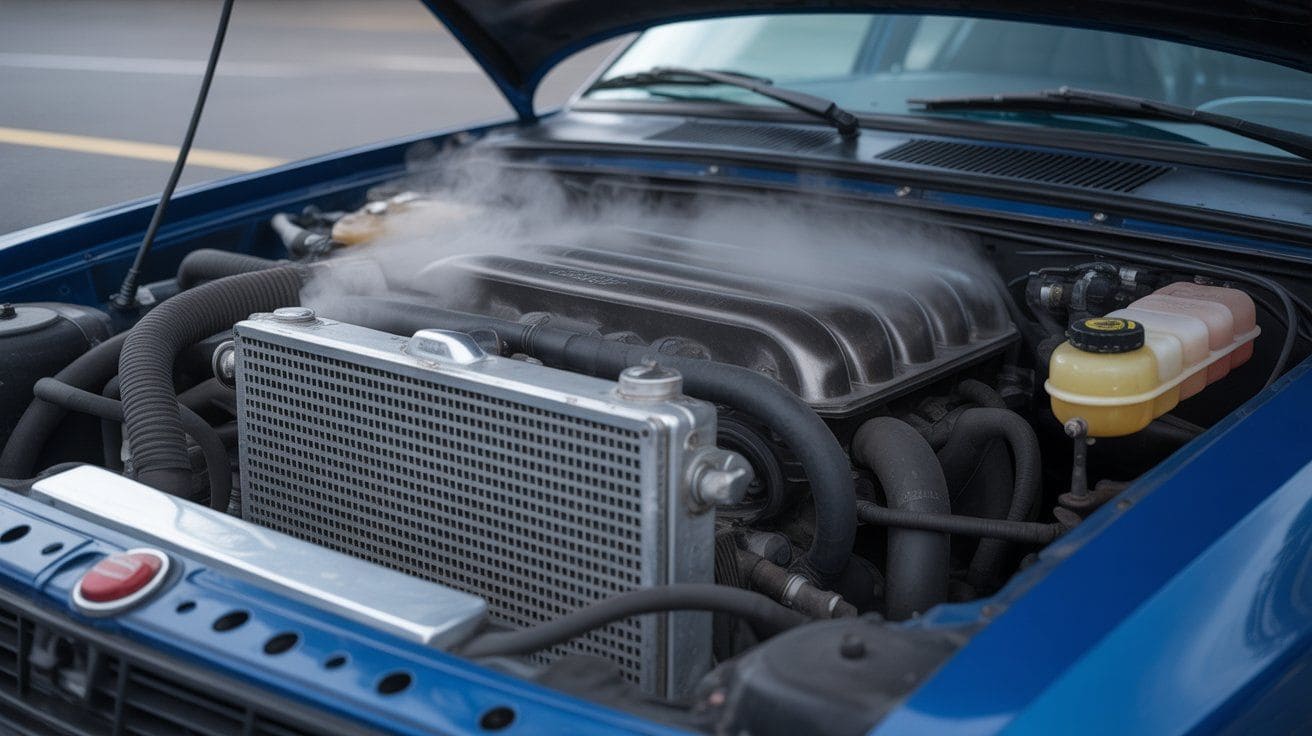
A blown head gasket can push combustion gases into the cooling system, creating bubbles and gurgling in the radiator or reservoir.
Warning signs: white exhaust smoke, milky oil, rapid coolant loss, sweet odor from tailpipe, temperature spikes, or misfires on startup. This issue is serious—driving can lead to warped heads or engine failure.
5.Water or Condensation in Exhaust / Muffler
Not all gurgling sounds are serious. Often, it’s water condensation in the exhaust or muffler. This occurs when a cold engine produces moisture that sloshes as gases move through the system.
Signs it’s harmless:
- Noise comes from the tailpipe, not under the hood
- Coolant levels remain steady
- No overheating or engine issues
- Disappears once the car warms up
This is common on short trips and usually requires no repair.
6.PCV, Oil, or Fuel-Delivery Oddities
Sometimes gurgling comes from overfilled oil, a clogged PCV valve, or irregular fuel delivery, not the cooling system or exhaust. Symptoms include rough idling, loss of power, or a check-engine light.
Use an OBD-II scan—codes for fuel trim or emissions often indicate PCV or injector issues. These causes are less common but important if coolant and exhaust checks are normal and the gurgling persists.
Potential Solutions
DIY Fixes and Maintenance
Keep coolant at the correct level, inspect hoses regularly, and bleed the system after any repair.
Professional Repairs
If the thermostat, heater core, or head gasket fails, professional repair is necessary. Thermostat replacement usually costs under $200, while a heater core may run $500–$900. A head gasket job is far more expensive — often $1,200–$2,000 — but essential to prevent engine loss.
Preventive Measures to Avoid Future Gurgling
Follow these methods to avoid future problems.
1.Routine Maintenance and Fluid Checks
Follow manufacturer schedules for coolant flushes and inspections. Also, replace worn hoses and clamps before they cause problems.
2.Monitoring Coolant Levels Safely
Check coolant regularly with the engine cold. Rapid drops mean a leak. Keep a spare coolant bottle in your car for emergencies.
3.Knowing Your Vehicle’s Normal Sounds
Every car has quirks. Learn what’s normal so you can quickly spot new noises. Record or note unusual sounds to discuss with your mechanic.
FAQs
Q1: Why is my car making a gurgling noise when I start it?
Often trapped air in the cooling system or harmless exhaust condensation.
Q2: Can low coolant cause a gurgling sound?
Yes. Low coolant creates air pockets that gurgle through the heater core or hoses.
Q3: Is it safe to drive with a gurgling noise in my car?
Not if there’s overheating, smoke, or coolant loss. If none are present, monitor closely.