The car may be knocking when you drive due to issues like low-quality fuel, worn spark plugs, carbon buildup, or low engine oil. These problems cause irregular combustion or poor lubrication inside the engine.
Why Is My Car Knocking While Driving?
A knocking or pinging sound can come from your engine, suspension, or exhaust, and each cause tells a slightly different story.
Understanding Why Is My Car Knocking While Driving? helps you take quick action, prevent expensive repairs, and keep your engine running smoothly for years to come.
What Does Knocking Mean in a Car?
When drivers talk about engine knocking, they usually mean a metallic “ping” or “tapping” noise that appears when accelerating.
Inside the engine, this happens when air–fuel mixture ignites too early, a problem known as pre-ignition or detonation knocking. It can also come from low-octane fuel, carbon buildup, or incorrect ignition timing.
But not every knock is internal, some come from worn suspension joints, loose engine mounts, or damaged exhaust components.
How to Check Car Knocking While Driving
| Step | What to Check |
|---|---|
| 1. Listen while driving | Note when the knocking happens — during acceleration, idle, turning, or over bumps. |
| 2. Check engine oil | Use the dipstick after the engine cools; check oil level, color, and consistency. |
| 3. Inspect fuel and octane | Review where you refueled, the fuel grade used, and whether knocking began after refueling. |
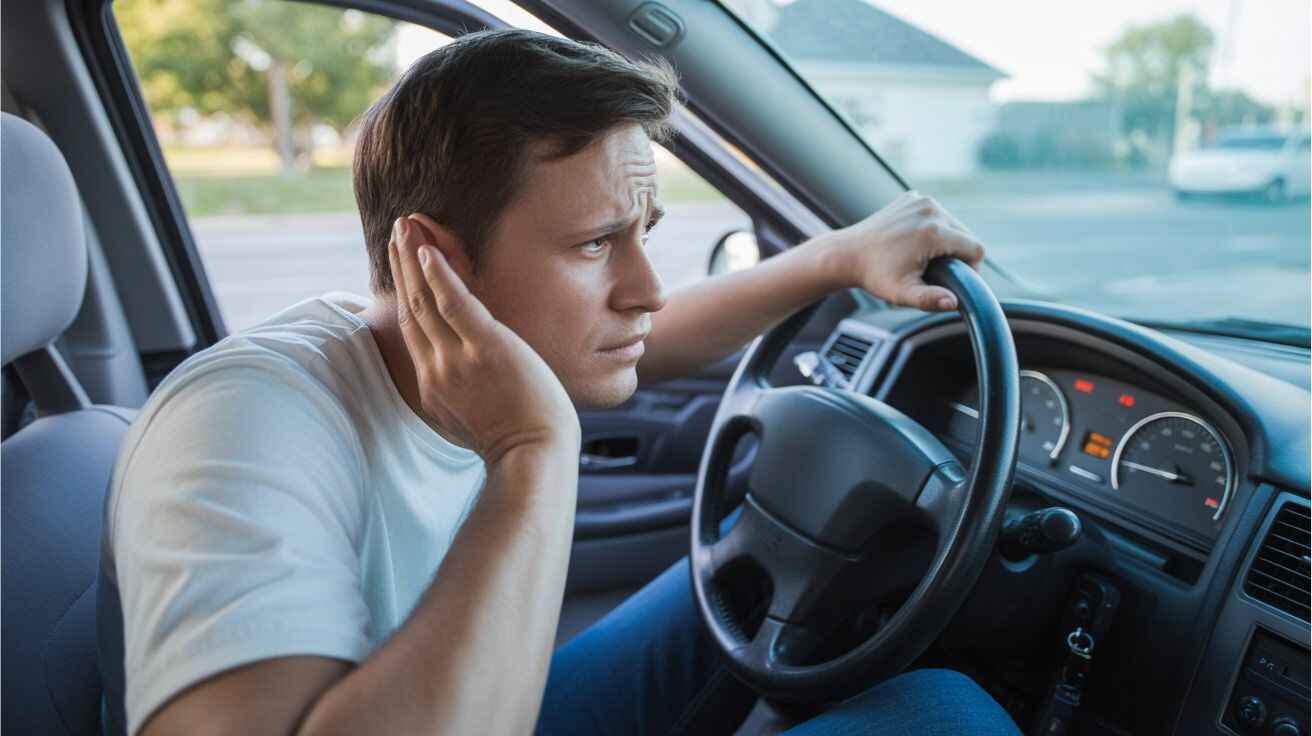
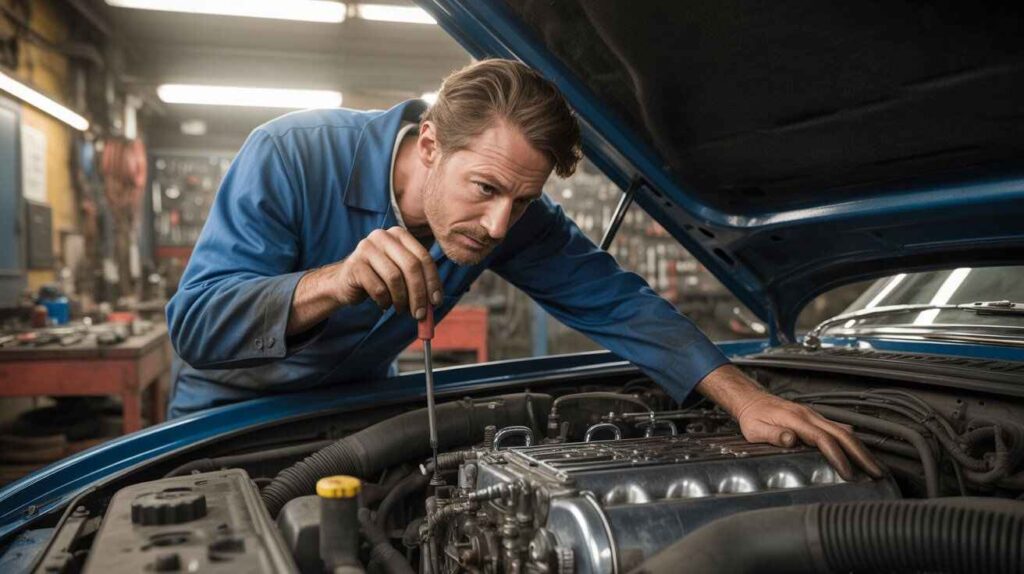
| 4. Listen under the hood | Use a mechanic’s stethoscope or a long screwdriver to localize the sound. |
| 5. Check spark plugs & ignition | Remove and inspect spark plugs and ignition coils for wear, fouling, or carbon buildup. |
| 6. Scan for diagnostic codes | Use an OBD-II scanner to detect issues like knock sensor or misfire codes. |
| 7. Inspect suspension & exhaust | Check for loose or damaged components such as mounts, joints, and hangers. |
| 8. Retest after small fixes | After basic checks, test drive carefully to see if knocking persists or changes. |
Common Causes of Knocking While Driving
1. Low-Octane or Bad Fuel
Using fuel with an octane rating too low for your car can cause engine knocking under load. The lower the octane, the earlier combustion can start, leading to that metallic sound.
Try filling up with premium fuel for a few tanks and see if it improves.
2. Carbon Buildup & Hot Spots
Over time, carbon deposits form on pistons and valves, raising compression and creating hot spots that ignite fuel prematurely.
Regular use of a fuel system cleaner or professional intake service helps remove buildup and restore smooth combustion.
3. Ignition or Spark Plug Problems
Worn plugs or bad ignition coils can cause misfires that sound like knocking. If your car idles roughly or hesitates when accelerating, inspect or replace plugs.
4. Low Oil Pressure or Worn Bearings
Low oil levels or thin oil reduce lubrication, leading to metallic tapping or deeper rod knock. Check your oil immediately if the sound gets louder with RPM.
5. Suspension or Exhaust Issues
A knocking sound under the car when driving over bumps or turns often comes from worn struts, CV joints, or exhaust hangers rather than the engine itself.
How to Fix Car Knocking When Driving
- To fix car knocking, start by refueling with high-octane gas and adding a fuel system cleaner to remove carbon buildup.
- Check and replace spark plugs if they’re worn, and ensure your engine oil is clean and at the proper level.
- Use an OBD-II scanner to check for a bad knock sensor or ignition issues.
- If the knocking deepens or speeds up with engine RPM, stop driving and see a mechanic immediately.
- Regular oil changes, quality fuel, and timely tune-ups help prevent knocking in the future.
Preventive Measures to Avoid Future Knocking
- Maintain Good Fuel Quality
- Use the recommended octane level for your car.
- Avoid cheap or unreliable gas stations with poor storage conditions.
- Add a fuel system cleaner every few months to prevent carbon buildup.
- Keep Up with Oil Changes
- Change engine oil and filter at regular intervals.
- Always use the correct viscosity recommended by your manufacturer.
- Check oil level and quality every 1,000 miles or before long trips.
- Schedule Regular Tune-Ups
- Replace spark plugs, coils, and air filters as per the maintenance schedule.
- Have your mechanic clean intake valves to prevent carbon deposits.
- Maintain the Cooling System
- Keep your coolant topped up and ensure there are no leaks.
- Regularly inspect the radiator, hoses, and thermostat for proper function.
- Avoid engine overheating, which can cause pre-ignition and knocking.
- Practice Good Driving Habits
- Avoid driving in high gear at low RPM (engine lugging).
- Don’t accelerate hard when the engine is cold.
- Drive smoothly and accelerate gradually to reduce engine stress and prevent knocking.
FAQs
Q1: Is it safe to drive a car that’s knocking?
Light pinging from fuel can be manageable short-term, but heavy engine knock requires immediate attention.
Q2: Can bad gas cause knocking?
Yes. Poor-quality or low-octane fuel triggers pre-ignition and engine pinging.
Q3: What’s the difference between pinging and rod knock?
Pinging is light and rapid; rod knock is deep and rhythmic, often matching engine speed.