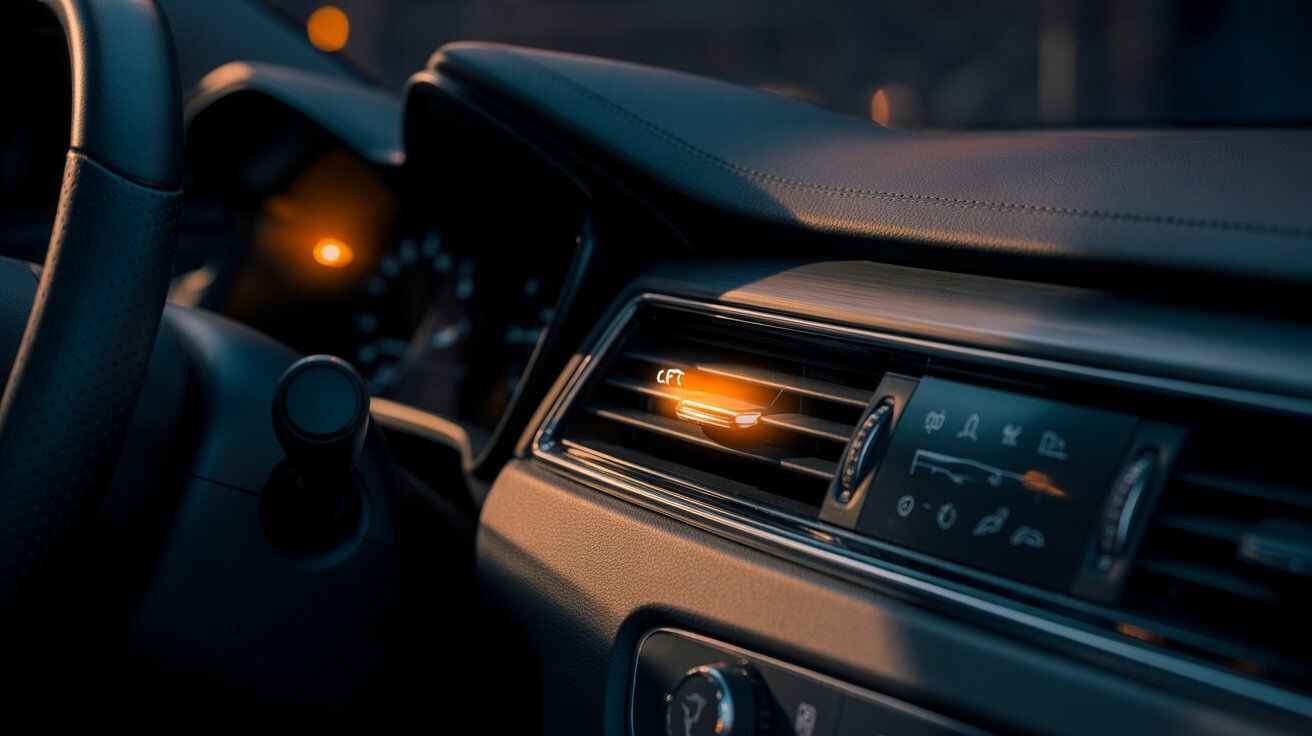
Car AC light blinks because of a system fault such as low refrigerant, compressor, or electrical issue, or safety lockout. It’s a warning that the AC isn’t working properly and needs inspection.
Why is my car AC light blinking
If you’ve ever wondered, “why is my car AC light blinking?” you’re not alone. That flashing light is your car’s AC light is blinking, it means the system has detected a fault and may shut down to prevent damage. Ignoring it can lead to warm air or costly repairs. Most issues are easy to spot and fix , this guide covers common causes, diagnosis, repair costs, and prevention.
Common Causes of a Blinking AC Light
1.Low Refrigerant Levels
Refrigerant absorbs heat inside your car and releases it outside. When levels drop, your AC can’t blow cold air. Modern cars detect low system pressure, which makes the AC light blink.
Signs include weak airflow, warm air, hissing noises, or frost on AC lines. Leaks from hoses, seals, or the condenser are common. Running the AC like this stresses the compressor and shortens its lifespan.
2.Faulty Pressure Switch
The pressure switch keeps refrigerant pressure safe. If it fails, it may send wrong signals, causing the AC light to flash. Symptoms include the AC cycling on and off or not engaging at all, even if refrigerant is fine.
3.Electrical Issues
Your AC depends on relays, fuses, and wiring. A blown fuse, corroded connection, or bad relay can break the circuit and trigger a blinking AC light.
Signs include intermittent cooling, sudden shutdowns, or the compressor clutch not engaging. These faults can be sporadic and tricky to trace.

4.Compressor Problems
The compressor is the heart of the AC system, moving refrigerant through the lines. If the clutch doesn’t engage or the compressor seizes, the AC light blinks.
Costs vary: clutch replacement is a few hundred dollars, while a full compressor swap costs $800–$1,200+. Fixing issues early helps avoid expensive repairs.
5.AC Control Module Issues
The AC control module (amplifier) is the “brain” of the climate system, regulating signals between sensors, the compressor, and electrical parts. If it malfunctions, it may misread inputs or fail to activate the compressor, causing a blinking AC light.
Symptoms:
- Complete loss of cooling
- Inconsistent cooling
- AC turning on and off randomly
Steps to Diagnose a Blinking AC Light
- Visual Inspection
- Look for refrigerant leaks (oily residue on hoses or the condenser).
- Check the AC fuse, relay, and wiring for damage or corrosion.
- Watch the compressor clutch — if it doesn’t engage, it may signal electrical or compressor issues.
- Use Diagnostic Tools
- Connect an OBD-II scanner to read error codes from the HVAC module.
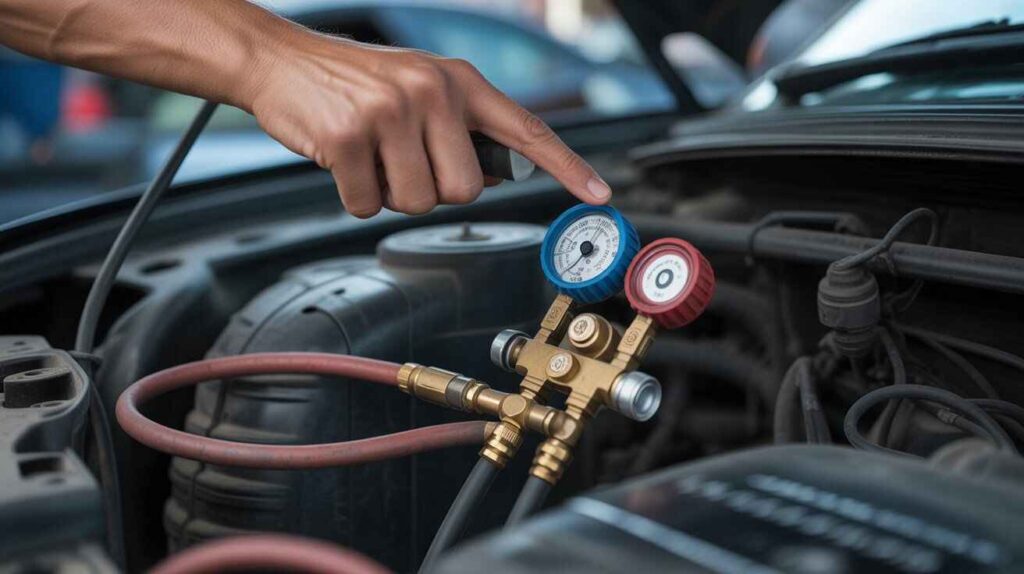
- Attach pressure gauges to confirm refrigerant levels are within the normal range.
- Seek Professional Help
- If refrigerant is low but you can’t locate the leak.
- If electrical faults are too complex to trace.
- Mechanics have specialized tools for leak detection, electrical testing, and compressor diagnostics, ensuring accurate repairs.

Solution & Fixes
DIY Solutions
Some issues can be fixed at home. If refrigerant is low, a recharge kit may restore cooling, but it’s only temporary without fixing leaks. You can also tighten electrical connectors, replace blown fuses, clean the condenser, and change the cabin air filter regularly. Running the AC for a few minutes every couple of weeks — even in winter — helps keep seals lubricated.
Professional Assistance
If the AC light keeps blinking after basic checks, see a mechanic. Professionals can detect leaks, test the compressor, and check the control module. Typical costs: recharge $150–$300, pressure switch $100–$250, compressor $800–$1,200+. While repairs may be pricey, proper diagnosis prevents wasted money and keeps your AC running efficiently.
Repair & Cost Estimates
| Repair Type | Description | Estimated Cost (USD) |
|---|---|---|
| Refrigerant Recharge & Leak Repair | Restores cooling efficiency, includes checking for leaks | $150 – $300 |
| Pressure Switch Replacement | Fixes faulty readings that cut off compressor operation | $100 – $250 |
| Sensor or Relay Replacement | Resolves electrical interruptions in the AC system | $100 – $250 |
| Compressor Clutch Repair | Repairs or replaces clutch that engages compressor | $300 – $600 |
| Full Compressor Replacement | Required if the compressor seizes or fails internally | $800 – $1,200+ |
| AC Control Module Replacement | Fixes faulty module miscommunication with sensors | $500 – $1,000+ |
Model-Specific Triggers
Some cars are designed to make the AC light blink when safety overrides activate. For example, certain Toyota and Tacoma models use a compressor lock sensor. If it detects a mismatch between engine RPM and compressor RPM, it forces the light to blink and shuts down the AC to prevent damage. Other brands have similar features, though details vary. If this happens on your vehicle, check the owner’s manual or consult a mechanic familiar with your model’s HVAC system.
Step-by-Step Preventive Maintenance
- Schedule Regular AC Checkups
Have your air conditioning system inspected before the hot season. A quick check can catch small leaks or worn parts early. - Replace the Cabin Air Filter
A clogged filter restricts airflow and makes the AC work harder. Swap it out as recommended in your owner’s manual. - Inspect Belts and Hoses
Look for cracks, wear, or looseness. Healthy belts and hoses keep refrigerant and airflow moving smoothly. - Clean the Condenser
Remove leaves, dirt, and debris around the condenser to ensure steady airflow and reduce strain on the system. - Run the AC Year-Round
Even in winter, switch the AC on for a few minutes each week. This keeps seals lubricated and prevents refrigerant leaks.
FAQs
Q1: Can low refrigerant cause my AC light to blink?
Yes. Low refrigerant drops system pressure, and the car disables the compressor to prevent damage.
Q2: Is it safe to drive with a blinking AC light?
Yes, but your AC won’t cool effectively. Long-term, ignoring it can harm the compressor.
Q3:Why is my car AC light blinking only sometimes?
This usually indicates an intermittent electrical connection or fluctuating refrigerant pressure.