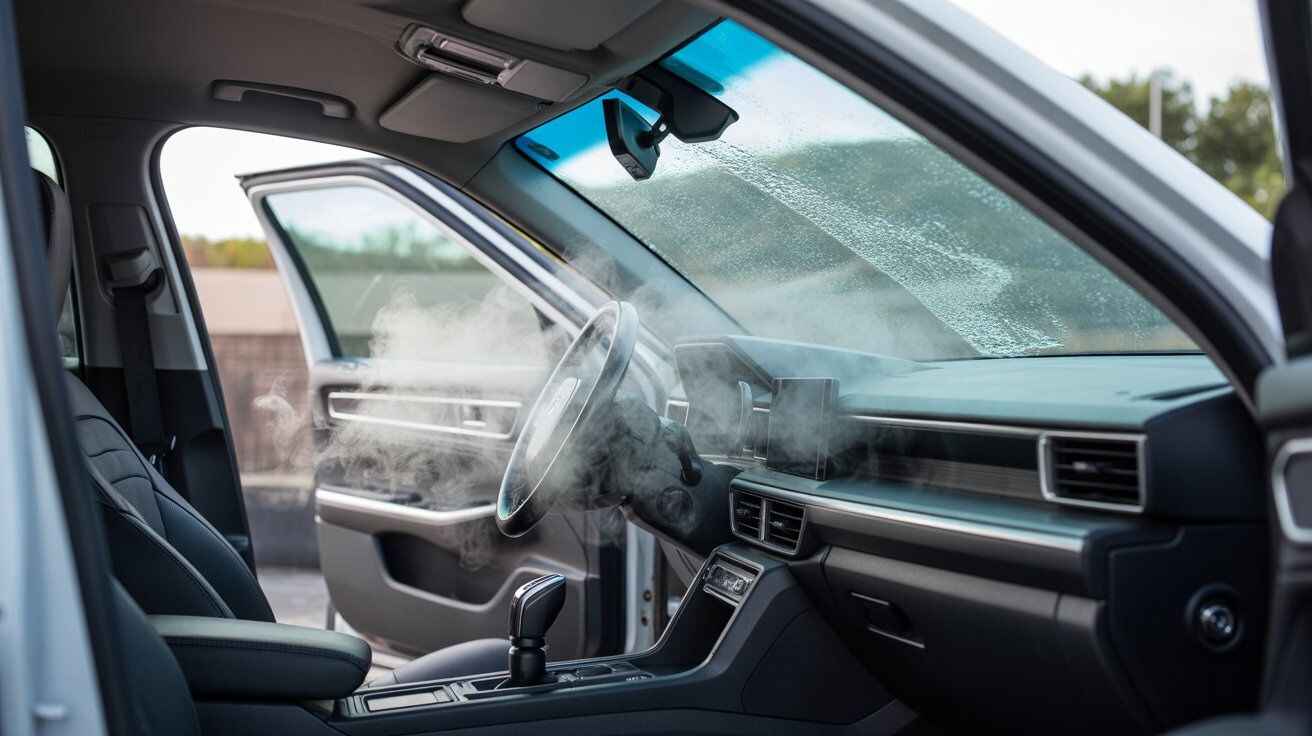
Car AC may blow smoke due to harmless condensation, but it can also signal serious issues like a clogged drain, heater core leak, electrical burning, or compressor problems.
Why Is My Car AC Blowing Smoke
If you’ve ever asked yourself why is my car AC blowing smoke, it may actually be harmless white fog from condensation when humid air hits the cold evaporator. However, if it’s real smoke, it could mean a clogged evaporator drain, a leaking heater core, or damaged wiring.
What Does Smoke from Car AC Vents Look and Smell Like?
When your car AC blows white fog with no smell, it’s usually harmless condensation, common in humid weather or after rain. But if the “smoke” has a sweet odor, it may signal a heater core leak with coolant vapor.
An acrid, burning plastic smell often points to electrical issues like a failing blower motor resistor or shorted wiring. Always note both appearance and odor to know if it’s normal vapor or a serious problem needing urgent repair.
Step-by-Step Diagnosis of Car AC Smoke
| Step | What to Check | What It Means | Possible Cause(s) |
|---|---|---|---|
| 1 | Look at color and smell of smoke | – Odorless white fog→ normal condensation – Sweet smell → coolant issue – Acrid/burnt smell → electrical problem | Condensation, heater core leak, wiring/electrical burning |
| 2 | Inspect floor mats | Damp passenger carpet indicates moisture leak | Clogged evaporator drain or heater core leak |
| 3 | Check coolant level | Low coolant + smoke from vents | Heater core leak |
| 4 | Look under the car | No water dripping when AC runs | Clogged evaporator drain |
| 5 | Observe AC performance | Weak cooling or strange noises with smoke | Low refrigerant, compressor failure |
| 6 | Check electrical behavior | Blower fan cuts out, fuses blowing, smoke with burnt odor | Electrical short, blower motor or resistor overheating |
Common Causes of Car AC Blowing Smoke
1.Condensation / Humidity
The most harmless cause of AC “smoke” is condensation. When humid air hits the cold evaporator, tiny water droplets form and blow out as mist.
This is common after rain or on humid days. It has no smell, is harmless, and disappears quickly. Using recirculation mode, keeping the cabin filter clean, or cracking a window can reduce this effect.
2.Clogged Evaporator Drain
A clogged evaporator drain traps water inside the HVAC box instead of letting it drip under the car. This water turns into vapor that looks like smoke.
Signs include damp carpets, musty smells, or no water puddle under the car when AC runs. Cleaning or unclogging the drain usually fixes it.
3.Leaking Heater Core / Coolant
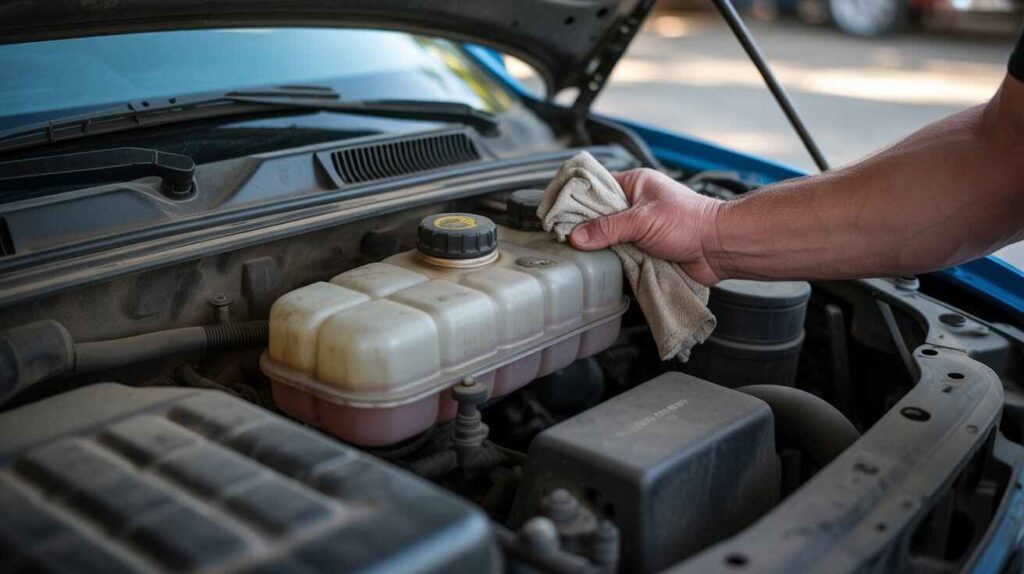
A heater core leak is a serious issue. Coolant can vaporize inside the HVAC system, producing white smoke with a sweet smell.
Other signs include greasy window film, low coolant, and wet passenger carpet. This is dangerous to breathe and can overheat your engine. Repairs are costly but urgent—ignoring it risks bigger damage.
4.Electrical Burning
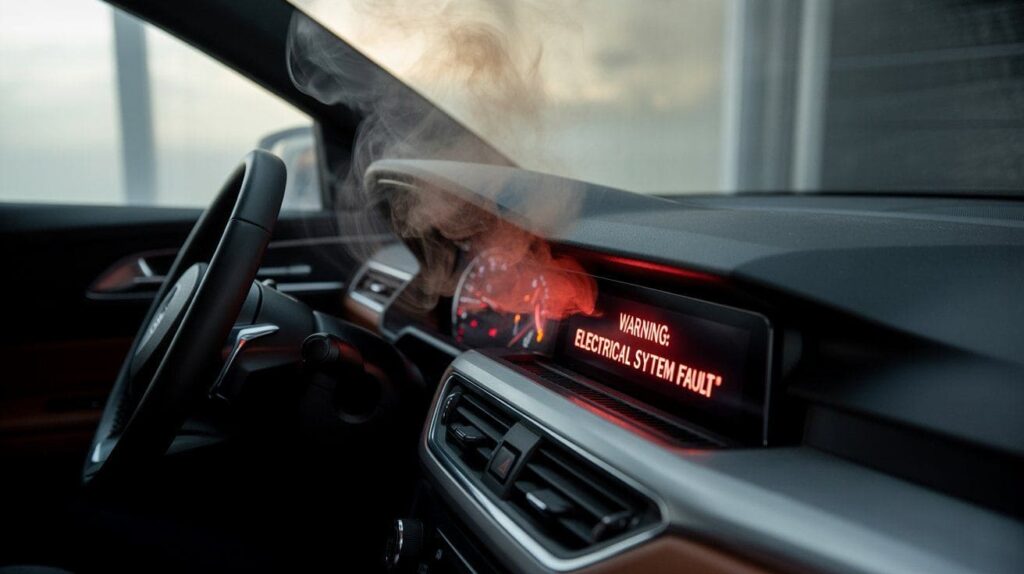
If smoke has an acrid, plastic-like odor, it’s likely an electrical problem such as a blown resistor, failing blower motor, or frayed wiring.
This is dangerous and can cause fire. Watch for intermittent fan speeds, blown fuses, or smoke at high settings. Turn off AC and avoid driving until inspected by a professional.
5.Compressor or Oil Burning
A failing AC compressor can release chemical-smelling smoke if oil or refrigerant leaks and burns. Symptoms include poor cooling, engine bay noises, or oil around the compressor.
Since the compressor is the AC’s core, repairs can be costly but necessary to prevent further damage.
Safety Concerns — Why Car AC Blows Smoke
Not all AC smoke is harmless fog. In many cases, it can pose serious health and safety risks.
Fire Hazard
Electrical smoke from short circuits or overheating blower components is a real fire risk. A frayed wire behind the dashboard can ignite plastics and spread quickly.
If you notice burnt or acrid-smelling smoke, stop driving immediately and have your car inspected by a professional.
Health Hazards
Coolant vapors from a leaking heater core or toxic fumes from burning wires are dangerous to inhale. Exposure can cause headaches, dizziness, or nausea.
Since your AC pushes air directly into the cabin, these risks are serious and should never be ignored.
Solutions and Recommendations
Immediate Actions
If you see smoke, first turn off the AC and pull over safely. Do not continue driving until you know the cause. Ignoring the issue risks damage to your vehicle and your health.
If the smoke smells burnt or sweet, stop driving and arrange for towing rather than risking a breakdown.
Professional Inspection
Mechanics can diagnose AC smoke with pressure tests, visual inspections, and electrical checks. Repairs may include clearing drains, replacing a heater core, fixing wiring, or servicing the compressor. Addressing the root cause early prevents higher costs later.
DIY Fixes You Can Try
For minor issues, you may attempt safe DIY fixes:
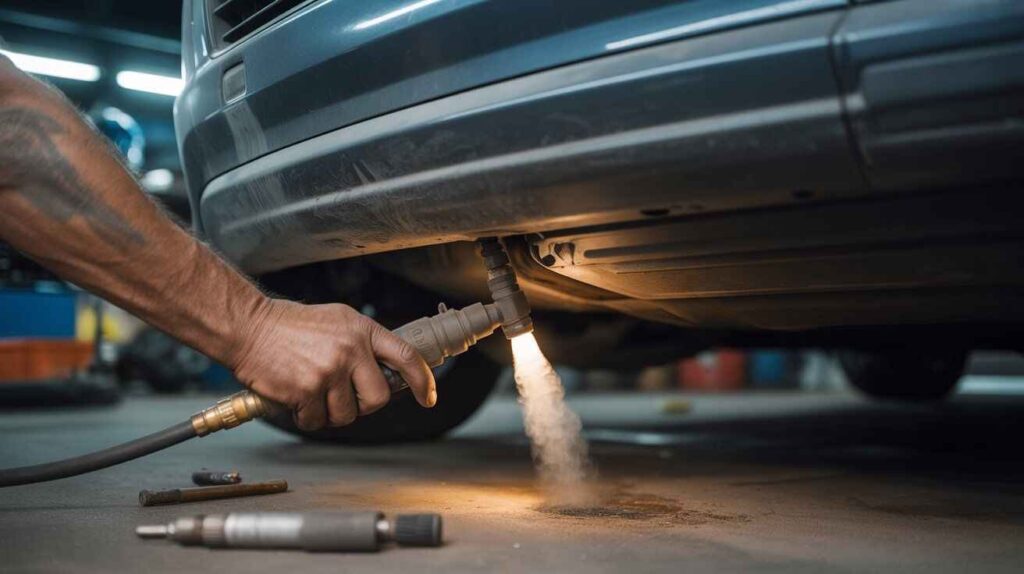
- Clear the evaporator drain with compressed air.
- Replace the cabin air filter if it’s damp or clogged.
- Use recirculation mode in humid weather.
Avoid refrigerant handling or electrical repairs, as they require professional tools and safety knowledge
Typical Car AC Repair Costs
| Repair Type | Average Cost Range (USD) | Notes |
|---|---|---|
| Evaporator Drain Unclogging | $50 – $150 | Usually a quick, low-cost fix at a repair shop. |
| Blower Motor / Resistor | $150 – $400 | Costs vary depending on parts and labor. |
| Heater Core Replacement | $600 – $1,500+ | Labor-intensive; dashboard often needs removal. |
| AC Compressor Replacement | $700 – $1,200 | One of the most expensive AC repairs. |
When to Call a Mechanic
Persistent smoke, strong odors, or signs of coolant or electrical burning require immediate professional help. Waiting risks engine damage or fire hazards.
Preventive Measures
- Replace the cabin air filter annually.
- Schedule AC service every 1–2 years.
- Ensure the evaporator drain is clear.
- Address unusual odors quickly.
FAQs
Q1: Is AC vent smoke dangerous?
Yes, if it’s coolant or electrical burning.
Q2: How do I fix car AC vapor at home?
Clean the drain and replace the cabin filter.
Q3: When should I see a mechanic?
Immediately if there’s odor, persistent smoke, or coolant loss.