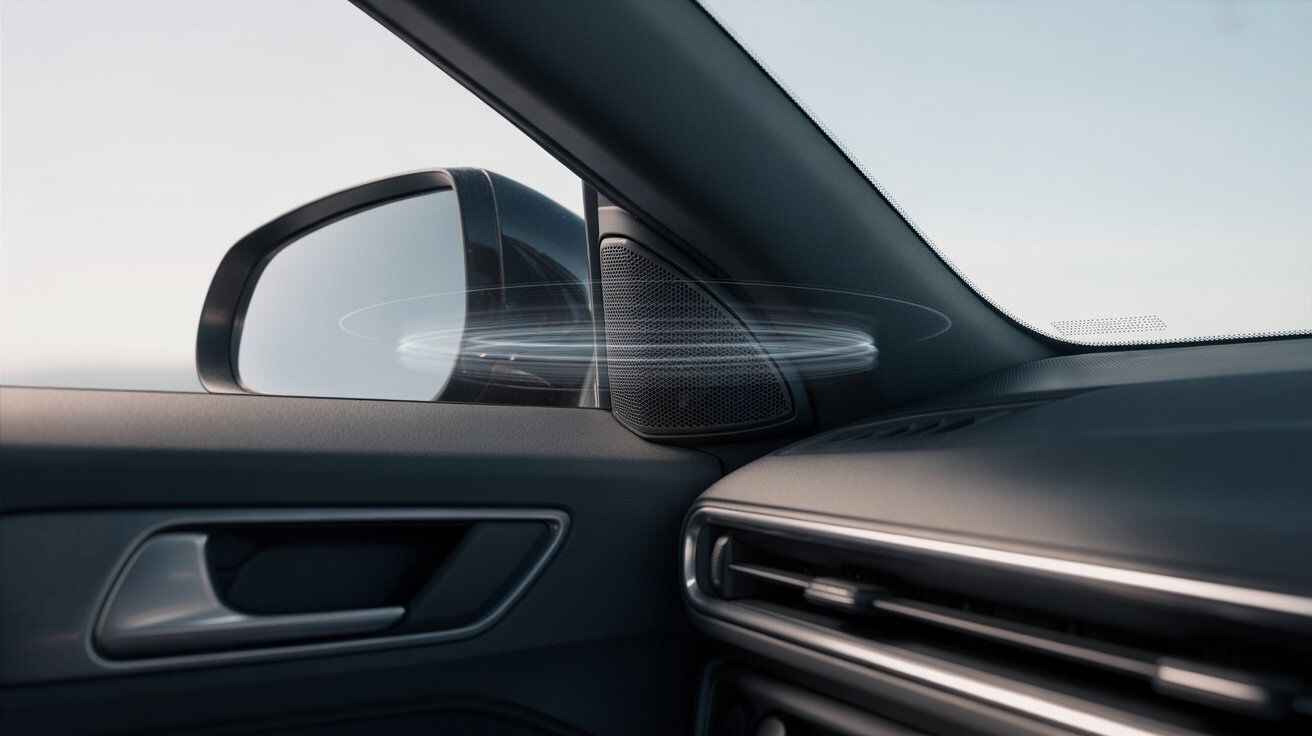
Car speaker may rattle due to loose mounting screws, vibrations in nearby door panels, or damaged speaker parts like the cone or surround. Excessive bass or worn suspension in the speaker can also cause distortion and rattling.
Why does my car speaker rattle
Many drivers encounter the problem of car speakers producing an unwanted rattle. The question why does my car speaker rattle is a common one in car audio maintenance, and understanding the causes is important for preserving sound quality.
Quick Checklist: 6 Fast Checks
These quick checks often reveal the problem.
| Step | Action | Purpose |
|---|---|---|
| 1 | Adjust volume and track | Detect distorted sound in car speakers |
| 2 | Tap the grille lightly | Identify speaker mounting rattle |
| 3 | Tighten screws | Fix loose mounting hardware |
| 4 | Inspect door panel | Check resonance in door panels |
| 5 | Remove loose objects | Eliminate buzzing sounds |
| 6 | Try another audio source | Rule out amplifier clipping or poor files |
Understanding Car Speakers
Car speakers convert electrical signals into sound through vibration. Coaxial speakers combine multiple drivers, while component speakers separate tweeters, woofers, and crossovers for better accuracy.
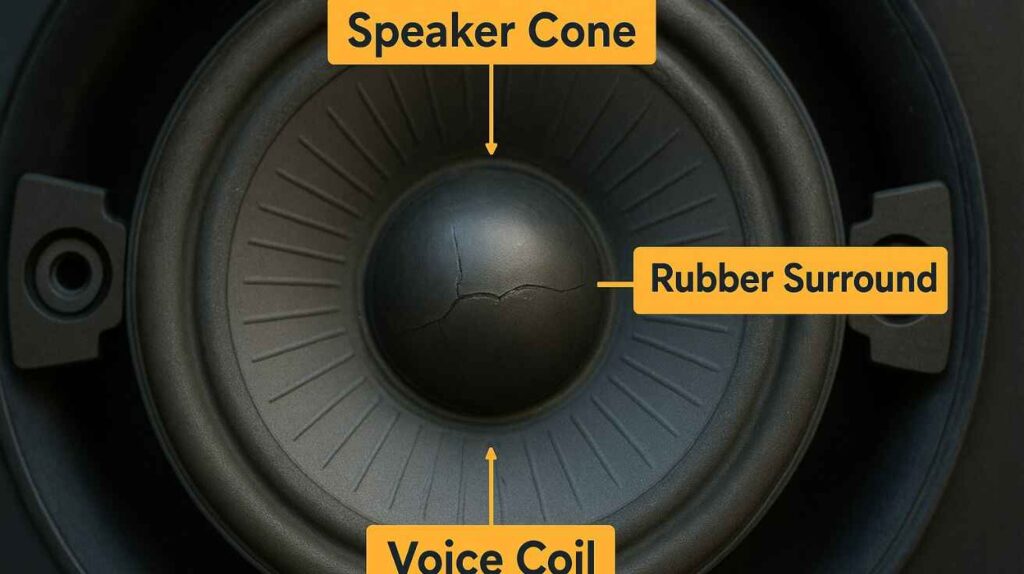
Damage or wear to the cone, surround, or voice coil can cause distortion and door speaker rattles.
Components of a Car Speaker
Cone:- The cone moves air to produce sound waves. Cracks or warps can cause blown cones and audible distortion.
Surround :-The surround keeps the cone centered. Wear or tears can loosen stability and cause persistent vibration.
Voice Coil :-The voice coil powers the cone’s motion. Overheating or stress can lead to voice coil damage, often mistaken for cheap speaker rattling.
How to Diagnose Which Part Is Rattling 6-Step Test
- Isolate one speaker at a time.
- Play a frequency sweep or test track.
- Press the cone gently to detect cone warping or surround tear.
- Tap door panels for resonance.
- Remove the grille to inspect loose hardware.
- Swap with a working speaker to confirm voice coil damage or failure.
Identify Speaker vs Rattling Issue
A damaged speaker produces distortion, hissing, buzzing, or loss of bass even outside the enclosure, often from a blown cone or voice coil damage.
In contrast, rattling issues usually stop when pressing panels or tightening screws, indicating loose hardware or door panel resonance. Test each speaker individually to confirm the fault.
Common Causes of Speaker Rattles
1.Loose Connections
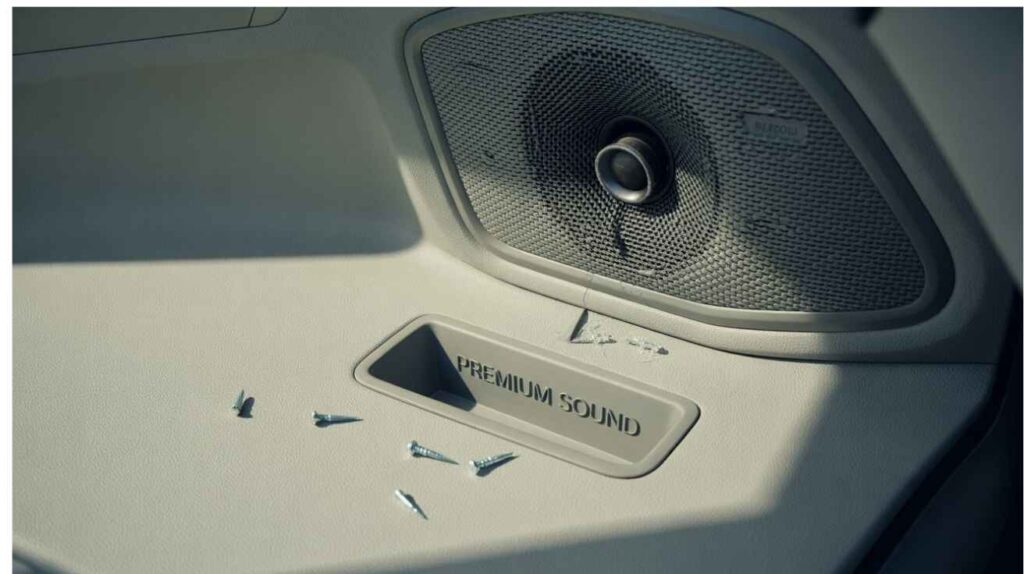
Loose wiring, poor speaker fit, or missing screws often result in speaker vibration noise. When mounting hardware isn’t secured, the car speaker shifts with movement, creating buzzing or rattling.
This is one of the simplest causes to check, as tightening screws or securing wiring can quickly resolve minor door speaker rattle issues.
2.Damaged Speaker Components
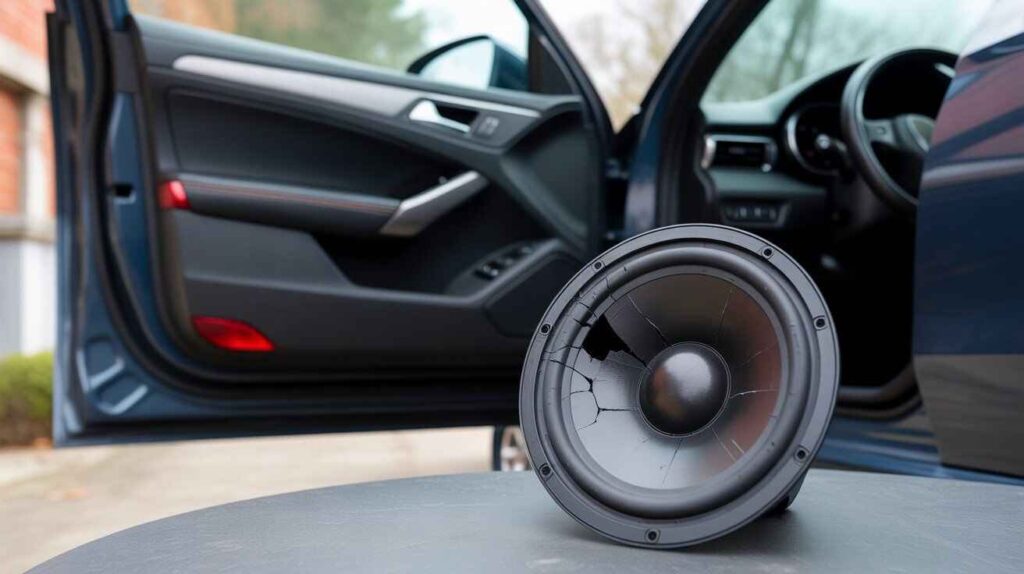
Physical damage such as blown cones, torn surrounds, or a warped speaker cone can lead to unwanted noise. Symptoms include hissing sounds, buzzing sounds, or reduced bass response.
Over time, materials wear out from heat, stress, or poor quality. These failures often mimic problems associated with cheap speakers rattling in vehicles.
3.Improper Installation
Incorrect installation is a frequent cause of rattling. Using the wrong speaker size, plastic adapter rings, or poor mounts creates gaps that produce vibration noise.
Both factory and aftermarket setups can suffer from these mistakes, especially when installers overlook tight sealing, leading to long-term speaker mounting rattle and reduced performance.
4.Resonance and Vibration Issues
Road vibrations and heavy bass frequently trigger rattles in vehicles. These issues often appear as rear deck speaker rattle or door speaker rattle.
Thin panels, loose trim, and weak damping allow resonance to build at certain frequencies. As a result, even undamaged speakers may sound distorted during normal playback or high volume.
Solutions to Fix Rattling Speakers
| Solution | Action | Why It Works |
|---|---|---|
| Check and Tighten Connections | Re-tighten loose wiring, screws, and mounting hardware. | Prevents speaker vibration noise caused by shifting components or poor electrical contact. |
| Replace Damaged Components | Refoam a torn surround if damage is minor; replace blown speaker cones or warped parts when repair is not practical. | Restores proper sound output and eliminates hissing or buzzing sounds. |
| Ensure Proper Installation | Install the correct size speaker with secure mounts and proper sealing, whether factory or aftermarket. | Avoids gaps or weak fittings that lead to cheap speakers rattling or resonance. |
| Use Damping Materials | Apply sound deadening pads, foam gasket tape, or damping sheets in car doors and rear decks. | Reduces resonance in door panels and stops rattling caused by road vibrations and excess bass. |
When to Get Professional Help
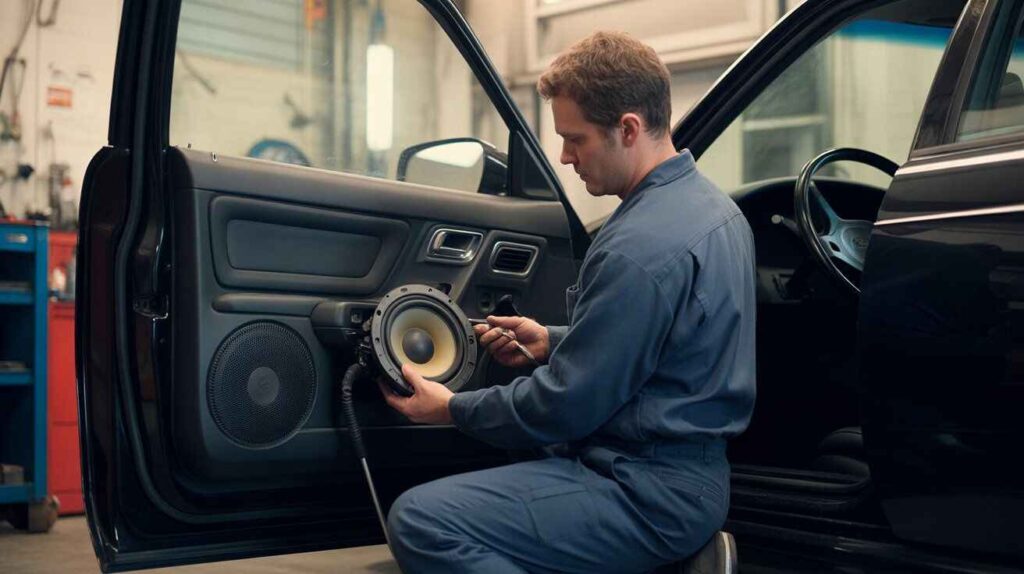
If DIY fixes fail and you still wonder why my car speaker rattles, seek professional repair. Services include refoaming speaker surrounds ($40–$80), replacing blown speakers ($100–$300), or adding sound deadening car doors ($150–$400 installed). Labor costs can raise the total, so compare multiple quotes for the best solution.
Preventing Future Rattles
Routine care and smart choices can reduce the risk of car speaker rattle over time.
1.Regular Inspections
Check for early problems like rubber surround wear, loose mounting hardware, or door speaker rattle. Tighten screws, test for unusual vibration, and inspect for cone or surround cracks.
Regular maintenance keeps speakers stable and ensures distortion-free performance.
2.Proper Speaker Selection
Choose quality aftermarket speakers that fit your vehicle. Poorly sized speakers create gaps and cause resonance in panels. Always match size, power rating, and mounting style.
A proper fit ensures stability, better bass, and fewer vibration noise issues.
FAQs
Q1: Is a car speaker rattle the same as a blown speaker?
No, a blown speaker causes distortion or loss of bass, while rattling comes from loose hardware or panel resonance.
Q2: Can equalizer settings fix rattling speakers?
Lowering bass may reduce vibration, but it cannot repair damaged cones or poor installation.
Q3: Will sound deadening void a car warranty?
No, adding sound deadening for car doors doesn’t affect manufacturer warranties.
Q4: How can I quickly test if my speaker is faulty?
Play a frequency sweep and press the cone—buzzing or distortion indicates damage.