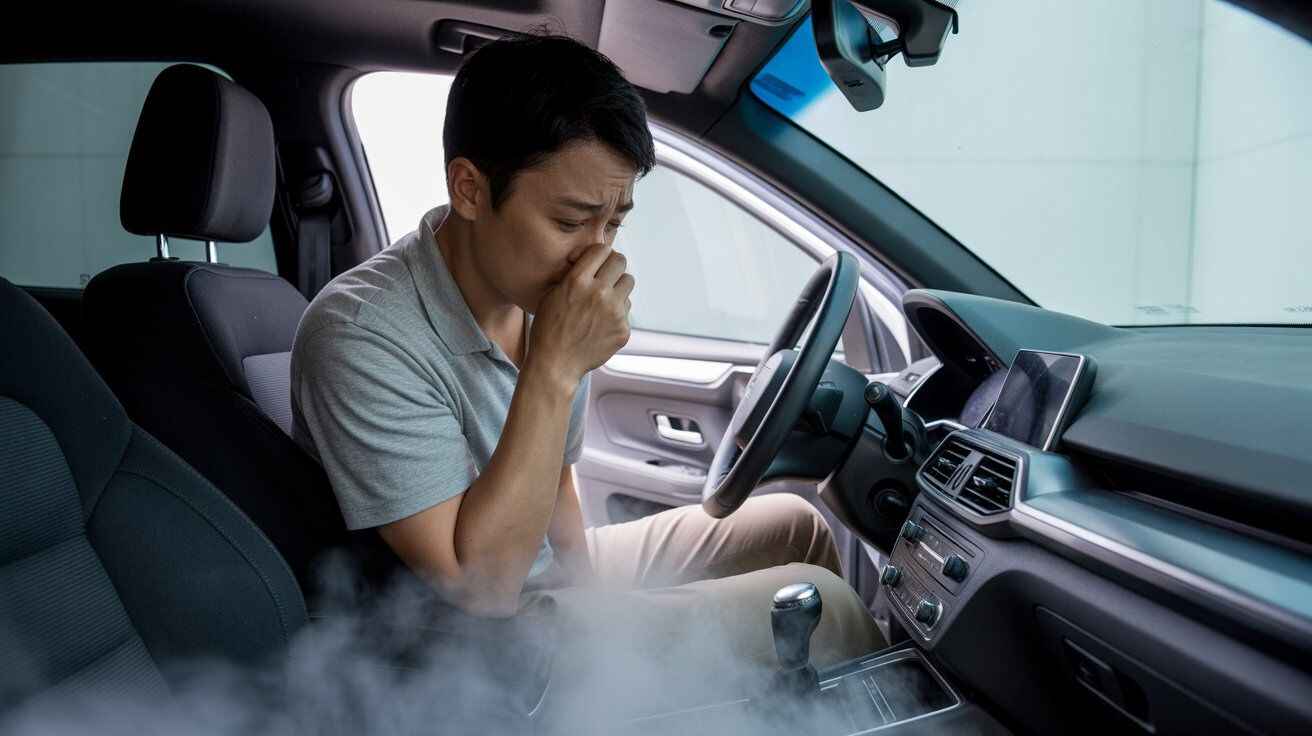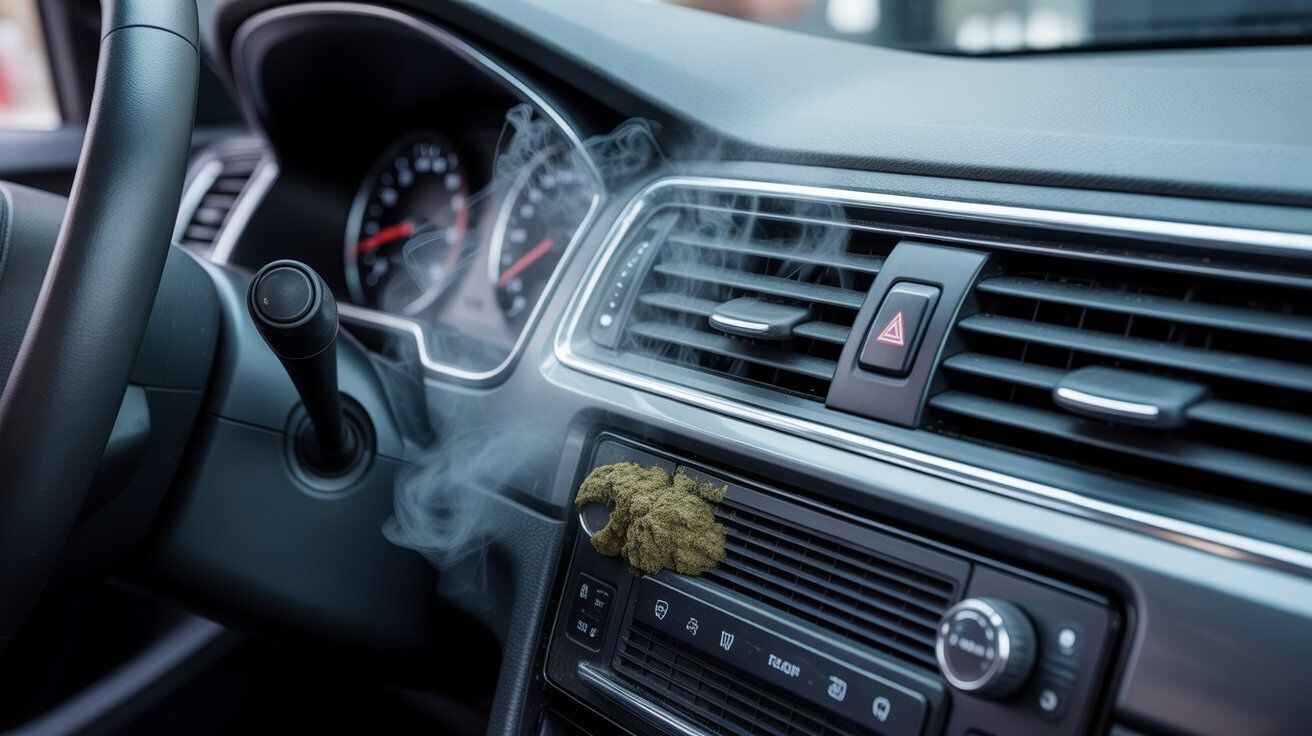
The car may smell like skunk due to a bad catalytic converter, fuel leak, or trapped skunk spray. Mold in the A/C system can also cause a similar odor.
Why Does My Car Smell Like Skunk?
Why does my car smell like skunk? Start by checking where the smell is strongest. If it’s mostly outside the car, especially near the bumper or wheel wells, it might be actual skunk spray or residue from driving over it. In that case, washing the exterior and undercarriage should help.
If the odor seeps inside the cabin or appears when the AC or heater is running, it’s probably not a skunk. Mechanical issues, such as a leaking catalytic converter, burning fluids, or HVAC mold, can all mimic that sulfur-like “skunky” smell.
Quick Checklist
| Step | Check | What It Reveals |
|---|---|---|
| Smell Inside/Outside | Compare cabin vs. exterior odor | If the source is internal or external |
| AC On/Off | Run AC, then fan only | Detects HVAC mold or evaporator issues |
| Undercarriage | Look for leaks or animal residue | Spots contamination or fluid leaks |
| Cabin Filter | Inspect or replace if dirty | Finds airflow or filter odor problems |
| OBD-II Scan | Check for exhaust/fuel codes | Reveals emissions or catalytic issues |
Common Causes of Skunk Smells in Cars
1. Skunk Spray or Animal Carcass
If you’ve parked outside overnight, a curious skunk or small animal might have crawled beneath your car. Spray on the undercarriage or wheel wells can linger for days. To clean it, rinse the area thoroughly, then apply a neutralizing mix of hydrogen peroxide, baking soda, and dish soap.
Avoid bleach—it reacts with skunk spray and worsens the odor. If the smell persists or you suspect a dead animal, contact a wildlife removal or detailing service for safe cleanup.
2. Cabin Air Filter or HVAC Mold
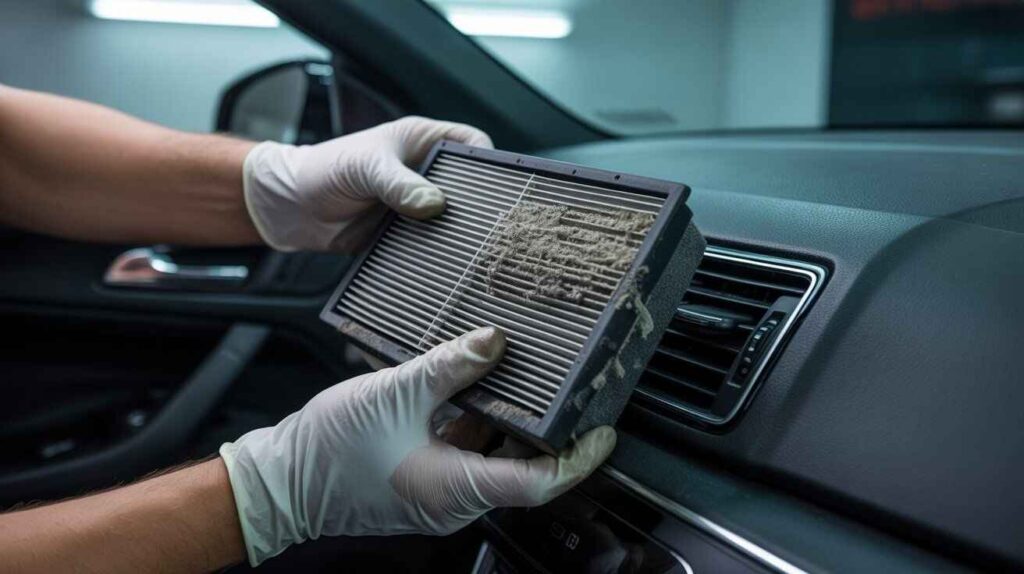
When the smell hits the moment you start the AC or heater, it’s often due to mold or mildew inside the HVAC system. A damp cabin air filter traps moisture and releases a musty, skunky odor.
Replace the filter, clean vents with an AC disinfectant spray, and run fresh air through the system for 10 minutes. Regular cabin air filter replacement every 12,000 miles helps prevent this.
3.Fuel or Exhaust Problems
A failing catalytic converter or a rich fuel mixture can create a sulfur or rotten-egg smell that many people describe as “skunky.” The odor usually comes from the tailpipe and may accompany performance loss or a check-engine light.
This happens when unburned fuel produces hydrogen sulfide, the same gas responsible for skunk spray’s sulfur tone. If your car smells like skunk while driving, have a mechanic run an OBD-II scan to check for fuel or exhaust faults.
Fixing a clogged converter or exhaust leak not only eliminates the smell but also prevents harmful emissions from entering the cabin.
4.Burning Fluids or Oil
If the odor appears after long drives or heavy braking, it might be burning oil or transmission fluid. These fluids, when overheated, emit a harsh scent similar to skunk spray.
Look for visible leaks, smoke near the hood, or low fluid levels. Don’t ignore it—burning fluids can damage seals and wiring.
Address leaks early and have your engine bay inspected for oil residue or melting components. A small drip on a hot exhaust pipe can easily mimic that lingering “skunk” smell.
5.Other Interior Contaminants
Sometimes the answer to why your car smells like skunk is simple—contaminants inside the cabin. Household cleaners, fertilizers, spilled food, or pet odor can all combine into unpleasant, skunk-like scents.
Vacuum thoroughly, shampoo carpets, and sprinkle baking soda overnight to absorb odors. For persistent smells, use activated charcoal or a mild enzyme cleaner designed for automotive interiors. Avoid covering odors with strong air fresheners—they only mask the problem instead of fixing it.

How to Diagnose the Smell
Visual Inspection
Pop the hood and look carefully. Check the engine bay, undercarriage, and vents for any signs of oil, coolant, or transmission leaks.
Look for nesting materials, fur, or residue — these could mean a small animal hid under your car. Also, inspect around the cabin air intake, where mold and leaves often build up.
Finally, compare the smell inside and outside the car. If it’s stronger inside, the issue may be with the HVAC system or cabin filter. If it’s stronger outside, you’re likely dealing with spray residue or a mechanical leak.
Seeking Professional Help
If the odor won’t go away, it’s time to call in professionals. A car detailing service can deep-clean vents, carpets, and the undercarriage using ozone or enzyme treatments that remove skunk and chemical smells.
If you suspect something mechanical, visit a certified mechanic. They can pinpoint fuel leaks, HVAC mold, or exhaust faults using diagnostic tools you won’t have at home.
Mechanics also perform smoke and pressure tests to find hidden leaks. They’ll inspect the catalytic converter and emissions system for sulfur buildup that can smell like skunk spray.

Fast DIY Fixes
| Fixes | What to Do | Purpose |
|---|---|---|
| 1. Ventilate | Open doors and windows; run fan on fresh air mode. | Clears trapped odor. |
| 2. Clean Exterior | Wash undercarriage with peroxide + baking soda + dish soap mix. | Neutralizes spray. |
| 3. Interior Refresh | Remove mats and seat covers; air them in sunlight. | Breaks down odor. |
| 4. Absorb Odors | Place baking soda, vinegar, or charcoal inside overnight. | Pulls out smell. |
| 5. Disinfect Vents | Spray AC disinfectant or enzyme cleaner into vents. | Cleans HVAC. |
| Avoid Mixing Chemicals | Don’t mix bleach or ammonia with other cleaners. | Prevents toxic gas |
Preventive Measures
Once your car smells fresh, keep it that way with a few simple habits. Schedule undercarriage cleaning every few months to wash away road grime and salt.
Replace your cabin air filter twice a year to prevent trapped moisture and debris. Avoid leaving food, gym bags, or pet carriers inside the vehicle overnight.
If you often park near trees or wooded areas, check under the hood for nesting materials or signs of animal activity.
FAQs
Q1: Why does my car smell like skunk only when the AC is on?
It’s probably due to HVAC mold or a dirty cabin filter. Replace and disinfect vents.
Q2: Can exhaust problems cause skunk smells?
Yes, catalytic converter or exhaust leaks can emit sulfur gas that mimics skunk spray.
Q3: What removes skunk odor from a car fast?
Use a hydrogen peroxide + baking soda.