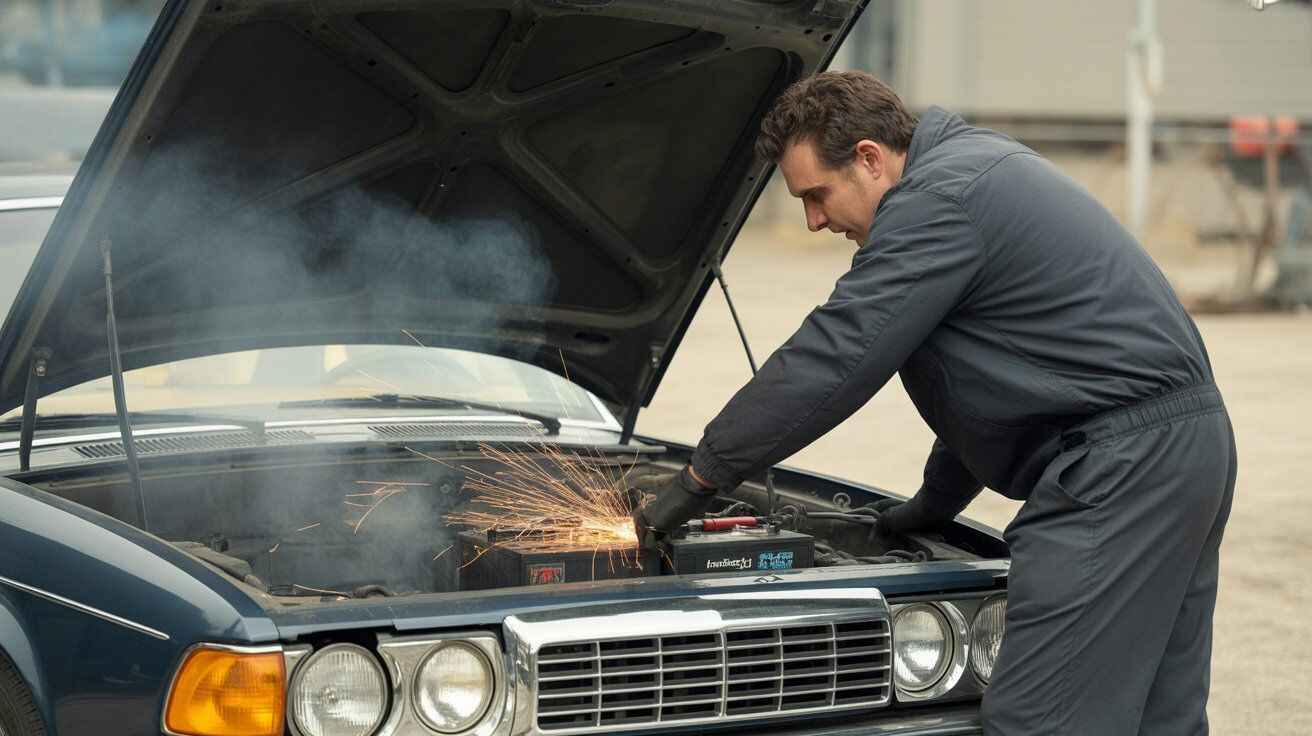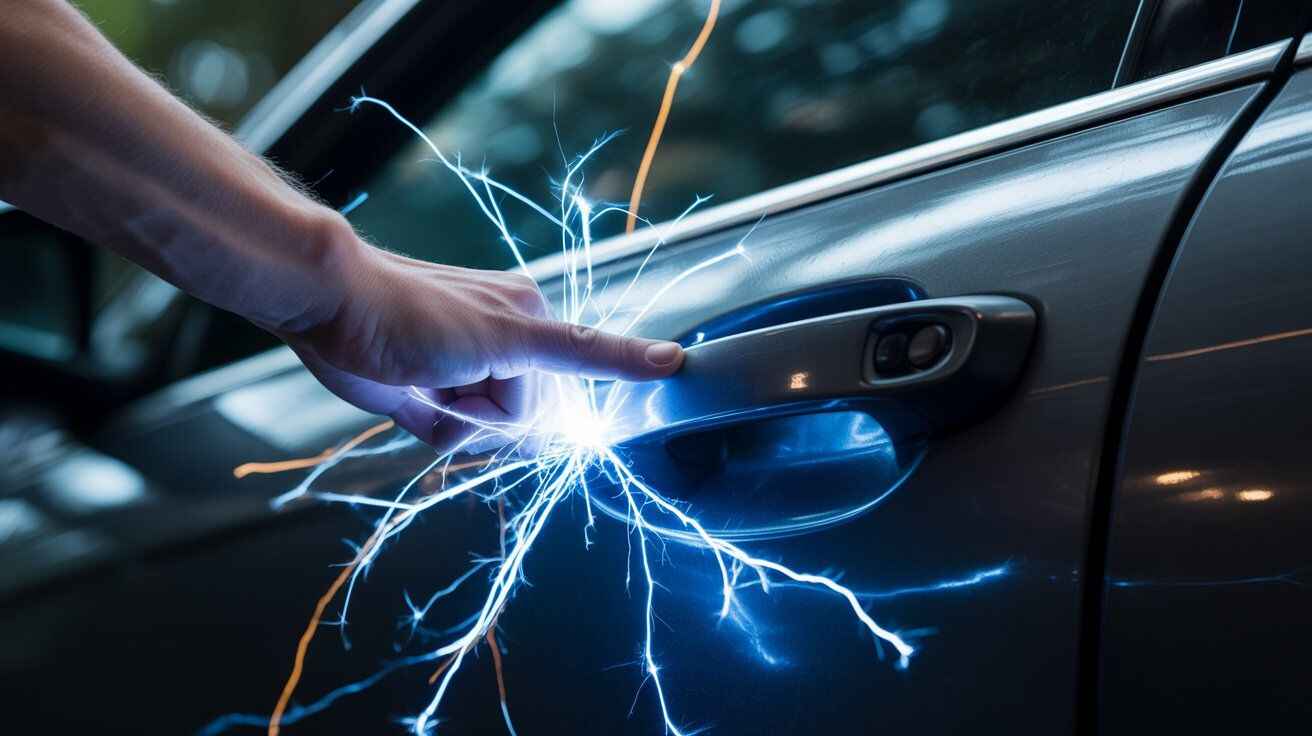
Car shocks you mainly due to static electricity from friction between clothes and seat, especially in dry weather. Synthetic fabrics, low humidity, or missing grounding straps make it worse, while rare cases involve poor wiring or grounding issues.
Why Does My Car Shocking Me?
If you’re asking why does my car shocking me, the answer is usually static electricity created by friction between your clothes and the seat, releasing a small zap when you touch metal. This is harmless but annoying. In rarer cases, shocks may come from faulty wiring, grounding issues, or electrical leaks, which are more serious and need a mechanic’s check.

Diagnostic Checklist
| Step | What to Do | What It Tells You |
|---|---|---|
| 1 | Reproduce the shock | Confirms if the issue is repeatable or occasional |
| 2 | Change clothes or shoes | If shocks stop → static buildup from fabric/footwear |
| 3 | Note if shocks occur in winter /dry weather | Points to seasonal /static cause |
| 4 | Touch the door handle with a knuckle | Less painful, confirms static electricity |
| 5 | Park on different surfaces | Tests grounding effect of pavement vs. grass |
| 6 | Inspect heated seat wiring | Detects possible damage or electrical leaks |
| 7 | Check the ground strap near the battery | Finds loose or corroded grounding that can cause stray current |
4 Common Reasons
1.Static electricity build-up
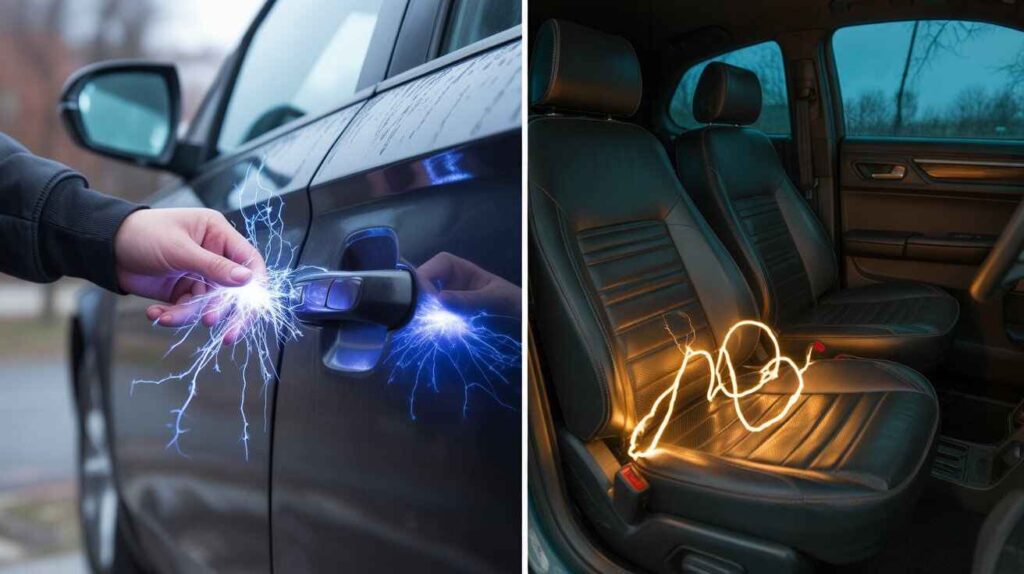
This is the most common reason. When synthetic fabrics rub against the car seat, they generate static. Shoes with rubber soles increase the effect because rubber insulates instead of grounding you. The charge remains until you touch a conductor such as the car door handle.
2.Poor chassis grounding or wiring issues
If your car’s ground strap or electrical system connections are loose or corroded, you may experience more than just static. A faulty grounding in car can allow stray current to travel through metal parts, creating a mild but real shock.
3.Seat wiring and accessories
Cars with heated or power seats sometimes develop faults in the wiring. A damaged wiring insulation or exposed connector could allow low-voltage current to pass into the seat. While rare, this type of heated seats shock is not just irritating — it can be dangerous.
4.High-voltage car parts
Modern hybrids and EVs have high-voltage systems. A failing component or damaged insulation may cause shocks that feel sharper than static. If you suspect a high voltage car parts issue, do not attempt DIY fixes. Always consult a qualified technician.
How to Tell if Car Shocking is Static or Electrical
Not sure whether it’s just static or something more serious? Here’s how to check:
- Severity: Static shocks feel sharp but brief. Electrical shocks may linger or feel stronger.
- Frequency: Static is common in dry weather and more noticeable in winter when humidity is low. If shocks occur daily regardless of conditions, suspect an electrical issue.
- Smell or sparks: A faint burning smell, visible sparks, or tingling while sitting point toward electrical leak in car wiring.
- Car status: Static shocks happen whether the engine is on or off. If shocks only occur while the car is running, the problem may involve live current risk car systems.
- Other people: If passengers also get zapped touching the same spot, it’s more likely static buildup. If only you experience it, check your clothing, shoes, and seat fabric
9 Practical Fixes & Solutions
- Touch metal before exiting
Use your knuckle to touch the door frame while still seated. This discharges static gradually. - Install anti-static straps for car
These grounding straps hang from the bumper to dissipate static into the road surface. - Use anti-static spray for car seats
Lightly spraying seats and mats reduces charge buildup. Household fabric softeners also help. - Wear natural fabrics
Clothes made of cotton or wool reduce static compared to polyester or nylon. Avoid rubber soles if possible. - Inspect heated seats wiring
Check connectors under the seat for damage. If you suspect exposed wires, have a mechanic repair them immediately. - Clean and tighten chassis ground
Locate the ground strap connecting your car’s frame to the battery. Remove corrosion and tighten bolts to fix a chassis ground problem. - Increase humidity
Static thrives in dry air. Using a humidifier in your garage or leaving a small water container in the car can reduce shocks. - Use anti-static keychains or discharge tools
These devices let you release charge safely before touching metal parts. - Visit a mechanic
If shocks are frequent, painful, or accompanied by sparks, it may involve electrical leak in car components. Professional diagnosis is safest.
Warning Signs: From Static Zap to Electrical Risk
Static shocks are uncomfortable but not hazardous. The situation changes if you notice:
- Shocks strong enough to cause pain or muscle twitching.
- Sparks or smoke when touching the car.
- Burning smells from seats or electrical panels.
- Tingling while sitting, especially with power seats wiring issue.
These are signs of wiring insulation damage car or live current risk car. In hybrid or electric vehicles, high-voltage circuits are involved.
Preventing Static Shocks in Your Car
1.Practical Tips for Drivers
Use anti-static sprays on seats and carpets, choose natural fiber clothing, and discharge safely by touching metal before stepping out. These small actions greatly reduce static electricity in car interiors.
2.Regular Maintenance and Care
Keep your vehicle well-maintained to avoid chassis ground problems. Clean connections, check grounding straps, and use interior products designed to reduce static buildup for a smoother, shock-free driving experience.

FAQs
Q1: Why does my car shocking me more in winter?
Cold, dry air reduces humidity, making static build-up easier. That’s why you feel stronger zaps in winter.
Q2: Can faulty wiring cause why does my car shocking me?
Yes. A chassis ground problem car or damaged wiring insulation can let small amounts of current escape.
Q3: Do tires affect why does my car shocking me?
Yes. Tires with higher silica content discharge static better, while old rubber compounds may increase shocks.