Cars leak antifreeze when a part of the cooling system fails. The most common causes include a damaged radiator, cracked hoses, a failing water pump, a leaky heater core, a cracked coolant reservoir, or a blown head gasket.
Why Does My Car Leak Antifreeze?
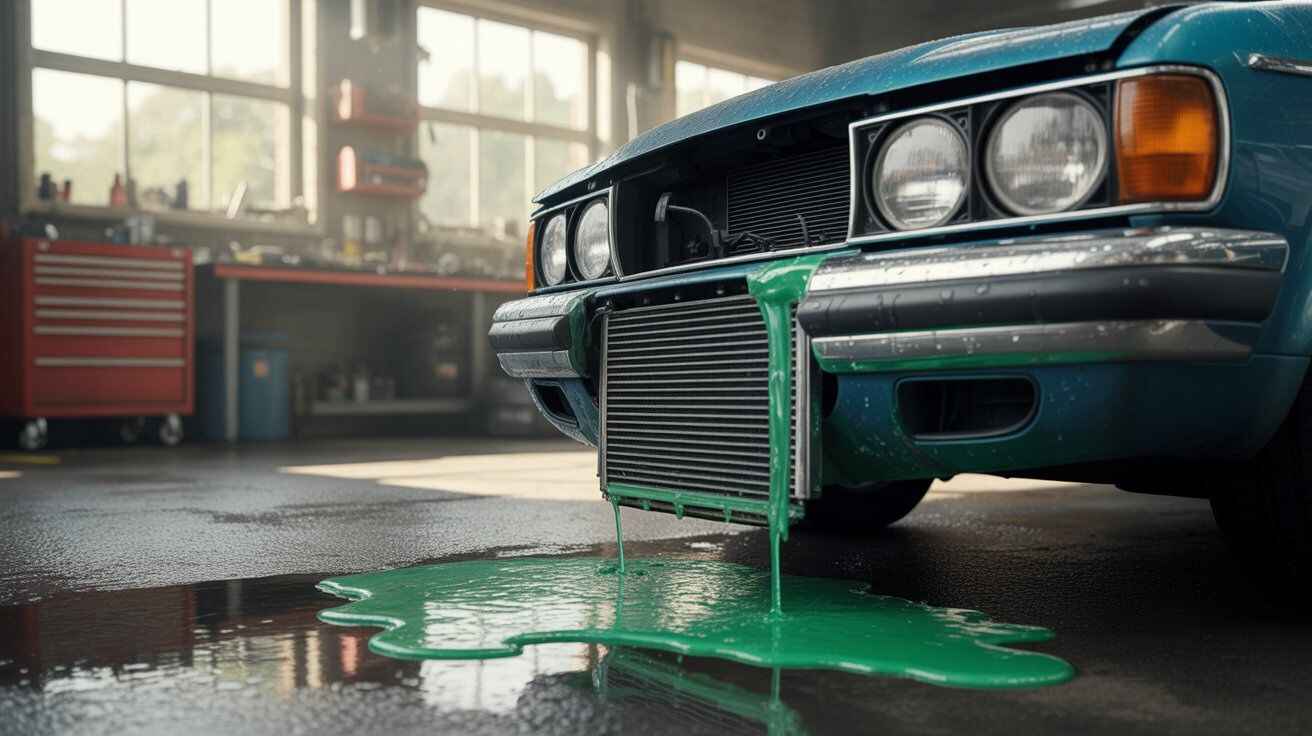
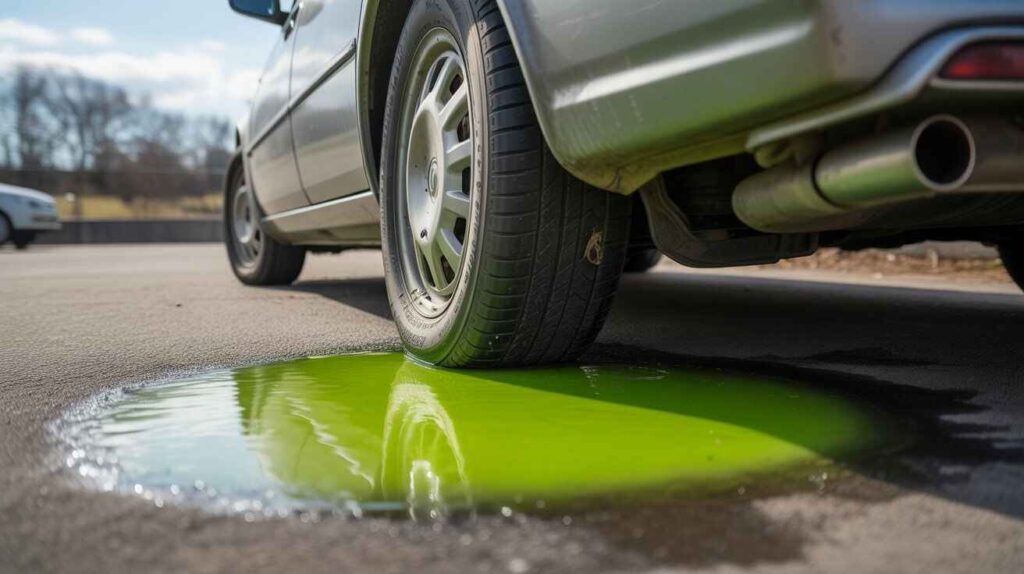
Seeing a bright green, pink, or orange puddle under your parked car is never a good sign. That sweet-smelling liquid is coolant—also called antifreeze—and a leak means your engine’s cooling system is compromised.
Not every puddle is a crisis. First, confirm it’s coolant. Modern antifreeze comes in several colors: traditional green, extended-life orange or yellow, and newer pink or blue formulations. Its most telling characteristic is a distinct, sweet smell. It also feels slippery to the touch.
Your first diagnostic step is simple: when the engine is completely cool, check the translucent coolant reservoir tank under the hood.
Crucial Warning: Antifreeze is highly toxic and attractive to pets and children due to its sweet taste. Clean up any spill immediately.
The 7 Most Common Reasons for an Antifreeze Leak
Coolant circulates in a sealed loop. A leak occurs when any part of this circuit fails. The seven most common culprits are:
- Damaged Radiator
- Worn Out Hoses
- Failing Water Pump
- Leaky Heater Core
- Blown Head Gasket
- Cracked Coolant Reservoir
- Faulty Radiator or Freeze Plugs
Let’s find out which one you’re dealing with.
Diagnostic Guide: Find Your Leak Source
Step 1: Locate the Puddle
| Puddle Location | Likely Problem Areas |
|---|---|
| Front of car (near grille) | Radiator, radiator hoses, radiator cap |
| Center/under engine | Water pump, heater hoses, freeze plugs |
| Passenger cabin area | Heater core, heater core hoses |
Step 2: The Cold Engine Visual Check
| Component to Inspect | What to Look For |
|---|---|
| All coolant hoses | Cracks, bulges, soft spots, wetness |
| Radiator seams/fins | Wet spots, white/green crusty residue |
| Water pump | Drips from center, leaks from “weep hole,” moisture near pulley |
| Coolant reservoir | Cracks, leaking around fittings |
| Heater hoses (firewall area) | Wetness, residue, or visible dripping |
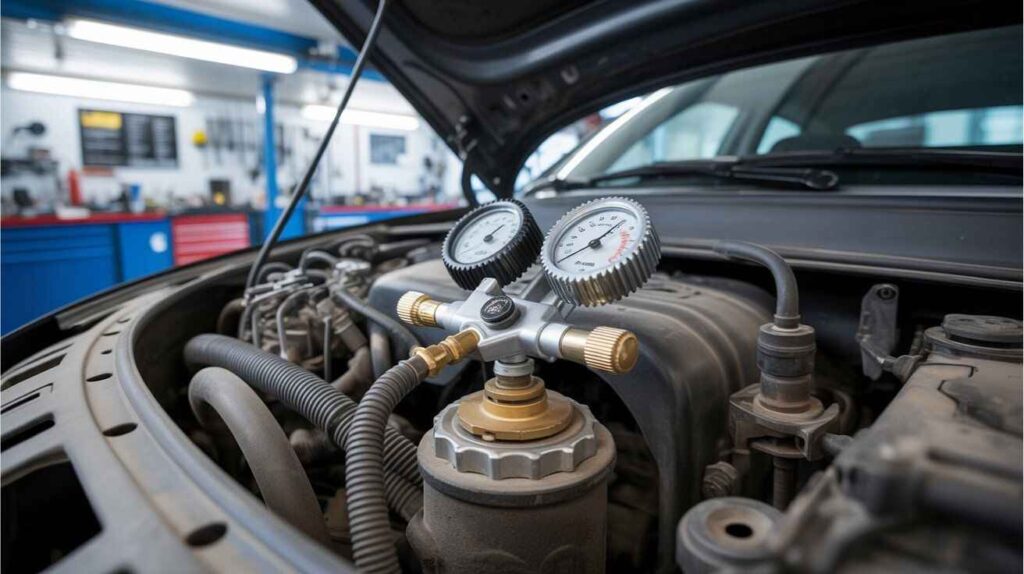
Step 3: The Pressure Test (The Professional’s Method)
| Test | Purpose | Benefit |
|---|---|---|
| Cooling System Pressure Test | Adds pressure to the system while engine is cold | Makes hidden or slow leaks show up |
In-Depth Look at Each Cause & Repair Cost
1. Damaged Radiator
- What It Is & Why It Leaks: Your radiator cools the hot coolant. It can leak from corrosion, physical damage from debris, or cracks in its plastic side tanks from age and heat cycles.
- Key Symptoms: Puddle at the front of the car, overheating, visible coolant on the fins or tanks.
- Typical Repair Cost Range: $450 – $900 for parts and labor.
- Can You Drive It? Not Recommended. A radiator leak can quickly lead to complete coolant loss and overheating.
2. Worn Out Hoses
- What It Is & Why It Leaks: The upper and lower radiator hoses and smaller heater hoses carry hot coolant. Rubber degrades over time, becoming brittle and cracking.
- Key Symptoms: Visible cracks or bulges on hoses, crusty residue at the clamp connections, a puddle near a hose end.
- Typical Repair Cost Range: $150 – $350. This is often one of the most affordable fixes.
- Can You Drive It? Extreme Caution. A burst hose will dump all your coolant instantly, causing immediate and severe overheating.
3. Failing Water Pump
- What It Is & Why It Leaks: The water pump circulates the coolant. It has a internal seal that eventually wears. Most pumps have a “weep hole” that releases a small amount of coolant when this seal begins to fail.
- Key Symptoms: A drip or trail coming from the center of the engine (behind the main pulley), sometimes accompanied by a whining or grinding noise.
- Typical Repair Cost Range: $500 – $850. Labor is high as it often requires removing engine belts and sometimes the timing cover.
- Can You Drive It? No. A failing pump can seize or rupture completely without further warning.
4. Leaky Heater Core
- What It Is & Why It Leaks: A small radiator inside your dashboard that provides cabin heat. It can corrode and leak internally.
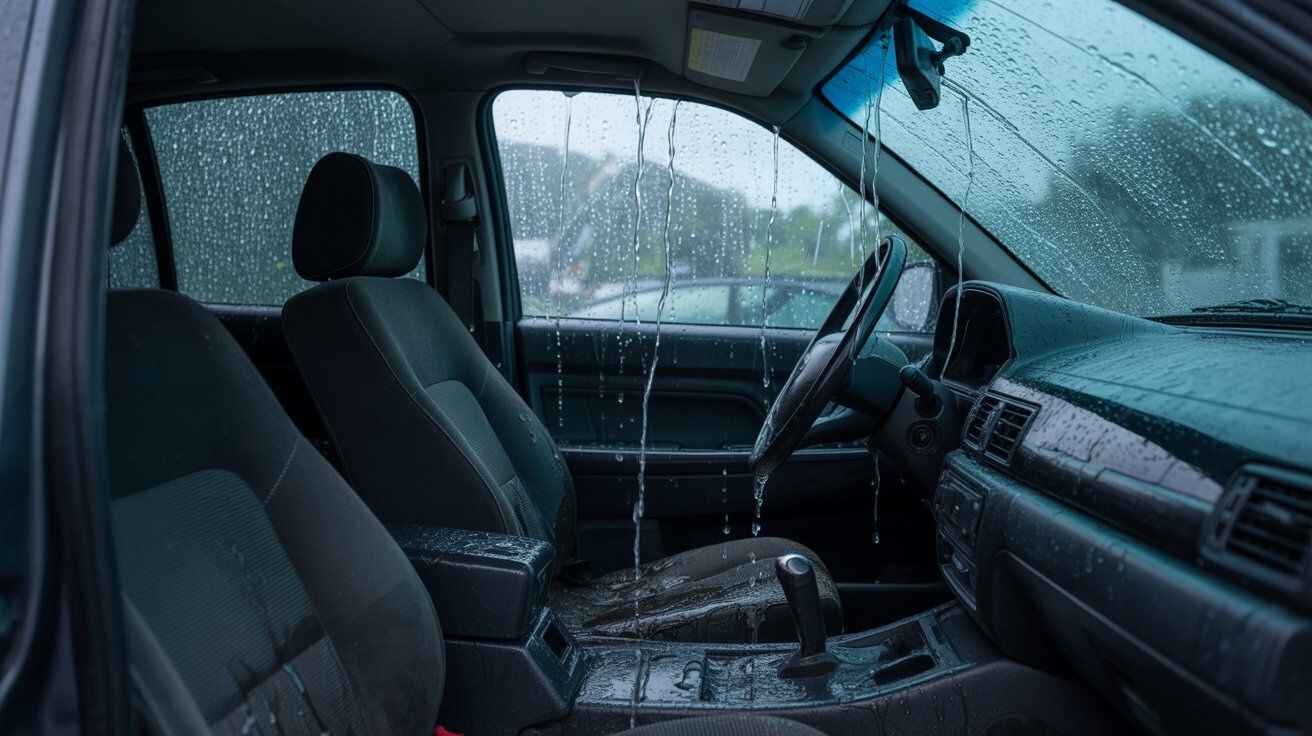
- Key Symptoms: Sweet smell inside the car, persistent windshield fogging with a greasy film, or damp coolant on the passenger side floorboard.
- Typical Repair Cost Range: $800 – $1,500+. This is very labor-intensive, requiring dashboard removal.
- Can You Drive It? Mechanically, yes. But it’s messy, can fog your windows dangerously, and will eventually drain the system.
5. Blown Head Gasket
- What It Is & Why It Leaks: A critical seal between the engine block and cylinder head. When it fails, it can allow coolant to leak into combustion chambers or mix with oil.
- Key Symptoms: White, sweet-smelling exhaust smoke, milky, mayonnaise-like substance on the oil filler cap or dipstick, constant overheating with bubbles in the coolant reservoir.
- Typical Repair Cost Range: $1,800 – $3,000+. This is a major engine repair.
- Can You Drive It? ABSOLUTELY NOT. Driving with a blown head gasket will rapidly destroy your engine.
6. Cracked Coolant Reservoir
- What It Is & Why It Leaks: The plastic overflow tank can become brittle and crack from heat and age.
- Key Symptoms: Low coolant with no obvious puddle, or a leak tracing directly from the tank itself or its connecting hoses.
- Typical Repair Cost Range: $100 – $250. Often a simple and inexpensive part swap.
- Can You Drive It? Monitor Closely. While usually a minor leak, it can still lead to air entering the system and eventual overheating if ignored.
7. Faulty Freeze Plugs
- What It Is & Why It Leaks: Metal plugs in the side of the engine block that can corrode or pop out.
- Key Symptoms: A leak directly from the side of the engine block, often with rusty-colored coolant.
- Typical Repair Cost Range: $200 – $600. The plug is cheap, but labor to access it can vary widely.
- Can You Drive It? Not Recommended. Like any leak, it can worsen suddenly and cause coolant loss.
The Critical Warning: Head Gasket Failure
A blown head gasket is the most serious and expensive reason for coolant loss. It’s not just an external leak; it’s an internal breach.
The symptoms—white exhaust smoke, milky oil, and bubbling in the overflow tank—are red flags.
If you notice any of these, stop driving immediately and seek professional diagnosis. The cost of repair is high, but the cost of ignoring it is a completely ruined engine.
Can I Drive My Car with a Coolant Leak?
Your decision depends entirely on the leak’s severity. Use this triage guide:
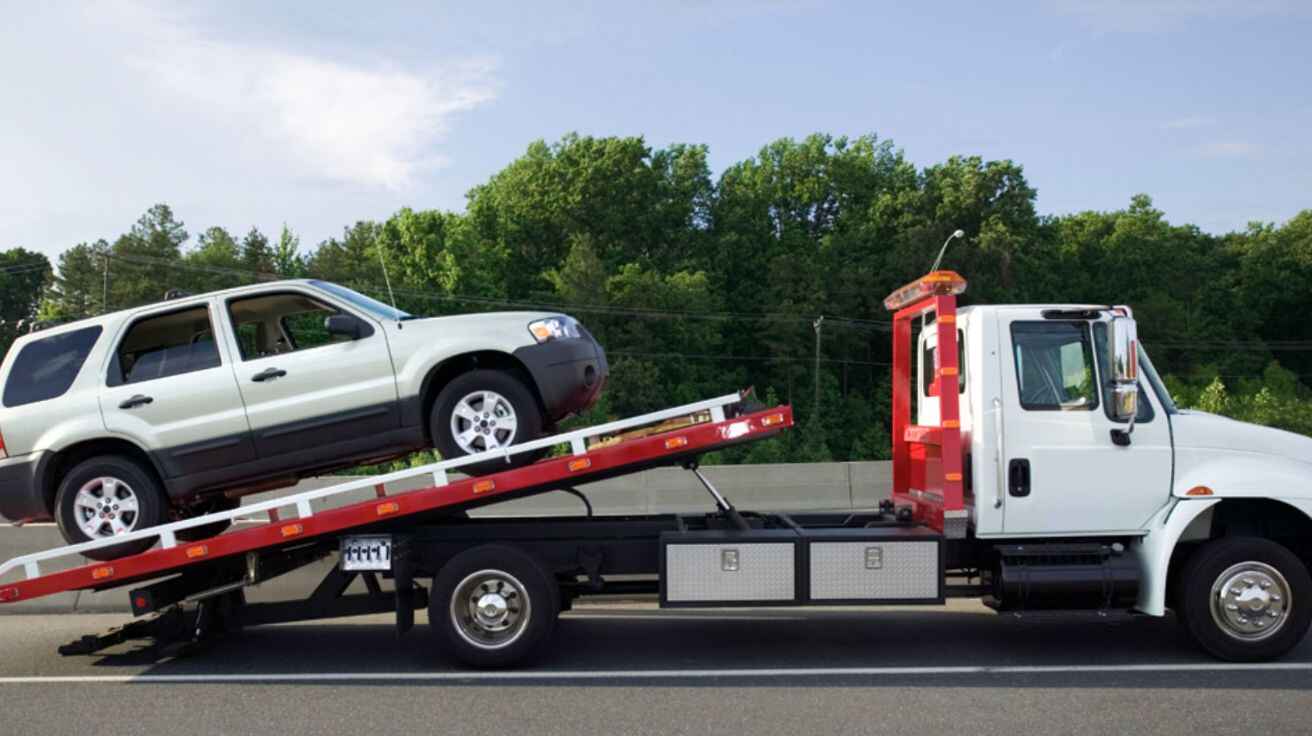
- STOP – Do Not Drive: If the temperature gauge is in the red, you see steam, or coolant is gushing out. Call for a tow.
- CAUTION – Drive Directly to Mechanic: For a steady drip with a normal engine temperature. Top off the reservoir with the correct coolant and drive straight to the repair shop.
- MONITOR – Schedule Repair Soon: For a minor seep or a few drops per week with stable coolant levels and normal engine temps. Have it checked within days.
The core risk of driving is catastrophic engine overheating, which can warp cylinder heads and seize the engine in minutes.
Temporary Fixes & What to Avoid
In a roadside emergency
- Stop-leak additives
- Tape on a cracked hose
- Water added to the radiator (short-term only)
These are NOT real repairs.
Stop-leak can clog your radiator or heater core—use only to reach a service shop.
How to Prevent Future Antifreeze Leaks
- Flush coolant every 30,000–60,000 miles
- Inspect hoses and clamps at every oil change
- Use only the coolant type recommended by your manufacturer
- Never mix coolants unless explicitly allowed
FAQs
Q1: Why is my car leaking antifreeze but not overheating?
The leak is small and the system still has enough reserve fluid. Fix it now before it gets worse.
Q2: Is stop-leak a permanent solution?
No. It’s only for emergencies and can cause long-term damage.
Q3: Can I use water instead of antifreeze?
Only temporarily to prevent overheating on your way to a shop. Water alone provides no freeze protection and can cause corrosion.