The car keeps dying with a new battery, the problem is usually not the battery itself, but issues like a bad alternator, parasitic drain, loose or corroded connections, wrong battery size, or ECU/fuse problems.
Why does my car keep dying with a new battery?
You just replaced your car battery, only to find that the car still won’t start or keeps dying. Frustrating, right? Why does my car keep dying with a new battery? In most cases, the battery isn’t the issue it’s the charging system or hidden drains pulling power when the car is off.
How to Confirm if the New Battery Is Actually Good
Before blaming your car, first confirm the new battery is actually good. Use a multimeter a healthy battery should read 12.6 volts at rest. A reading of 12.2 volts indicates a partially charged battery, and a reading below 12.0 volts suggests the battery is weak or faulty.
A load test is also recommended to check its cold cranking amps (CCA), which many auto parts stores do for free. Sometimes, the problem is simply that the battery sat on the shelf for too long before installation.
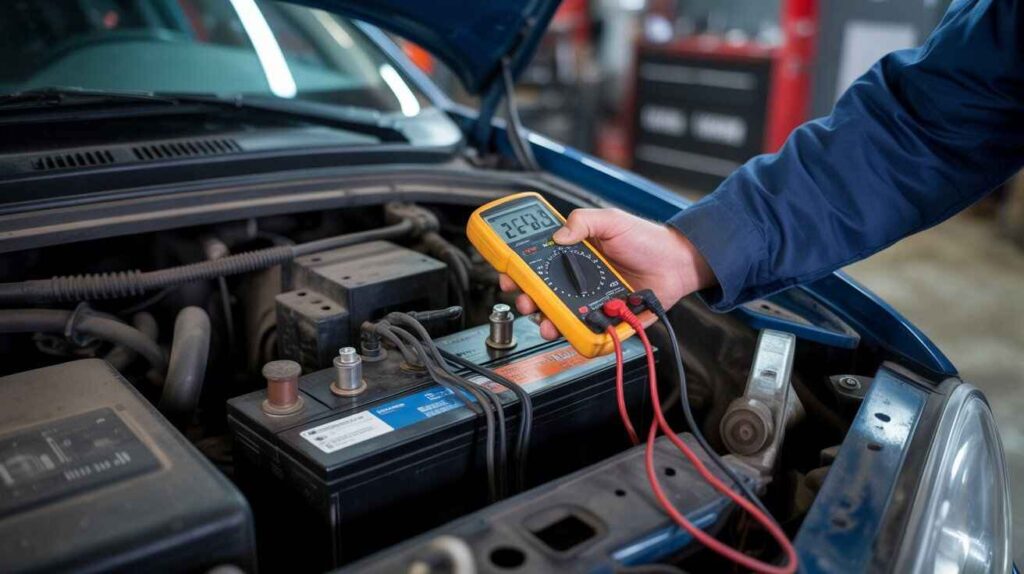
Diagnostic Checklist for a Car That Keeps Dying with a New Battery
| Step | What to Do | Healthy Reading / Sign |
|---|---|---|
| 1 | Check battery resting voltage (engine off) | ~12.6V |
| 2 | Start engine, check alternator output | 13.8–14.6V |
| 3 | Test for parasitic drain (multimeter in amps mode) | < 50mA |
| 4 | Inspect terminals & grounds | Clean, tight, corrosion-free |
| 5 | Check fuses & relays | All intact/working |
| 6 | Scan ECU with OBD2 tool | No stored fault codes |
Common Reasons for a Car Dying with a New Battery
1.Parasitic Battery Drain
One of the most common reasons a car continues to die with a new battery is parasitic drain — when an electrical component continues to draw power even after the car is turned off.
Signs of parasitic drain include the battery dying overnight, no warning lights, yet the battery is flat, and the issue persists even after replacing the battery.
Typical culprits include aftermarket stereos, alarms, dash cams, and lights in the glove box or trunk that remain on, as well as faulty control modules or alternator diodes.
To test for parasitic draw, disconnect the negative battery cable, place a multimeter (set to amps) between the cable and terminal, and check the reading. A normal draw is under 50 milliamps. If it’s higher, pull fuses one at a time until the reading drops the circuit that lowers the draw is where the problem lies.
Parasitic drain is tricky because it often hides in accessories you don’t suspect. If your car battery keeps draining overnight, this should be the first thing to check.
2.Alternator or Charging System Failure
Another major reason a new battery keeps dying is a bad alternator. The alternator’s job is to recharge the battery while the vehicle is in operation. If it fails, the car will run only on the battery until it is completely drained.
To check the alternator, start the engine and measure battery voltage with a multimeter. A healthy alternator typically shows a voltage range of 13.8–14.6 volts. Anything below 13.5 volts means weak charging, while anything above 15 volts suggests a faulty regulator.
Warning signs of alternator failure include dim or flickering headlights, the battery warning light on the dashboard, and the car dying shortly after a jump-start. If the voltage drops quickly when turning on accessories like lights or AC, the alternator isn’t keeping up.
Even with a brand-new battery, a failing alternator guarantees repeated breakdowns — making it a top cause to rule out early.

3.Installation Issues or Wrong Battery
Sometimes the problem isn’t your car at all — it’s the installation. Loose or corroded terminals can prevent proper contact, blocking your car from drawing enough power, even with a new battery. Always clean battery posts with a wire brush and tighten clamps securely.
Another common mistake is using the wrong battery size or low cold cranking amps (CCA). For example, if your car requires a Group 35 battery with 600 CCA, but you install one with only 450 CCA, it will struggle to start and fail under load.
Also, don’t forget the ground strap. A loose or missing ground can mimic the symptoms of a dead battery, leaving you stranded even though the battery itself is fine.
4.ECU Reset, Stalling or Idle Issues
Modern cars depend heavily on electronic control units (ECUs). When you disconnect or replace a battery, the ECU may lose its adaptive memory. This can cause the car to idle roughly, stall at stoplights, or hesitate when accelerating.
This doesn’t always mean there’s a mechanical issue. In many cases, the ECU just needs to relearn idle and throttle settings through a normal drive cycle.
However, if stalling or rough idle persists after several trips, it may indicate a dirty throttle body, a failing idle air control valve, or the need for a software update.
5.Fuses, Relays, and Component Failures
A new battery can reveal hidden electrical issues that were previously masked. Problems such as a weak fuel pump relay, a failing starter relay, or a blown fuse may suddenly appear once fresh power is supplied.
Signs to watch for include intermittent starting, non-functioning electrical accessories, or the engine cranking but not firing. A quick visual inspection of the fuse and swapping relays with known good ones can help diagnose the issue.
Often, these electrical faults mimic battery problems, but the battery isn’t to blame. Always check fuses and relays as part of your troubleshooting before blaming the new battery.
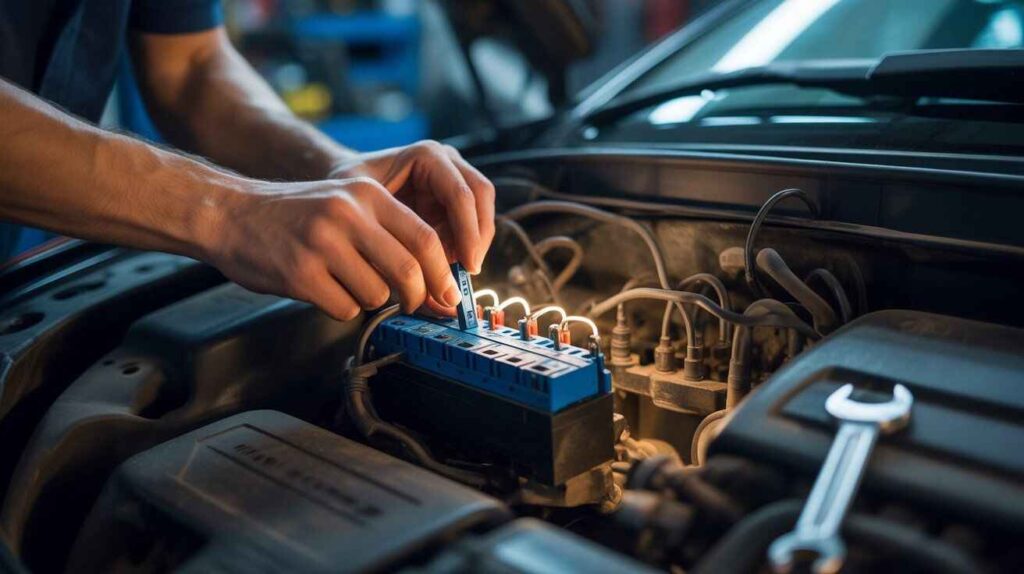
Troubleshooting Steps
- Check battery voltage. Off: 12.6 volts is healthy.
- Inspect the alternator. Running: 13.8–14.6 volts is normal.
- Look for parasitic drain. Use a multimeter in amps mode; under 50 milliamps is safe.
- Inspect terminals and grounds. Tighten and clean.
- Check fuses and relays. Replace faulty ones.
When to Call a Mechanic
If your alternator fails tests, parasitic drain exceeds what you can safely diagnose, or the ECU throws persistent error codes, it’s time to see a professional. Mechanics have tools to measure parasitic draw precisely and can test alternator diodes or wiring.
Simple Preventative
- Clean and tighten battery terminals regularly.
- Use the correct battery group size and CCA rating for your vehicle.
- Avoid leaving accessories, such as chargers or lights, plugged in overnight.
- Drive your car frequently — short trips may not fully recharge the battery.
- Check alternator belts and wiring during routine maintenance.
FAQs
Q1.Can a new battery be bad?
A. Yes, defects or long storage can weaken it.
Q2.Why does my car die overnight?
A. Likely parasitic drain.
Q3.Can the wrong battery cause issues?
A. Absolutely. Wrong size or low CCA won’t last.