The Car AC fuse keeps blowing due to short circuits, faulty compressor clutch, or damaged wiring. Ignoring it can lead to bigger electrical issues, so timely repair is important. Regular inspection and maintenance can help prevent the fuse from blowing again.
Why Does My Car AC Fuse Keep Blowing?
When a car’s AC stops working, a blown fuse is often the cause. If the car AC fuse keeps blowing, it signals an electrical fault often a short-to-ground or failing compressor clutch.
Replacing fuses isn’t enough; diagnosing the root problem is key to restoring safe, reliable cooling.
Understanding the AC Fuse
An automotive fuse protects wiring and components from electrical overload by breaking the circuit when current exceeds safe limits. The A/C fuse specifically shields the compressor clutch and related circuits from damage.
When this fuse blows, signs may include the AC not working, a burning smell, a melted fuse element, or the AC fuse keeps tripping repeatedly.
Is It Safe to Keep Driving?
Driving with a blown car AC fuse won’t damage the engine, but ignoring the issue risks electrical overheating or melted wiring.
Replacing the fuse repeatedly is not a long-term solution it only masks the fault. Short trips without AC may be fine, but ongoing failures mean it’s time to diagnose and repair properly.
Common Causes for Blowing AC Fuses
When drivers wonder, “Why does my car AC fuse keep blowing?”, the causes generally fall into three groups: electrical issues, component failures, or installation problems.
1.Electrical Issues
Short Circuits
A short circuit occurs when electrical current flows through an unintended route to the ground. Causes include frayed wiring, damaged insulation, or moisture near the condenser fan/radiator. These quickly exceed the fuse rating and make it blow repeatedly.
Electrical Overload
An overload occurs when parts draw too much current. A faulty clutch coil, failing blower motor, or shared circuits can cause this. Over time, overloads weaken the fuse until it fails, often intermittently.

2.Component Failures
Faulty AC Compressor
A shorted clutch coil or seizing bearing makes the compressor draw excessive current, blowing the AC fuse sometimes instantly when turned on.
Malfunctioning AC Relay
A stuck or burned relay can send irregular current, often mimicking a wiring short and blowing the fuse.
Defective Fans or Motors
A worn or seizing fan/blower motor pulls too much current. Since they often share circuits with the compressor, they can be a hidden cause of fuse failure.
3.Installation Issues
Improper Wiring
Poor splices, loose harnesses, or incorrect routing can rub against metal and create a short-to-ground, often causing repeated fuse failure.
Wrong Fuse Rating
Using a lower-rated fuse leads to nuisance blowouts, while a higher-rated fuse risks overheating wiring. Always adhere to the designated rating provided in the manual or on the fuse box.
Troubleshooting Steps
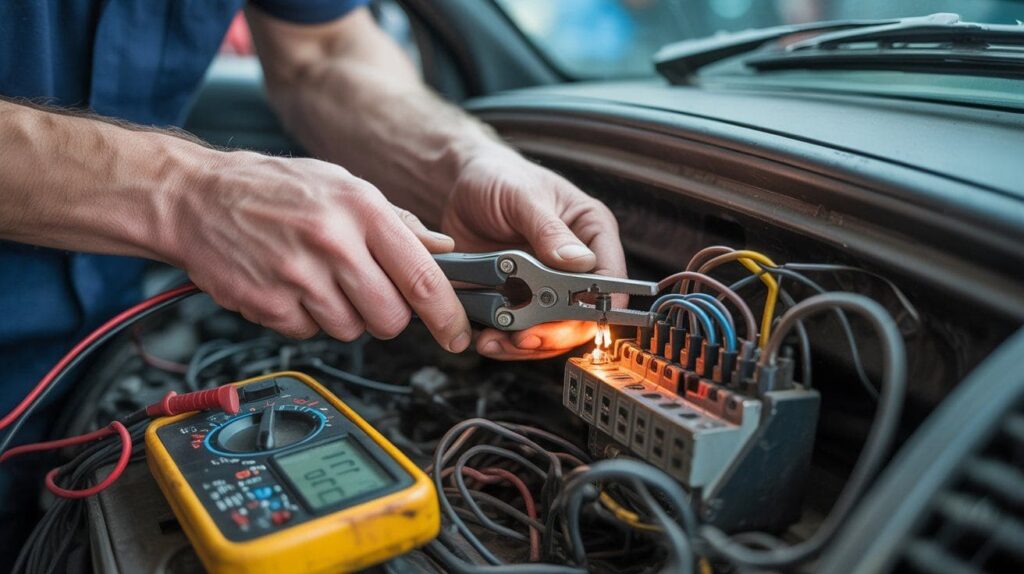
| Step | What to Do | Why It Matters | Tools Needed |
|---|---|---|---|
| Inspection | Check wiring, connectors, insulation. | Finds visible damage or shorts. | Flashlight, hand tools |
| Testing Components | Test coil resistance, relay, and ground. | Spots faulty parts or overloads. | Multimeter, test light |
| Consulting a Professional | Visit a mechanic if fuse still blows. | Ensures safe, accurate repair. | Wiring diagrams , scan tools |
Step-by-Step DIY Diagnosis
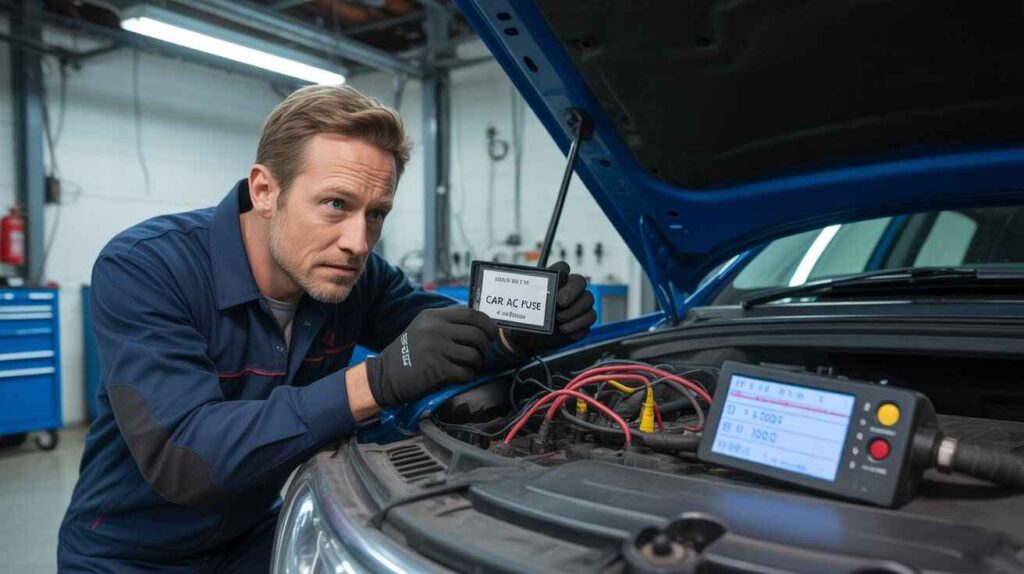
- 1.Confirm the correct fuse rating from lid/manual.
- 2.Replace fuse; unplug compressor clutch and turn A/C on.
- 3.If fuse still blows, swap/test the A/C relay.
- 4.Inspect harness near pulleys/edges for rub-through.
- 5.Measure clutch-coil resistance vs spec.
- 6.Check continuity to chassis for shorts.
- 7.Clean/retighten grounds and connectors.
- 8.Isolate blower/condenser fan if circuits are shared.
- 9.Clamp-test compressor current draw.
- 10.Stop DIY and call a mechanic if faults persist.
Fixes That Actually Stop the Fuse From Blowing
To fix a car AC fuse that keeps blowing, start by repairing or replacing any frayed wiring and damaged connectors. If needed, replace a faulty compressor clutch coil or the entire compressor unit.
A faulty A/C relay should be replaced, and clean grounds restored. Rerouting harnesses with loom adds protection, while removing aftermarket splices prevents hidden shorts. Always use the correct fuse rating, and finally, retest the system to confirm proper current draw and safe operation.
Prevention & Maintenance Tips
1.Regular Maintenance
Routine inspections and servicing are the best defense against a car AC fuse that keeps blowing. Checking wiring, connectors, and the compressor during scheduled maintenance helps catch problems early.
Following your vehicle’s recommended service schedule ensures the AC system, fans, and relays remain in good condition, reducing the risk of overloads or shorts.
2.Awareness of Electrical System
Stay alert to warning signs like burning smells, intermittent AC function, or repeated fuse failures. Avoid overloading circuits with aftermarket accessories and always use the AC system as intended.
Proper usage, along with protective measures like keeping harnesses secured and splash shields intact, helps prevent electrical faults that can damage the AC fuse.
FAQs
1.Can low refrigerant blow a fuse?
No, but low refrigerant may stress components, indirectly causing fuse issues.
2.Is it safe to upsize a fuse temporarily?
No, it’s unsafe and risks electrical damage.
3.Can blower motor be to blame?
Yes, if on a shared circuit—test separately to confirm.