Car AC lines are hot, it could be due to low refrigerant, a clogged condenser, or a faulty compressor. Normally, the high-pressure line is warm, but persistent heat with poor cooling needs a mechanic.
Why Are My Car AC Lines Hot?
If you’ve ever touched the hoses running from your car’s AC and notice , why are my car AC lines hot?. Car’s AC lines feel unusually hot. Some warmth is normal, especially on the high-pressure side, but excessive heat or both lines being hot usually signals a problem. Understanding why this happens can help you fix the issue and get your AC blowing cold air again.
What It Means When Car AC Lines Are Hot
Car’s AC system uses refrigerant moving through high- and low-pressure lines. Normally, the high-pressure line feels hot, and the low-pressure line feels cold.
If both lines are hot, it usually indicates a problem—like low refrigerant, a blocked condenser, or a failing compressor.
Hot lines often cause poor cooling, and catching the issue early can prevent costly repairs. Essentially, they act as a warning that your AC system needs attention.
Understanding High-Side vs Low-Side AC Lines
High-Side (Pressure) Line
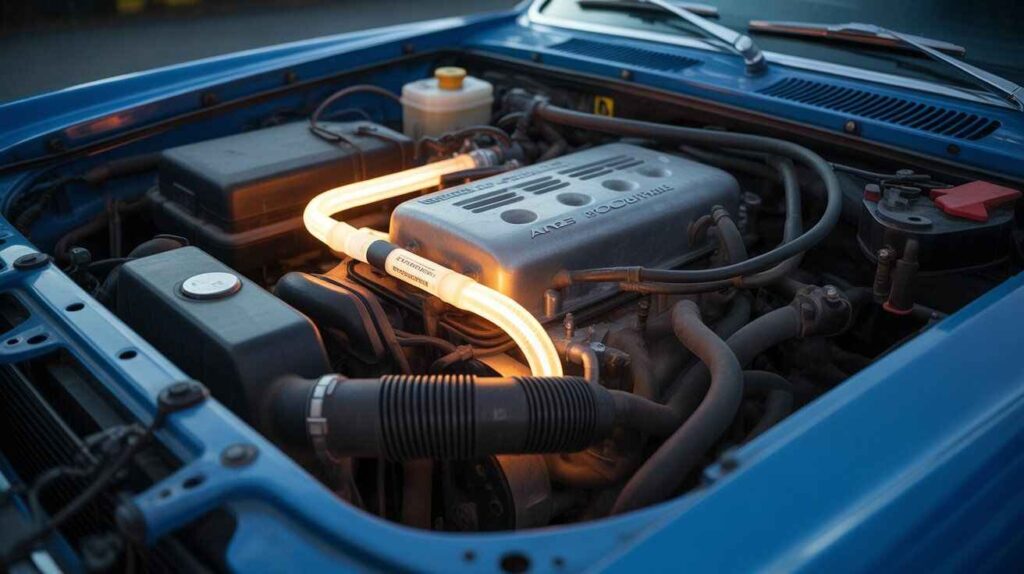
After leaving the compressor, the refrigerant travels through the high-side line toward the condenser. This line is normally hot because the compressed refrigerant raises its temperature and pressure, which is released through the condenser before cycling back.
Low-Side (Suction) Line
After cooling in the condenser, the refrigerant passes through the expansion valve or orifice tube into the evaporator, absorbing heat from the cabin. The low-side line should feel cool or cold as it carries refrigerant back to the compressor.
Normal vs Abnormal Temperatures in Car AC Lines
Under normal operation, the high-side AC hose is hot while the low-side hose stays cool, enabling proper cabin cooling.
If both hoses are hot or the low-side isn’t cold, it often signals low refrigerant, a faulty expansion valve, cooling fan issues, or even an overcharged system, which strains the compressor.
Hot AC lines indicate reduced cooling and potential damage to costly parts. Poor airflow, strange noises, or warm cabin air are early signs your AC system needs attention.
Common Causes of Hot Car AC Lines
Several issues can cause unusually hot AC lines. Here are the most common ones are :
1.Low Refrigerant or Leak
The number one cause is low refrigerant. Without enough refrigerant, the compressor can’t maintain the correct pressure.
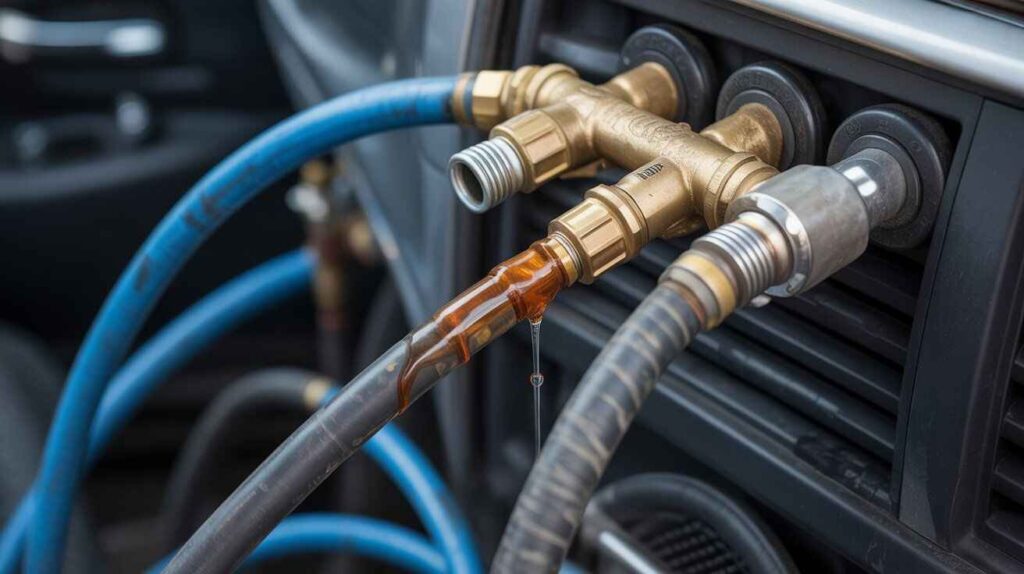
Both the high-side and low-side lines may feel hot, and the cabin won’t cool. Refrigerant leaks often leave oily residue around fittings or hoses.
2.Faulty Expansion Valve/Orifice Tube
This part controls how much refrigerant enters the evaporator. If it’s stuck closed or clogged, too little refrigerant flows, causing the low-side line to heat up. If stuck open, pressures become unbalanced, again overheating the system.
3.Compressor or Clutch issue
A worn-out compressor or failed clutch can’t pressurize refrigerant properly. Without pressure differences, both lines may feel hot. A noisy compressor or one that cycles irregularly is a common symptom.
4.Dirty or Blocked Condenser
When the condenser fins are clogged with dirt or debris, heat can’t escape. That extra heat transfers to the AC lines, especially in stop-and-go traffic where airflow is limited.
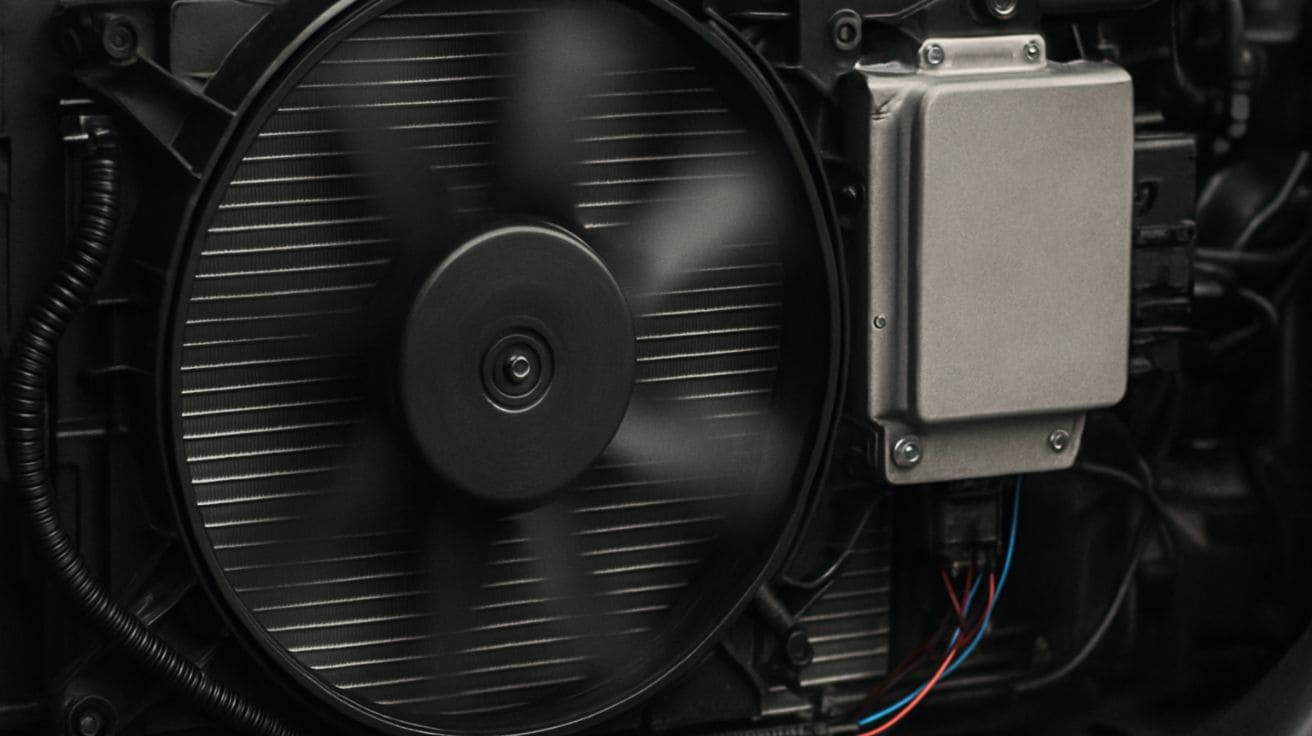
5.Malfunctioning Cooling Fans
Radiator and condenser fans are critical for airflow. If they fail, the condenser can’t release heat effectively.
Diagnosing the Problem
Visual Inspection
Start with a simple look at your AC lines. Check for cracks, worn rubber, or oily residue that signals refrigerant leaks. Pay close attention to fittings and connections.
Testing Refrigerant Levels
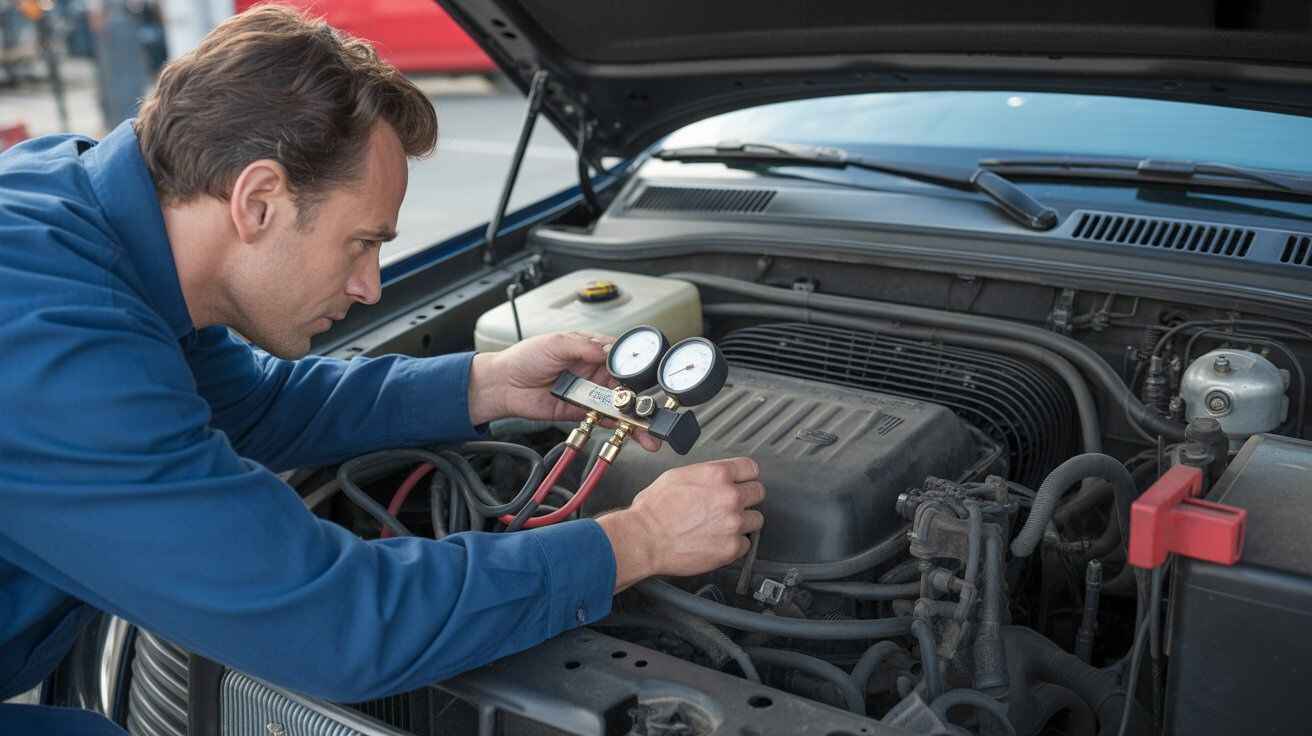
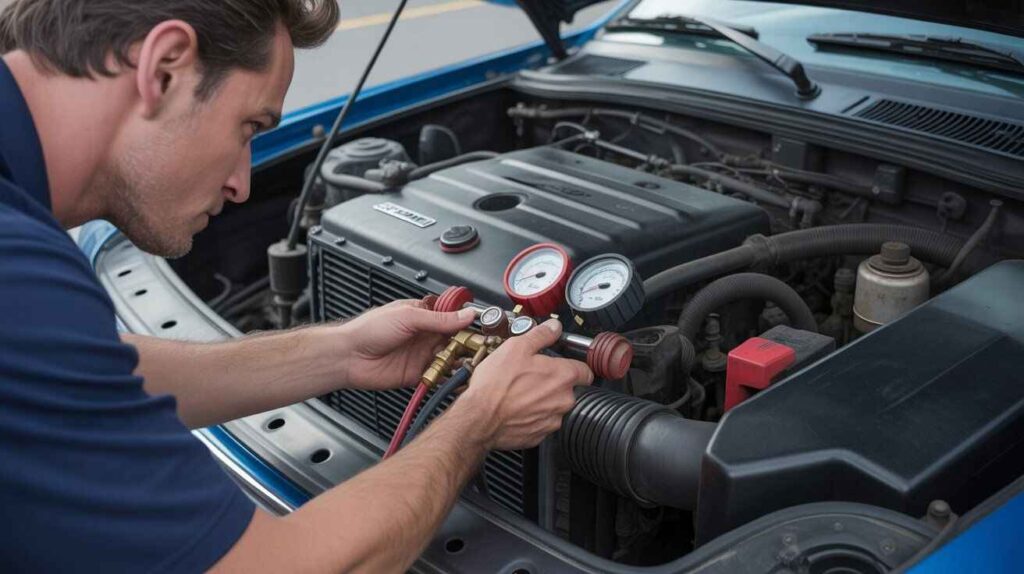
Use a manifold gauge set to measure pressure on both the high-side and low-side lines. Abnormal readings—too high or too low—indicate problems like leaks, overcharging, or a weak compressor.
Observing AC System Behavior
Watch how your AC performs: weak cooling, fluctuating temperatures, or warm air at idle indicate potential issues.
Temperature differences between lines can reveal whether the problem is refrigerant-related or airflow-related.
When to See a Mechanic
A warm high-side line is normal, but both lines hot or poor AC cooling signals trouble. Minor fixes like cleaning the condenser or adding refrigerant can sometimes be done at home.
However, if you notice persistent warm air, strange compressor noises, visible leaks, or fluctuating line temperatures, it’s time for a professional mechanic.
They can test refrigerant pressure, detect leaks, and repair compressors safely, protecting your AC system and keeping your cabin comfortable.
Solutions and Preventative Measures
Adding Refrigerant
If levels are low, you can recharge the system. Always use the manufacturer-specified refrigerant and avoid overcharging, which can damage the compressor.
Cleaning the Condenser
A dirty condenser is easy to fix. Use compressed air or a gentle hose spray to clean fins. Clear airflow keeps refrigerant temperatures in check.
Repairing or Replacing the Compressor
If the compressor or clutch is failing, replacement may be unavoidable. Repair costs vary widely, but expect anywhere from $800–$1,200.
Leak Repair Techniques
Small leaks may be sealed with professional kits, but major leaks require tools like UV dye or electronic detectors. In most cases, it’s best to have a certified mechanic handle refrigerant leaks.
FAQs
Q1: Can a dirty condenser cause hot AC lines?
Yes, a clogged condenser prevents heat from escaping and makes both lines hotter.
Q2: Why are both my car AC lines hot?
Usually from low refrigerant, a bad expansion valve, or cooling fan failure.
Q3: How do I know if my AC compressor is failing?
Look for loud noises, uneven cooling, and both lines running hot.