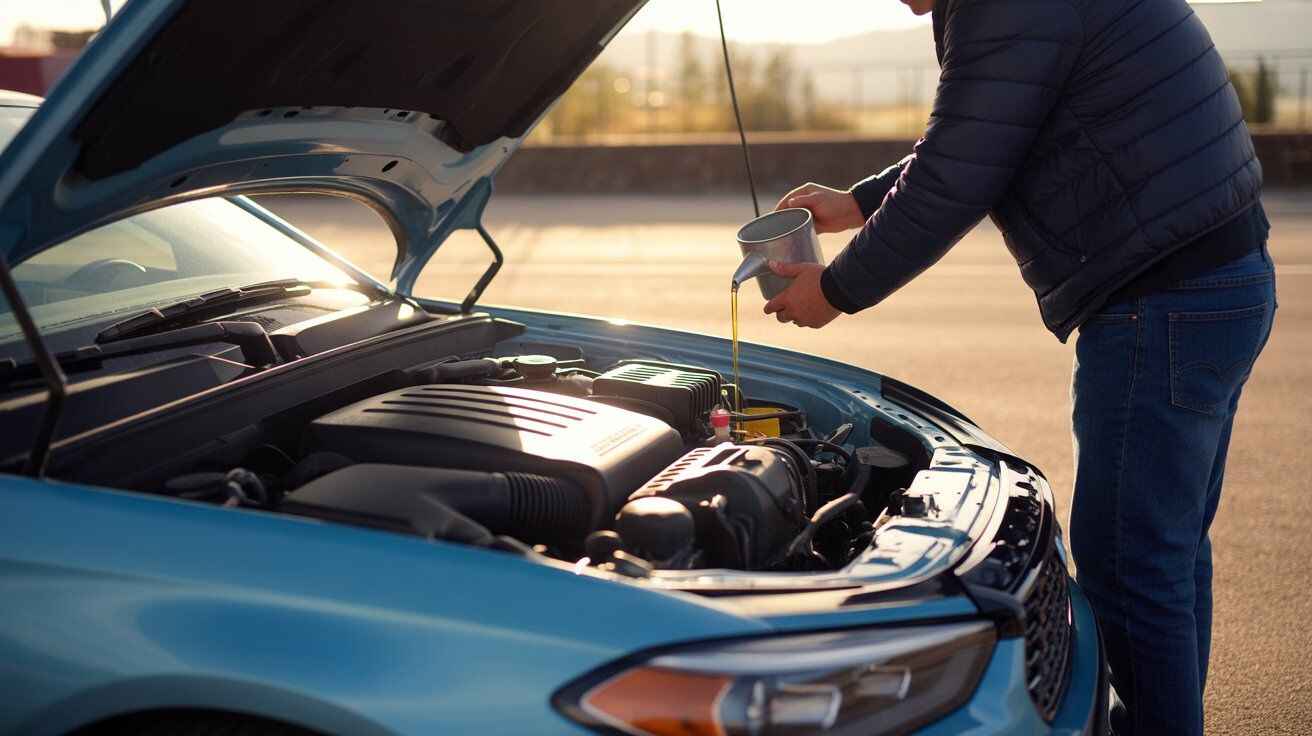
Yes, in most cases you can put oil in a hot car, meaning you can top up engine oil when the engine is warm, not running, and not overheated.
How to Safely Put Oil in a Hot Car
| Step | Action | Why It Matters |
|---|---|---|
| 1 | Park on level ground, turn engine off, engage parking brake | Ensures safety and a correct oil level reading |
| 2 | Wait 10–15 minutes for partial cool-down | Reduces burn risk and lets oil drain to the pan for accuracy |
| 3 | Open hood, locate dipstick and oil fill cap | Prepares for inspection and refill |
| 4 | Wipe dipstick, insert fully, withdraw to check oil level | Confirms if topping up is needed |
| 5 | Add oil slowly using a funnel — ¼-quart at a time | Prevents overfilling and aeration issues |
| 6 | Re-check dipstick after each small addition | Ensures oil level stays within the safe mark |
| 7 | Confirm correct viscosity grade per owner’s manual | Protects engine performance and longevity |
| 8 | Secure oil cap and clean spills | Prevents leaks, odors, and contamination |
| 9 | Monitor over next few drives | Ensures stable oil level and no underlying problems |
Understanding Engine Temperature
Normal Operating Temperature
Modern car engines typically maintain a temperature between 180–220 °F (82–105 °C) under normal conditions. This range ensures optimal efficiency, controlled emissions, and proper oil flow.
When the engine is warm, the oil becomes thin enough to circulate easily while remaining stable — perfect for accurate dipstick readings.
Risks of Adding Oil to a Hot Engine
While topping up oil is generally safe, doing it when the engine is extremely hot or still running can be risky.
- Thermal Shock: Pouring cold oil onto hot metal can cause sudden temperature changes, stressing metal components.
- Inaccurate Dipstick Readings: Hot oil may not have settled into the sump, leading to overfilling.
- Burn and Spillage Risk: Contact with hot engine parts or oil droplets can cause serious burns.
- Oil Aeration: Adding oil too fast may lead to foaming, which reduces lubrication efficiency.

Why Can Adding Oil to a Hot Car Be Confusing?
The confusion comes from old warnings about cracking engine blocks or damaging seals, which were more relevant in older engines using less-stable oils.
Modern engines, built with tighter tolerances and advanced lubricants, can handle topping up oil much better. However, some caution is still necessary.
- The crankcase isn’t highly pressurized like the coolant system, but it’s still warm and may contain oil mist or blow-by gases.
- Opening the oil cap immediately after a hard drive can release heat or steam.
- The oil’s viscosity (its “thickness”) changes when hot, which can affect dipstick readings and make the oil level appear inaccurate.
Types of Oil to Consider When Putting Oil in a Hot Engine
Conventional vs. Synthetic Oil
When adding oil to a warm engine, it’s important to understand the difference between conventional and synthetic oil.
- Synthetic oil is designed with a uniform molecular structure, fewer impurities, and better thermal stability. It resists breakdown at high temperatures and maintains consistent viscosity.
- Conventional oil, made from mineral bases, can degrade faster under heat, lose thickness, and form sludge over time.
For frequent warm-engine top-ups or hot-weather driving, synthetic oil provides superior protection and performance.
Oil Additives for Heat Protection
Modern lubricants contain additives that enhance oil performance in warm conditions:
- Viscosity modifiers maintain oil film strength across temperatures.
- Antioxidants prevent thermal breakdown and oxidation.
- Detergents and dispersants keep engine parts clean by preventing deposit buildup.
Choosing a high-quality oil with the right additive package ensures smooth operation — even when adding oil to a warm engine.
Hot vs Cold Oil Level Checks
| Condition | When to Check | Pros | Cons |
|---|---|---|---|
| Warm / Hot (10–15 min wait) | After short cool-down | Accurate level while oil is circulated | Parts still hot — caution needed |
| Cold (several hours) | Before driving | Most accurate dipstick reading | Slightly higher reading possible |
| Just Shut Off | Immediately after driving | Fast in emergencies | Oil not settled — inaccurate & higher burn risk |
Common Mistakes When You Put Oil in a Hot Car
- Adding oil with the engine running — increases risk of burn, inaccurate reading, and spillage.
- Using wrong viscosity — thick oil under hot engine conditions may not flow properly; likewise thin oil may shear too easily.
- Pouring too fast or too much — leads to overfilling, which can cause frothing, increased pressure, blown seals.
- Ignoring the wait-period — skipping the 10-15 minute pause may give an unreliable oil level reading and raise safety risks.
Best Practices for Adding Oil
Safety First
Always prioritize safety when working under the hood of a warm car. Wear gloves, avoid touching hot metal or engine parts, and keep a steady hand when pouring oil. If the engine is too hot to touch nearby components, wait a few more minutes.
Check Level While Hot
Checking the dipstick after a short cool-down (10–15 minutes) gives a realistic view of circulating oil levels. Make sure the car is parked on level ground and the engine is off before checking and topping up.
Engine Cooling Tips
If the oil level isn’t urgently low, allow the engine to cool longer to avoid heat exposure. Waiting also ensures all the oil drains back into the pan for the most accurate reading possible.

FAQs
Q1.How long should I wait after driving to add oil?
About 10–15 minutes so the oil can settle back into the oil pan.
Q2.Can adding too much oil damage the engine?
Yes. Overfilling can cause foaming, pressure buildup, and damage to seals or internal components.
Q3.Can low engine oil cause overheating?
Absolutely. Low oil increases friction and can lead to overheating and severe engine wear.