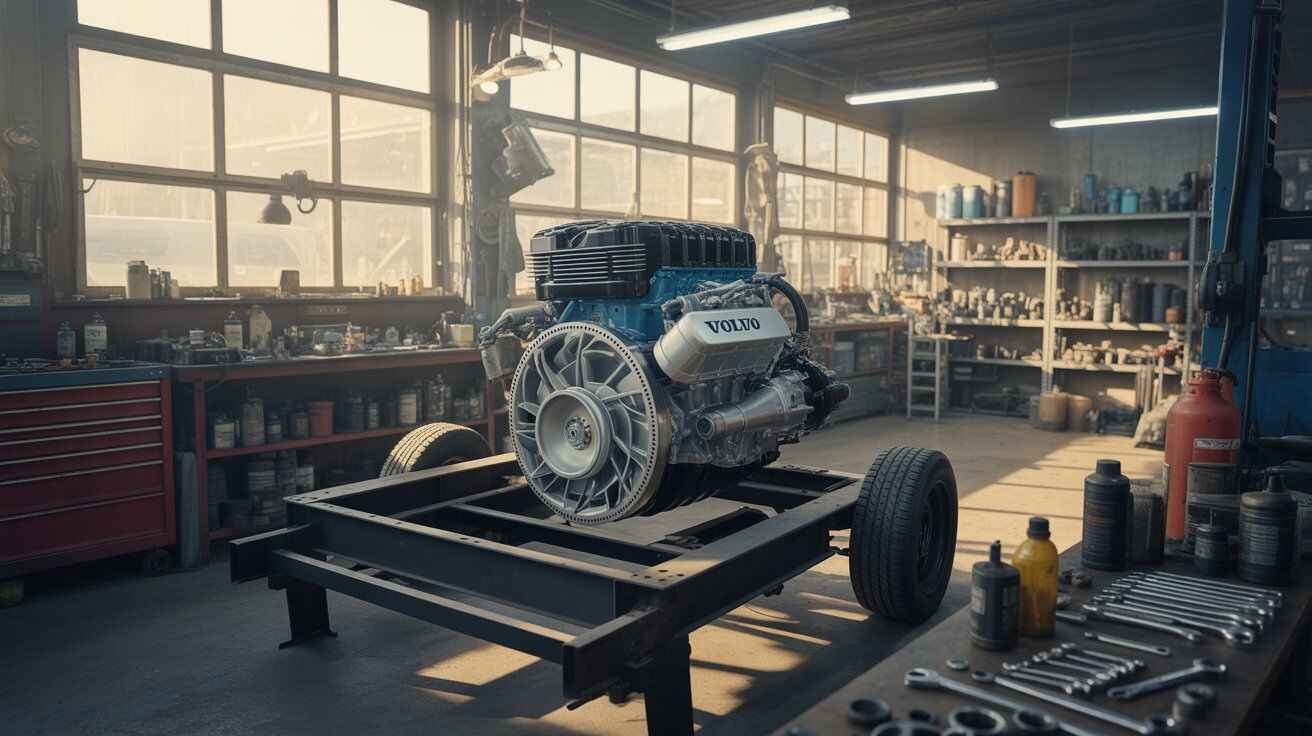
Yes, you can use Volvo Maine Redblock in a car, provided you address the cooling and mounting differences.
Can You Use Volvo Maine Redblock in a Car?
Yes, Volvo Maine Redblock can be adapted for use in cars. Mechanically, the block, crankshaft, and core internals of marine and car versions are similar.
However, marine engines use raw-water cooling systems instead of radiators and have different flywheel couplings, rather than a clutch. To make the swap work, you’ll need to install a car-style water pump, oil sump, alternator, and exhaust manifold.
These updates allow the engine to handle normal driving conditions. Once converted, the marine Redblock delivers the same reliability and power output as its automotive twin.
What Is the Volvo Redblock Engine?
The Volvo Redblock engine—a marine version of Volvo’s legendary cast-iron Redblock—earned a reputation for exceptional durability, smooth torque, and mechanical simplicity. Found in both cars and boats, it shares much of its DNA with automotive B21, B23, and B230 engines.
The Volvo Penta marine versions, used in boats, are essentially the same engines tuned for constant RPM and water-cooled systems. These marine blocks often feature different cams, pistons, and cooling layouts designed for reliability at sea.
Because they share the same engine architecture as automotive red blocks, performance potential, modification requirements, and real-world viability for enthusiasts and builders.
Many car builders explore converting them for land use. This shared DNA makes the swap possible, although not a plug-and-play process.
Differences Between Marine and Car Redblocks
The biggest difference between marine and car Redblocks is in the cooling system.
Marine engines circulate seawater through a heat exchanger, while car engines rely on a closed radiator system. The oil sump and pickup orientation also vary; marine setups often use remote oiling systems.
Additionally, the bellhousing bolt pattern and flywheel couplings are designed for boat transmissions, not car gearboxes. The ignition timing and ECU mapping in marine units focus on sustained RPM rather than variable loads.
Understanding these differences helps you plan modifications that keep the Redblock reliable and compliant with your vehicle’s requirements.
Conversion Steps to Use Volvo Maine Redblock in a Car
- Remove marine accessories such as the water pump, exhaust riser, and raw-water cooling setup.
- Install a car-style cooling system, including a radiator, thermostat, and hoses.
- Replace the oil sump and pickup tube to fit your vehicle’s layout.
- Adapt the flywheel and clutch assembly for compatibility with automotive transmissions.
- Update the ignition system or ECU for car use—marine timing curves are not ideal for variable RPM.
- Test for leaks and coolant circulation before installation.
These steps ensure your converted Volvo Penta Redblock runs smoothly in a car. Most builders recommend consulting swap guides or Volvo forums, such as Turbobricks, for detailed fitment notes.
Compatibility with Other Vehicles
Identifying Compatible Models
The Volvo Redblock engine fits easily into classic Volvo models such as the 240, 740, and 940 series. Swaps into other vehicles are possible, but they depend on the engine bay space, transmission bolt pattern, and mount alignment.
Compatibility improves when donor and recipient share similar drivetrain layouts.
Potential Modifications Required
A Volvo marine Redblock swap often requires custom engine mounts, modified drivetrain connections, and rewiring of the electrical system to integrate sensors and ECU signals.
Some builds require adapter plates for transmission fitment. Attention to cooling, exhaust routing, and fuel delivery ensures smooth integration and long-term reliability after installation.
Performance Considerations
Power Output and Reliability
The Volvo Redblock engine produces strong low-end torque and stable mid-range power, making it ideal for daily driving and mild performance builds.
When installed in non-Volvo vehicles, its robust cast-iron block and simple design maintain excellent reliability, provided proper cooling and lubrication systems are correctly adapted.
Maintenance Requirements
Compared to standard engines, the Redblock’s maintenance remains straightforward—oil changes, valve adjustments, and belt inspections are simple.
Common issues include leaks from old gaskets and worn timing components, which can be easily resolved with quality replacements. Regular servicing ensures dependable operation even after extensive custom installation or marine-to-car conversions.
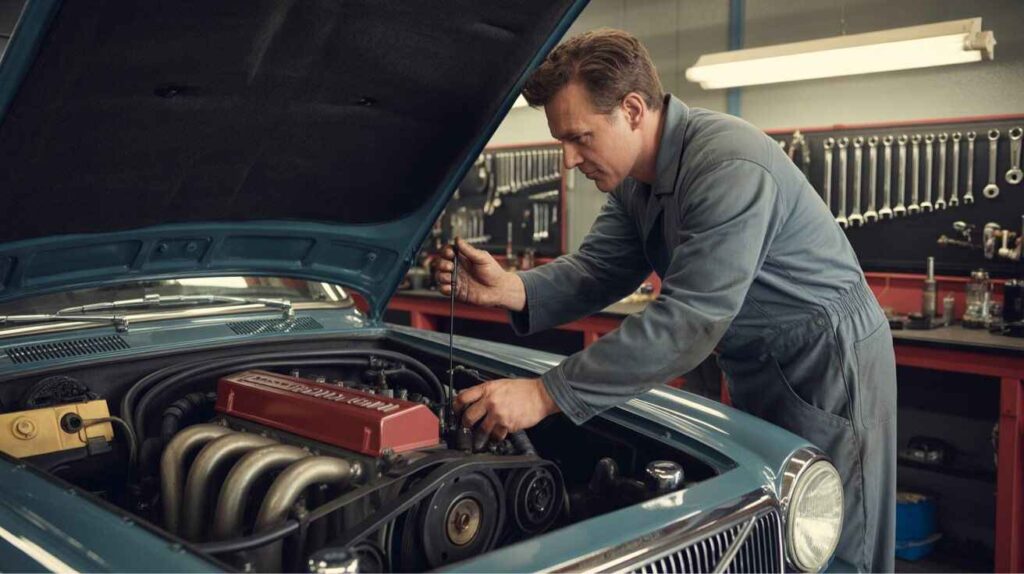
Pros and Cons of Using a Redblock Engine in a Different Car
Advantages
The Volvo Redblock offers affordable performance, long-term durability, and easy availability through marine and automotive sources.
Its adaptable design supports engine swap projects across multiple platforms, delivering a reliable and tunable powertrain without the high costs often associated with modern turbocharged or alloy engines.
Disadvantages
Swapping a Redblock engine into non-Volvo vehicles can pose fitment challenges, requiring fabrication and advanced mechanical skills.
Limited aftermarket support for custom applications and sourcing specific adapters or wiring solutions can increase project complexity, demanding patience and technical know-how for successful integration.
FAQs
Q1: Can I use Volvo Maine Redblock in any car?
Not every model verifies the mount and transmission fitment.
Q2: Are marine and car Redblocks identical?
Internally, yes, but accessories differ.
Q3: What about performance?
Comparable to stock car engines once tuned properly.
Q4: Is the swap worth it?
Yes, if you already own a marine engine and can handle mild fabrication work.