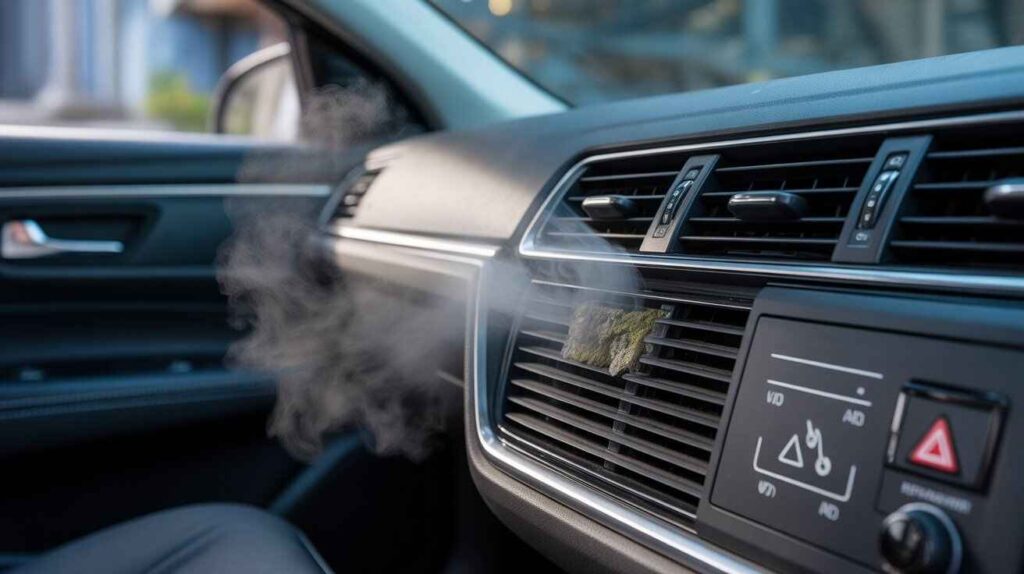
Car AC may smell like chemicals due to refrigerant leaks, mold or mildew buildup in the evaporator, or burning electrical components. These issues release odors that resemble chemicals or solvents.
Why Does My Car AC Smell Like Chemicals?
If you’ve ever wondered, “Why does my car AC smell like chemicals?” the answer is often linked to a refrigerant or coolant leak, mold buildup on the evaporator, or a dirty cabin air filter. These issues can create sweet, musty, or harsh chemical odors inside your vehicle.
How to Recognize a “Chemical” Smell vs Other Car AC Odors
Not all AC odors point to the same problem.
- Sweet or chemical smell, like nail polish remover → often a refrigerant or coolant leak.
- Bleach or chlorine-like odor → washer fluid vapors or chemical cleaners entering the intake.
- Musty or stale odor → mold or mildew inside the AC evaporator.
- Burning plastic or acrid odor → possible electrical issues with wiring or blower motor.
Quick Checklist
| Smell | What It Means | Quick Action |
|---|---|---|
| Sweet / chemical | Coolant or refrigerant leak | Check fluids, schedule repair |
| Musty | Mold or mildew in system | Run AC on high, replace cabin filter |
| Bleach / chlorine | Washer fluid vapors or cleaners | Inspect washer fluid & intake |
| Burning plastic | Electrical issue (wiring, blower motor) | Stop AC, get service |
| Dirty / chemical filter | Contaminated cabin filter | Replace filter |
| Strong odor + coolant loss | Heater-core or coolant leak | Seek immediate professional help |
How to Diagnose the Problem (Step-by-Step Checks)
- Note when the smell appears. Startup only, or constant while running?
- Check coolant levels. A drop in coolant plus a sweet odor points to a heater-core leak.
- Inspect the cabin air filter. Pull it out — if it smells chemical or looks dirty and damp, replace it.
- Run the AC. Stand near the vents and intake area (don’t sniff deeply). Look for any oily residue.
- Listen for hissing sounds. This can signal refrigerant escaping.
- Switch between fresh air and recirculate. If the odor fades in recirculate, the source may be outside.

Common Causes of Chemical Smells in Car AC
1.Refrigerant Leak
Refrigerator leaks, it often produces a sharp, sweet chemical smell. Signs include weak cooling, oily residue around hoses, and hissing sounds under the hood. Refrigerant leaks not only reduce AC performance but can also damage the compressor and harm the environment.
2.Mold and Mildew Growth
Moisture in the evaporator core creates the perfect breeding ground for mold and mildew. This leads to a musty chemical odor, especially strong at startup. Aside from being unpleasant, mold spores can cause coughing, sneezing, and headaches in sensitive passengers.
3.Electrical Issues
A burning chemical or plastic smell may indicate overheating wires or a failing blower motor. Electrical issues pose a safety hazard and can cause system failure or even fire if ignored.
4.Contaminated Cabin Air Filter
Your cabin air filter traps dirt and pollutants. Over time, it can absorb chemicals from the environment or simply get clogged with debris.
A dirty filter can emit chemical odors, restrict airflow, and reduce overall AC efficiency. Replacing it regularly is one of the simplest solutions to odor problems.
Impact on Health and Vehicle Performance
Potential Health Risks
Breathing chemical odors from your car AC is unsafe. Refrigerant leaks can irritate the eyes, nose, and throat, and high exposure may cause dizziness.
Coolant leaks release toxic ethylene glycol vapors. Mold spores can trigger allergies and asthma, especially in children and older adults.
Effects on Vehicle Performance
Chemical smells often indicate AC or engine issues. Refrigerant leaks reduce cooling and can damage the compressor.
Heater-core leaks cause coolant loss, risking engine overheating. Mold buildup clogs airflow, straining the blower motor. A dirty cabin filter limits ventilation, forcing the AC to work harder.
Solutions for Eliminating Chemical Smells
1.Inspecting for Refrigerant Leaks
If you notice a sweet chemical odor or hissing near the AC, stop using it. Refrigerant leaks require specialized tools and should always be handled by a professional technician.
2.Cleaning the AC System
Odors from mold or bacteria can be reduced with AC cleaning sprays, ozone treatment, or professional deep cleaning services. These methods disinfect the evaporator and eliminate hidden contamination.
3.Replacing the Cabin Air Filter
Locate your cabin air filter, remove and replace it with a fresh, high-quality HEPA filter. This simple step helps trap pollutants, reduces chemical odors, and improves cabin air quality.
4.Addressing Electrical Issues
A burning plastic odor often signals wiring or blower motor problems. Check fuses and visible wiring if safe, but always have a qualified mechanic repair electrical issues to prevent hazards.
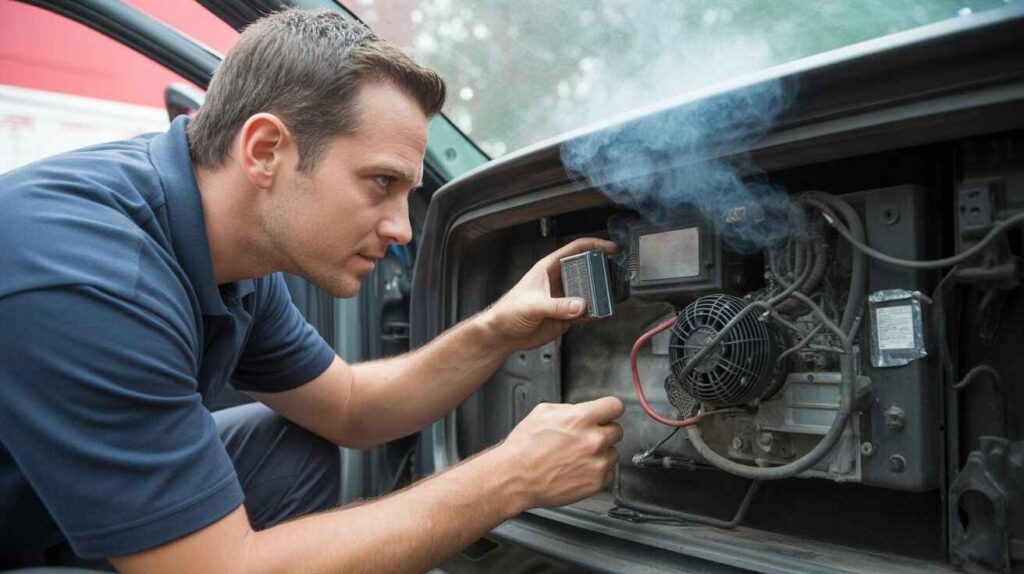
Fixes: DIY Steps vs Professional Repairs
DIY fixes
- Replace the cabin air filter (usually $15–$40).
- Use an AC disinfectant spray or foam to clean mold from the evaporator.
- Check washer fluid and avoid storing strong cleaners near the intake.
- Clear debris from air intakes near the windshield.
Professional repairs
- Refrigerant leaks require certified technicians to detect, repair, and recharge the system ($150–$400).
- Heater-core leaks are labor intensive, often costing $600–$1,000+.
- Professional evaporator cleaning or ozone treatments to kill mold typically range $100–$300.
Maintenance Tips to Prevent Chemical Smells
Regular HVAC System Maintenance
Prevent chemical odors by replacing the cabin air filter every 12,000–15,000 miles or yearly. Annual HVAC inspections help catch refrigerant leaks or electrical issues early. A clean, serviced system lasts longer and avoids costly repairs.
Keeping the Cabin Dry
Moisture causes most mold smells. Run the fan for a minute before turning off the engine, park in ventilated areas, and use a dehumidifier in humid climates. Avoid leaving wet items like umbrellas or gym clothes in the car.
FAQs
Q1: Can a refrigerant leak cause a sweet chemical smell?
Yes. A refrigerant leak odor is often sweet or sharp and usually comes with reduced cooling performance.
Q2: Why does my AC smell like bleach or chlorine?
A bleach-like smell often means washer fluid vapors or cleaning agents are entering the intake.
Q3: How do I prevent chemical smells in the future?
Change filters regularly, dry the AC before shutting it off, and schedule annual inspections.