Car AC usually makes a hissing sound due to refrigerant flowing through the system, a minor refrigerant leak, or pressure changes near the expansion valve or evaporator.
Why Is My Car AC Making a Hissing Sound?
A car air conditioning (AC) system plays a vital role in keeping the cabin cool, comfortable, and safe—especially during hot weather.
Beyond comfort, it helps reduce driver fatigue and prevents window fogging by controlling humidity.
Over time, many car owners experience AC-related problems such as weak cooling, unpleasant odors, or unusual noises.
One of the most common—and concerning—issues is a hissing sound from the car AC system. This noise can indicate anything from normal operation to a developing fault that requires immediate attention.
Understanding Car AC Systems
How a Car AC System Works
A car AC system operates by circulating refrigerant through a sealed loop. The refrigerant absorbs heat from inside the cabin and releases it outside, allowing cool air to flow through the vents.
Key Components of a Car AC System
- Compressor: Pressurizes and circulates refrigerant
- Condenser: Releases heat from the refrigerant
- Thermal Expansion valve / Orifice tube: Controls refrigerant flow
- Evaporator: Absorbs heat from cabin air
- AC hoses and seals: Transport refrigerant throughout the system
Each component must function properly to ensure efficient cooling and quiet operation.
The Role of Refrigerant
Refrigerant is the lifeblood of the AC system. It switches between liquid and gas states to absorb and release heat.
Low refrigerant levels or leaks are one of the most common causes of hissing sounds, particularly while the AC is running.
Importance of Regular AC Maintenance
Routine AC maintenance helps maintain cooling performance, prevents leaks, and reduces strain on critical components like the compressor.
Early inspections can catch minor issues—such as a faint hissing sound—before they turn into expensive repairs or complete AC failure.

Common Causes of Hissing Sounds in Car AC Systems
Your car’s AC system operates under high pressure. When the balance between pressure and refrigerant flow is disturbed, unusual noises occur.
Low Refrigerant Levels
This is the most common cause of a hissing AC. When refrigerant leaks and pressure drops, the remaining gas passing through the expansion valve can produce a sharp hissing sound—similar to air escaping a balloon.
Pressure Imbalances
AC systems have high-pressure and low-pressure sides. A faulty compressor or expansion valve can disrupt this balance.
- Hissing after turning the car off: Often normal pressure equalization
- Hissing while AC is running: May indicate a blockage or valve malfunction
Normal Operating Sounds
A brief hissing sound lasting 30–60 seconds after shutting off the engine is usually normal. This occurs as refrigerant pressure equalizes within the system.
Worn or Damaged Components
Over time, rubber hoses, O-rings, and seals degrade due to heat and vibration. A loose connection or cracked hose allows pressurized refrigerant to escape, producing a noticeable hissing noise and causing refrigerant loss.
How to Diagnose a Hissing Car AC
Safety tip: Never touch AC components while the engine is hot or running. AC lines can cause severe burns.
Visual Inspection
Open the hood and inspect AC hoses and connections. Look for greasy or oily residue, which often indicates a refrigerant leak mixed with compressor oil.
Listen for Sound Patterns
- Continuous hissing while driving: Low refrigerant or active leak
- Hissing only after engine shutdown: Usually normal
- Noise changes with fan speed: Possible vacuum leak or blower motor issue
Diagnostic Tools
Advanced users can check system pressure using an AC manifold gauge set. Low readings confirm low refrigerant. If you’re unfamiliar with high-pressure systems, professional diagnosis is recommended.
Fixes for a Hissing Car AC
DIY Solutions
If refrigerant is low, a recharge kit can help:
- Locate the low-pressure port.
- Attach the recharge hose.
- Add refrigerant until the gauge reaches the recommended range.
Warning: Overcharging can damage the compressor and turn a minor fix into a costly repair.
Professional Repair
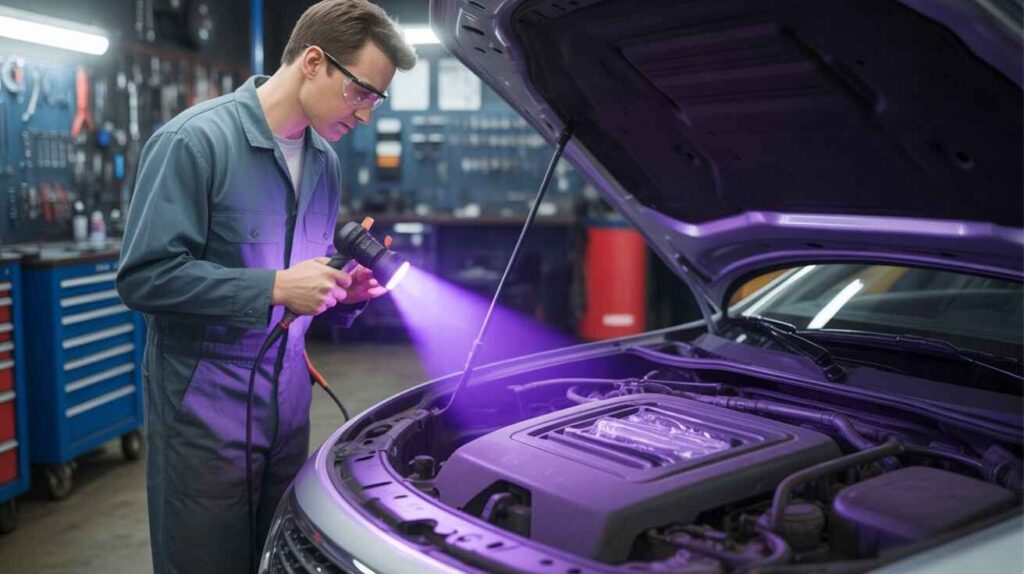
If the refrigerant leaks again or the noise persists, a physical leak likely exists. Mechanics use UV dye and electronic leak detectors to locate the issue.
Repairs involving compressors, condensers, or evaporators require specialized equipment and should be handled by professionals.
Preventing AC Hissing Issues
Regular Use and Maintenance
Run your AC for at least 10 minutes weekly, even in winter (use defrost mode). This keeps seals lubricated and prevents drying or cracking.
Address Problems Early
A minor hiss often signals a small leak. Fixing it early may only require an O-ring replacement or recharge. Ignoring it can destroy the compressor, leading to expensive repairs.
FAQs
Q1.Is it safe to drive with a hissing AC?
Yes, in most cases. However, running the AC with low refrigerant can damage the compressor. If the compressor seizes, it may affect the serpentine belt and other components. Turn off the AC until inspected.
Q2.How much does it cost to fix a refrigerant leak?
- DIY recharge: $30–$50
- Professional hose/O-ring repair: $150–$300
- Compressor replacement: $800–$1,500
Q3.Can I fix a hissing AC myself?
You can address minor issues like low refrigerant. Complex leaks or component replacements require professional tools and expertise.