No, states usually require you to get your car inspected in the state where it’s registered, unless you qualify for a rare exception.
Why Most States Require Inspections Where Your Car Is Registered
Most states require you to complete your vehicle inspection inside the state where it’s registered because inspections are tied directly to that state’s safety rules, emissions laws, and VIN verification systems.
Each state maintains its own standards for brakes, lights, tires, suspension, and pollution control, and these standards vary widely.
Because inspection requirements differ so much—some states test emissions annually while others require no inspections at all—an inspection done in one state often doesn’t meet the legal criteria of another.
States also store inspection results in state-specific databases, making it hard for DMVs to validate certificates issued elsewhere.
To maintain accurate records, enforce environmental laws, and ensure every vehicle meets local safety standards, states usually require the inspection to be done within their own borders.
State Vehicle Inspection Laws
Vehicle inspection laws exist to ensure that cars on the road meet a state’s standards for safety, emissions, and VIN verification.
While the core goal is the same across the U.S., each state sets its own testing rules, which is why inspection requirements vary so widely.
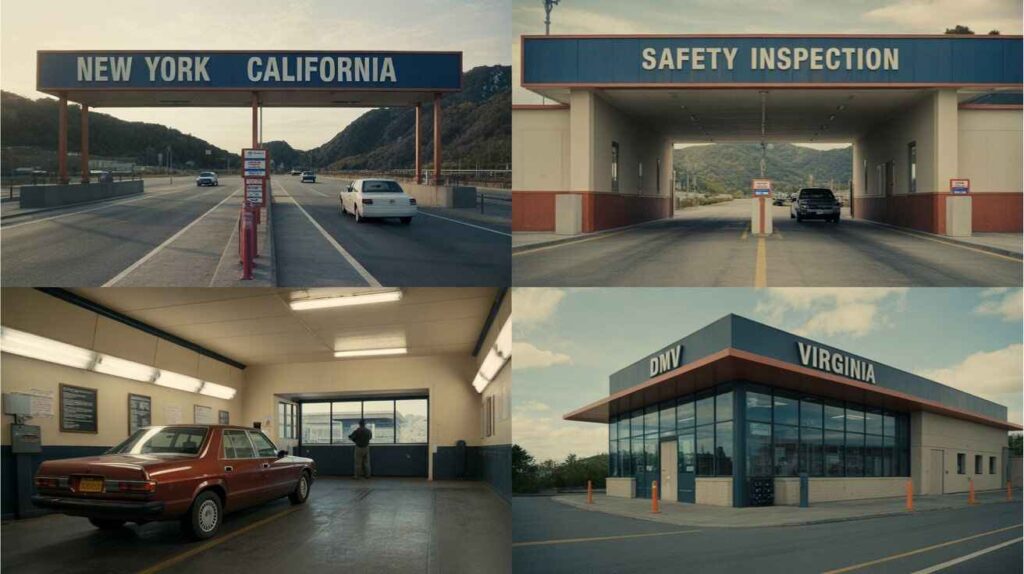
Some states enforce strict, detailed inspections, especially in high-population or high-pollution areas. Examples include:
- New York – mandatory annual safety and emissions inspection
- California – strict smog checks in designated regions
- Virginia – annual safety inspection plus emissions testing in certain counties
On the other side, several states have lenient or minimal inspection requirements, such as:
- Florida – no routine safety or emissions inspections
- Michigan – no annual inspections
- Montana – limited requirements depending on county
These differences matter because a vehicle inspected in a lenient state may not meet the standards of a stricter one.
General Rules for Out-of-State Vehicle Inspections
In most cases, states do not accept vehicle inspections performed outside the state where the vehicle is registered. Inspection systems are tied to state databases, local safety codes, emissions limits, and VIN verification rules.
Acceptance of an out-of-state inspection usually depends on:
- Residency status: temporary worker, student, or military member
- Where the vehicle is registered: your home state’s DMV rules always control
- Registration cycle: whether you’re renewing or newly registering
- Insurance requirements: some insurers require valid in-state inspections
It’s essential to check the rules for both states:
- Your registration state — where the car is legally tied
- The state where you want the inspection performed — if they even allow inspecting non-resident vehicles
Because laws vary so much, true acceptance of an out-of-state inspection is rare and usually granted only under documented exceptions.
Process of Getting an Out-of-State Inspection
If your home state does allow an out-of-state inspection under a waiver or temporary exemption, here’s the typical process:
- Research the laws in both states
Confirm whether your home state accepts outside inspections and which facilities in the other state can perform them. - Find an authorized inspection station
Not every shop can legally inspect out-of-state vehicles. Many states restrict this to certified facilities. - Prepare required documents
You may need:- Vehicle title
- Current registration
- Proof of insurance
- Driver’s license or state ID
- Schedule the inspection
Depending on your home state, this may include:- Safety inspection
- Emissions or smog check
- Combined testing
- Undergo the inspection
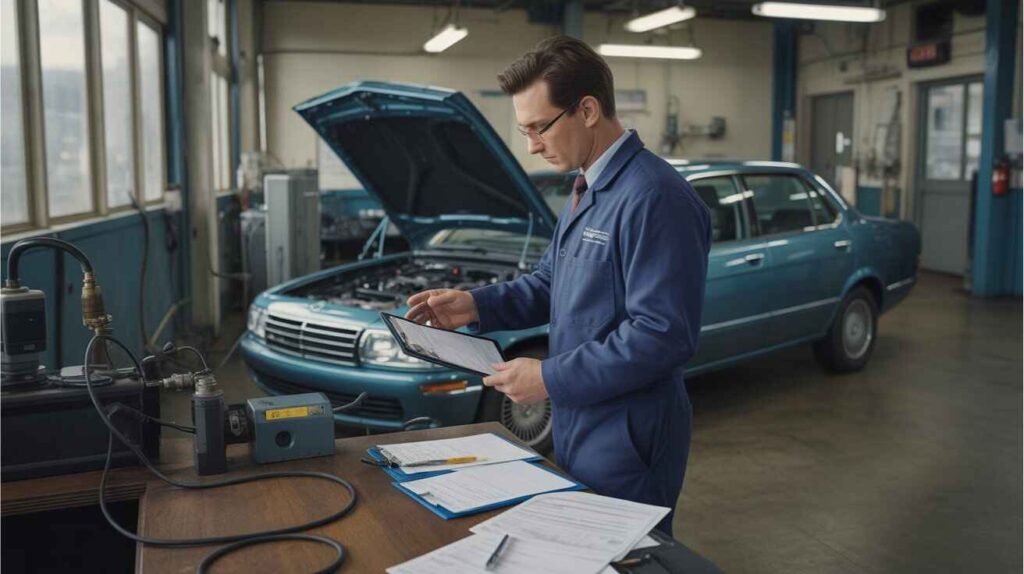
The inspector will test brakes, lights, emissions, tires, VIN info, etc. - After passing
You’ll receive a certificate, sticker, or electronic report. - After failing
You must repair the issues and return for a retest. - Submit results to your home state
If allowed, you may need to upload, mail, or present the inspection report to your DMV.
Special Considerations for Different Vehicle Types
Personal Vehicles
Most personal cars must follow the registration state’s rules, even when temporarily located elsewhere. Out-of-state inspections are rarely accepted unless your DMV explicitly allows it.
Commercial Vehicles
Commercial and fleet vehicles often face:
- Stricter safety rules
- Federal DOT inspections
- Additional paperwork when crossing state lines
These vehicles must stay compliant with both state and federal regulations.
Out-of-State College Students
Many states offer temporary exemptions for full-time students who still maintain home-state residency. The student may be allowed to keep home-state registration and inspection.
Long-Term Travelers / Remote Workers
If you’re living temporarily in another state for months at a time, some states offer:
- Extended inspection deadlines
- Temporary residence exceptions
- Grace periods for renewals
Military Personnel
Active-duty members often have the most flexibility:
- Many states allow military members to keep home-state registration
- Out-of-state inspections or extended deadlines are commonly granted
- Some states waive inspection requirements until the member returns home
Rental & Leased Vehicles
These cars follow the rules of:
- The leasing company
- The company’s state of registration
- The state where the vehicle is operated
Some leasing companies require inspections to be done only in the state where the vehicle is registered.
What to Check Before Assuming an Out-of-State Inspection Will Count
Before relying on an inspection done elsewhere, verify:
- Type of inspection required (safety, emissions, VIN check)
- New registration vs. renewal status
- Inspection sticker expiration
- VIN verification requirements
Because laws change frequently, always confirm with your DMV to avoid delays, rejected paperwork, or unnecessary travel.
Risks of Skipping Required Inspections or Using an Invalid One
Skipping or ignoring inspection rules can lead to:
- Registration denial or suspension
- Fines for expired or invalid inspections
- Problems during renewal or title transfer
- Safety or emissions issues that remain undetected
Out-of-state inspections that don’t align with your home state’s rules are usually invalid. Staying compliant protects you from legal trouble, failed renewals, and unexpected repair costs.
FAQs
Q1.What documents do I need for an out-of-state car inspection?
Title, registration, proof of insurance, driver’s license, and sometimes residency documentation.
Q2.Is it legal to drive with an expired inspection if I’m out of state?
Some states allow a grace period, but others do not. You risk tickets depending on where you’re driving.