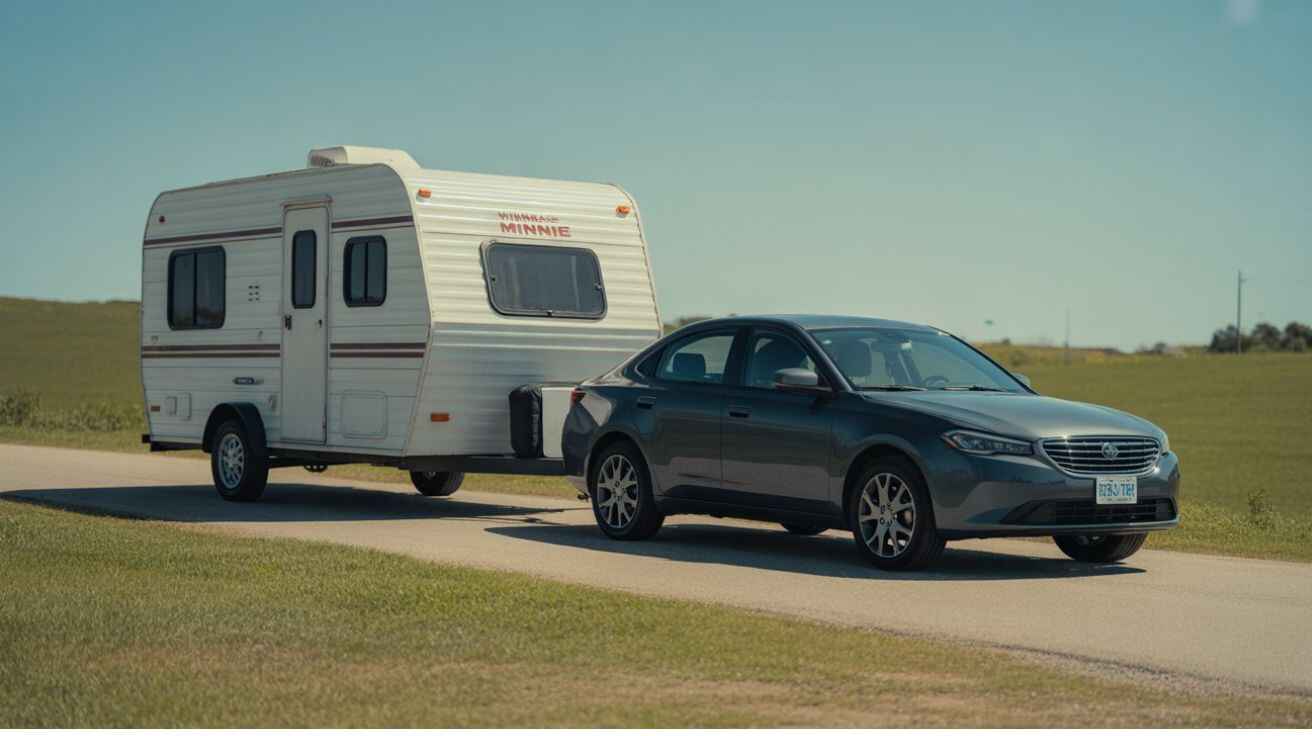
Yes, under very specific conditions, a normal car can pull a mini Winnebago, but only if the car’s towing capacity greatly exceeds the trailer’s weight and you use appropriate towing gear.
Mini Winnebago
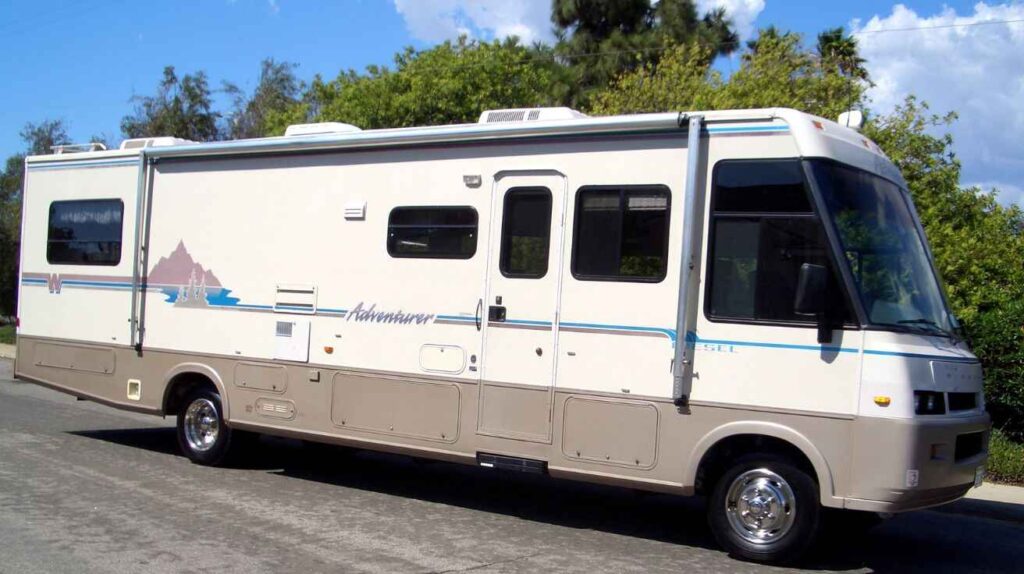
Mini Winnebagos (such as the Micro Minnie series) are compact travel trailers designed to offer many of the comforts of a larger RV — a bed, small kitchen, bathroom — but in a smaller footprint and with a lower weight than full-size models.
That said, they still weight substantially and require a capable tow vehicle.
Understanding Towing Capacity
Towing capacity is the maximum weight a vehicle is designed to tow safely, including the trailer and everything loaded in it. Manufacturers calculate this number based on what the vehicle can handle without risking mechanical failure.
Several factors influence towing capacity
- Engine size & torque
Larger engines generate more pulling force, especially when climbing hills or accelerating with weight behind the car. - Vehicle weight
Heavier vehicles provide better stability while towing. Lightweight cars often get pushed around by heavier trailers. - Transmission type
Vehicles with stronger, tow-rated automatic transmissions and optimized gear ratios usually handle towing better and run cooler under heavy loads.
Knowing your exact towing capacity — not guessing — prevents overloading your car, straining the engine, and losing control on the road.
Mini Winnebago Model Weight & Size Comparison Table
| Feature / Spec | Lightest Mini Winnebago Models (e.g., Micro Minnie 1800 Series) | Heavier Mini Winnebago Models (e.g., Micro Minnie 2500 Series or Similar) | Average Range Across Common Mini Models |
|---|---|---|---|
| Dry Weight (Unloaded Vehicle Weight) | ~3,500–3,900 lbs | ~5,200–6,200 lbs | ~3,700–6,200 lbs |
| GVWR (Fully Loaded Max Weight) | ~6,000–7,000 lbs | ~7,800–8,800 lbs | Up to ~8,800 lbs |
| Tongue / Hitch Weight | ~450–700 lbs | ~650–900+ lbs | ~10–15% of GVWR |
| Length | 20–22 ft | 24–26 ft | 20–26 ft |
| Width | 7–7.5 ft | 7.5–8 ft | 7–8 ft |
Evaluating the Weight of a Mini Winnebago
Before deciding can a normal car pull a mini Winnebago, you must understand the trailer’s weight. Mini Winnebagos vary significantly and are often heavier than people expect.
Lightest models
Small Winnebago Micro Minnie units can weigh around 3,500–4,200 lbs (dry weight) — meaning without water, propane, food, or gear.
Heavier models
Well-equipped versions may reach 5,000–6,200 lbs dry, and up to 7,000–8,000 lbs when fully loaded for camping. The difference matters because every pound adds strain and affects braking and stability.
Mini Winnebago trailers also add tongue weight — typically 10–15% of the total weight — that presses directly down on the car’s rear suspension. Too much tongue weight can cause sagging suspension and steering issues.
This is why knowing exact weight specs is essential. If your vehicle’s tow rating doesn’t exceed the trailer’s GVWR (gross vehicle weight rating) by a safe margin, towing becomes risky. A smaller trailer doesn’t automatically mean a small car can handle it — weight tells the real story.
Can a Normal Car Tow a Mini Winnebago?
The answer is sometimes yes, but usually not. Most sedans and compact cars have towing capacities around 1,000–2,000 lbs, far below what mini Winnebagos weight.
Even for the lightest models Some normal cars are built with better towing strength
| Vehicle | Typical Towing Capacity | Could Tow a Mini Winnebago? |
|---|---|---|
| Ford Fusion (sedan) | 1,000–2,000 lbs | Too low |
| Honda CR-V (compact SUV) | 1,500–1,500 lbs US models | Too low for safety |
| Toyota RAV4 (compact SUV w/ tow pkg) | up to 3,500 lbs | Only the lightest models |
| Ford Explorer / Toyota Highlander | 5,000 lbs+ | Better suited |
| Light-duty pickups | 7,000–10,000 lbs | Ideal choice |
A towing-rated SUV or truck is the safest match for a mini Winnebago.

Essential Equipment for Towing
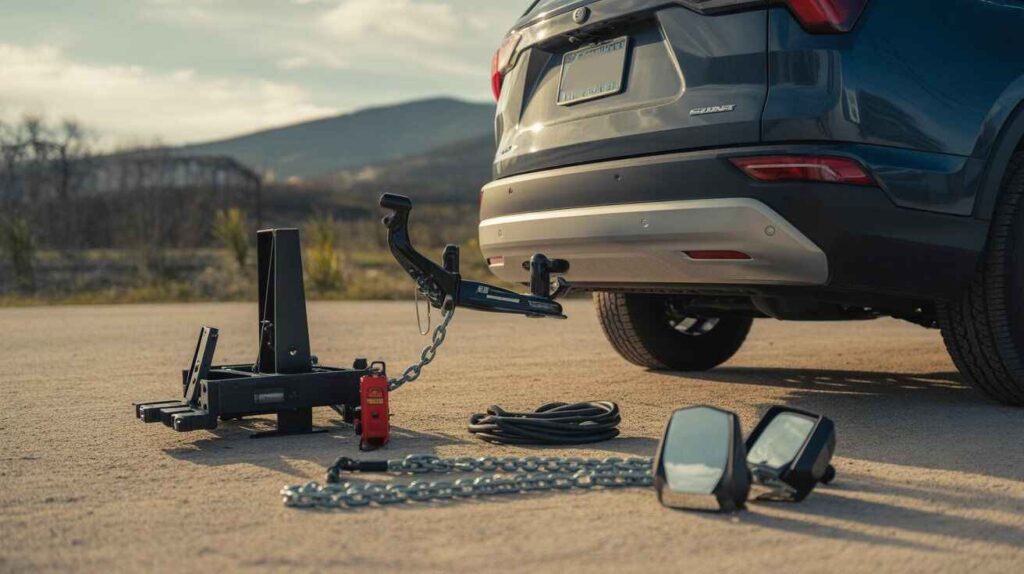
Even with the right vehicle, towing isn’t safe without proper equipment. At a minimum, you’ll need:
Correct Class Hitch
- Class III or higher is typically required for mini Winnebago towing
- Designed to handle heavier tongue loads and prevent hitch failure
Braking System
- Electric trailer brakes offer the best stopping power
- Most states require them for trailers over ~3,000 lbs
Weight Distribution System
- Prevents rear sag and improves steering
- Helps avoid sway, especially at highway speeds
Tow mirrors, wiring harness & trailer lighting system
- Required for visibility and legal compliance
Using the right setup ensures better control, smoother handling, and reduced wear on your car.
Alternatives to Towing With a Normal Car
Use of Larger Vehicles
If your car’s tow rating is too low, consider upgrading to an SUV, pickup truck, or heavy-duty crossover.
These vehicles provide stronger frames, higher payloads, and greater towing capacity, making them ideal for lightweight Winnebago trailers.
They’re also equipped with better chassis stability and braking systems designed specifically for towing.
Renting or Using a Towing Service
If upgrading isn’t possible, rent a vehicle with proper towing capabilities or hire a professional towing service.
This eliminates the risks and complications of towing with a regular car. A towing service manages all logistics, equipment, and safety standards, allowing you to enjoy your RV trip without stressing over your vehicle’s limits.
Safety Tips for Towing a Mini Winnebago
Pre-towing safety checklist
- Inspect your tires, brakes, suspension, and hitch components
- Make sure the trailer load is balanced front-to-back and side-to-side
- Confirm that safety chains and the electrical connection are secure
- Adjust mirrors for a full view of the trailer
Driving techniques
- Take hills slowly to prevent overheating
- Maintain steady speeds and avoid sudden lane changes
- Increase braking distance — the trailer adds momentum
- Use lower gears when descending to avoid brake fade
- Keep wide turns — the trailer tracks inside your path
Legal requirements
It vary by state, but often include:
- Functioning trailer brakes for heavier travel trailers
- Working turn signals and brake lights
- Approved towing mirrors when the trailer blocks rear visibility
FAQs
Q1: Can a regular sedan tow a mini Winnebago?
No. Most sedans are only rated to tow 1,000–2,000 lbs, while even the lightest mini Winnebagos exceed 3,500 lbs before gear is added.
Q2: Is towing a mini Winnebago dangerous with an underpowered car?
Yes. Overloading can cause brake failure, overheating, poor handling, trailer sway, and increased accident risk.
Q3: If my car is close to the tow rating, is it okay?
No. Always leave a safety buffer of at least 10–20%, because passengers, fuel, and cargo all add weight.