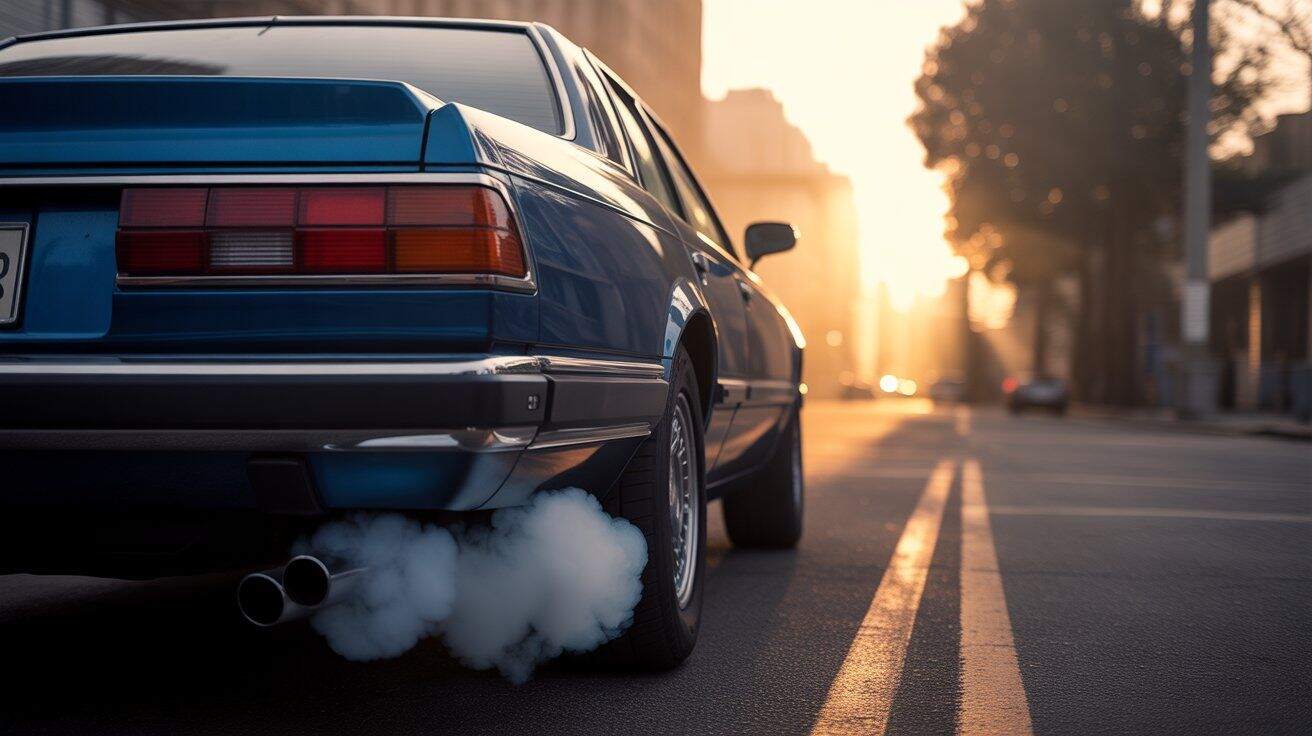
The car exhaust smells because the engine isn’t burning fuel or filtering gases properly. Each smell points to a different issue: gasoline, sweet coolant, rotten eggs, or burning oil.
How to Identify Different Exhaust Smells
Each Car exhaust smell points to a specific issue.
- Gasoline or petrol smell: Strong fuel odor means unburned fuel, a rich air-fuel mixture, or leaking injectors.
- Rotten eggs or sulfur smell: Often caused by a failing catalytic converter unable to process exhaust gases.
- Sweet, syrupy smell: Coolant leaking into the engine — a sign of a blown head gasket or cracked component.
- Burnt oil or acrid odor: Oil dripping onto hot exhaust parts or faulty valve seals.
- Thick black smoke or heavy fumes: The engine is burning too much fuel, often due to bad sensors or a clogged air filter.
Common Reasons for Car Exhaust Smells
1.Sweet Smell
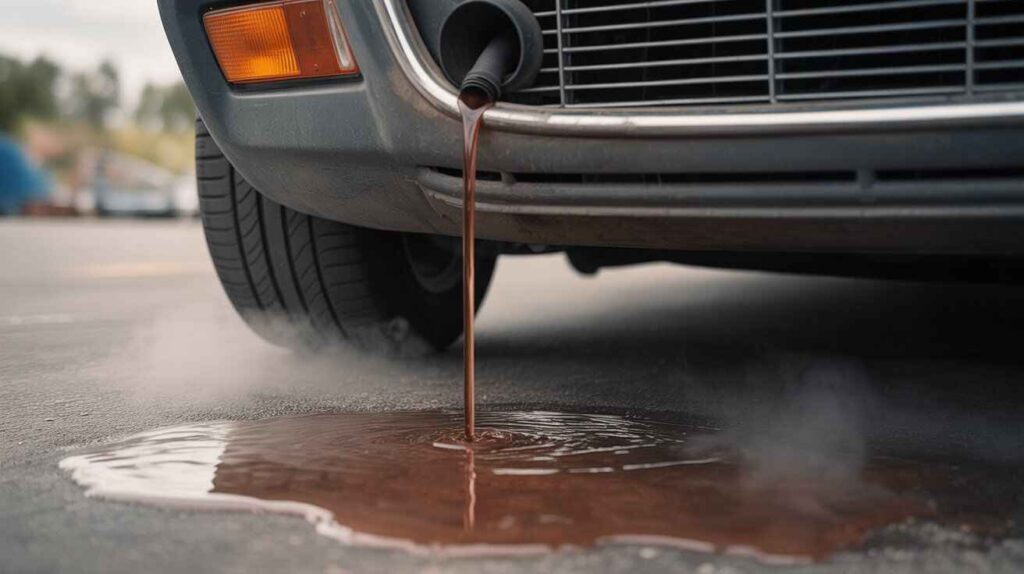
A sweet, syrup-like odor often points to coolant leaking into the combustion chamber or onto hot engine parts. This may result from a blown head gasket, cracked engine block, or damaged intake manifold gasket.
Drivers might also notice white exhaust smoke and low coolant levels. Since coolant leaks can lead to engine overheating and internal corrosion, it’s important to inspect the cooling system immediately and avoid long drives until repairs are made.
2.Rancid or Sulfuric Smell
A rotten egg or sulfur-like smell usually signals a failing catalytic converter. When the converter can’t properly process hydrogen sulfide, it releases a strong sulfur odor.
Other causes include fuel contamination or faulty fuel injectors that cause incomplete combustion. Ignoring this smell may lead to engine performance loss and increased emissions.
A mechanic can test the converter’s efficiency and determine whether replacement or fuel system cleaning is needed.
3.Burnt Oil or Acrid Burning
If you notice a sharp, burning oil smell, it usually means oil is leaking onto hot engine parts. Common spots include the valve cover gasket, turbo seals, or oil pan area. In some cases, the smell can come from overheated belts or burning electrical insulation, which creates an acrid, rubber-like odor.
Replace any leaking seals or gaskets and clean burnt oil residue around the exhaust and engine. Check the PCV valve as well; a clogged one can cause excess pressure and new leaks.
4.Strong Smoke / Black Smoke
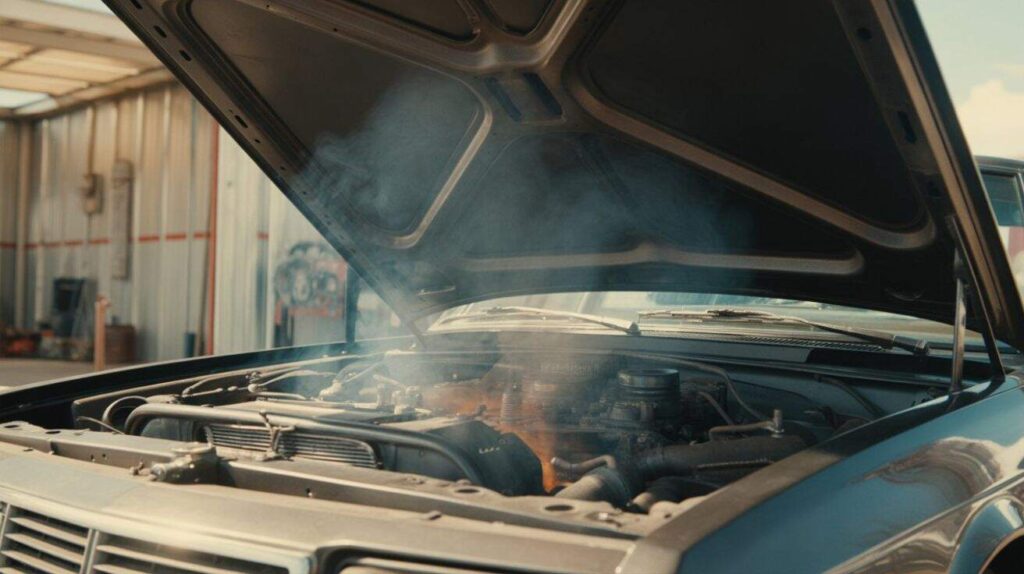
Seeing black smoke from your exhaust means the engine burns too much fuel. It’s usually caused by a clogged air filter, dirty injectors, or faulty sensors that throw off the air-fuel balance.
To fix it, replace the air filter and scan for fault codes with a diagnostic tool. If the smoke stays, have a mechanic clean the injectors and check the oxygen or MAF sensors.
5.Strong Gasoline Smell
A strong fuel odor from the exhaust often means unburned fuel is escaping the engine. Possible culprits include leaking fuel injectors, malfunctioning sensors (O₂, MAF, MAP), or engine misfires.
This condition reduces fuel economy and increases fire risk. Drivers should check for a check-engine light or rough idling. Prompt fuel system inspection helps identify leaks and prevents further damage to the catalytic converter or exhaust components.
Diagnostic Checklist
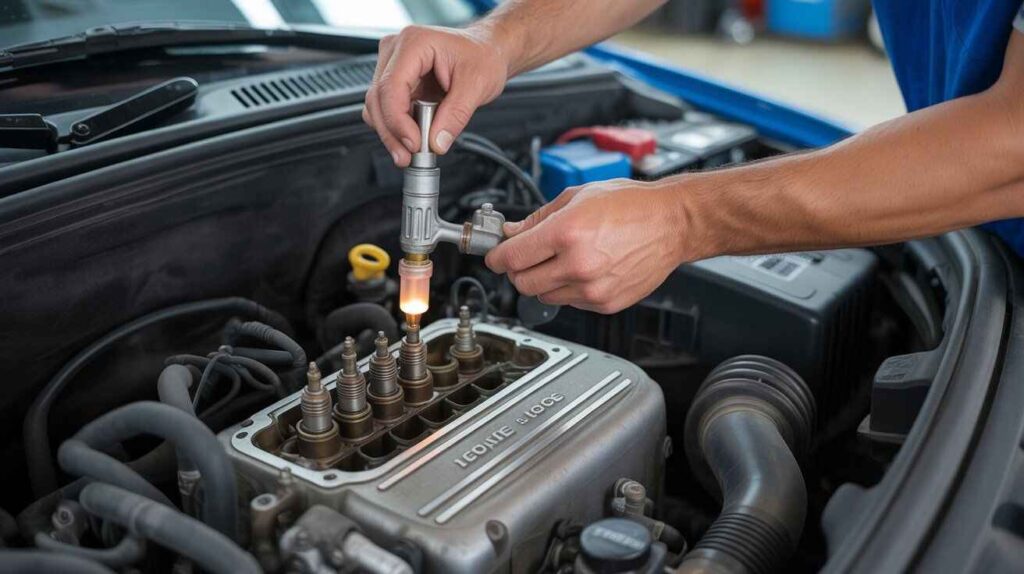
| Step | What to Check | Tips |
|---|---|---|
| 1. Cold vs. Warm Smell | Compare start-up vs. warm engine. | If smell fades when warm, minor issue; if not, inspect exhaust. |
| 2. Visual Inspection | Look for leaks or rust. | Check pipes and joints for cracks or soot. |
| 3. Fluid Levels | Coolant, oil, fuel lines. | Low or damp = possible leak. |
| 4. Smoke Color | Watch tailpipe smoke. | White = coolant, Blue = oil, Black = fuel. |
| 5. Listen for Noises | Engine and exhaust sounds. | Hissing or popping = leak or crack. |
| 6. Scan for Codes | Use OBD-II tool. | P0420–P0430 = catalyst; P0171–P0175 = fuel/sensor. |
| 7. Safety Stop | When to stop driving. | Strong fumes or dizziness = pull over now. |
Common Solutions and Repairs
After identifying the source of an exhaust smell, apply the appropriate fix to restore performance and eliminate odors.
Coolant Leaks
If a coolant leak is detected, first locate the source — radiator hoses, heater core, or head gasket. Replace worn gaskets and refill the system with the correct coolant mixture.
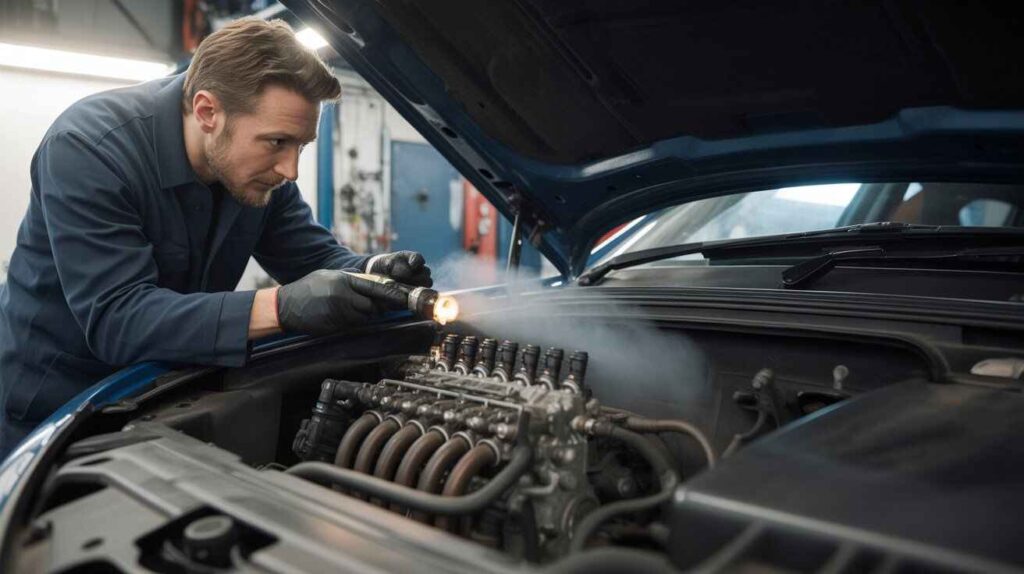
Use UV dye or pressure testing to confirm the leak’s location. After repairs, flush the cooling system to remove contaminants and monitor the temperature gauge closely during the next few drives to ensure stability.
Catalytic Converter Replacement
If diagnostics confirm a failing catalytic converter, replacement is often necessary. Symptoms include sulfuric smells, reduced power, and rattling noises.
Use an OEM or high-quality aftermarket converter to restore emissions performance. Regularly inspect upstream sensors and address fuel mixture problems before installing a new converter to prevent premature failure.
Fuel System Maintenance
Routine fuel system cleaning, filter replacement, and injector servicing help prevent gas odors and engine misfires. Ensure oxygen sensors and fuel caps are functioning properly.
Using quality fuel and periodic fuel additive treatments can keep injectors clean and maintain optimal combustion efficiency. Schedule annual inspections to catch leaks early and protect exhaust components.
Preventative Measures
Preventing Car exhaust smells starts with regular vehicle maintenance and early attention to performance changes.
Check engine oil, coolant, and transmission fluid levels regularly to detect leaks before they worsen. Inspect the exhaust system for rust, corrosion, or loose clamps every 6–12 months, especially in humid or cold climates.
Perform timely engine tune-ups — including spark plug replacement, air filter changes, and sensor diagnostics — to maintain clean combustion. A healthy catalytic converter and proper fuel-air balance reduce odors and emissions.
FAQs
Q1: Why does my car’s exhaust smell like gasoline?
This is because unburned fuel is escaping the system. Check injectors, sensors, and the EVAP system for leaks.
Q2: Why does my car exhaust smell sweet?
Coolant is leaking into the engine. It’s usually a sign of a blown head gasket or cracked part.
Q3: Is it safe to drive if my car’s exhaust smells?
No. Exhaust fumes contain carbon monoxide and other toxins. Always ventilate and seek professional help.